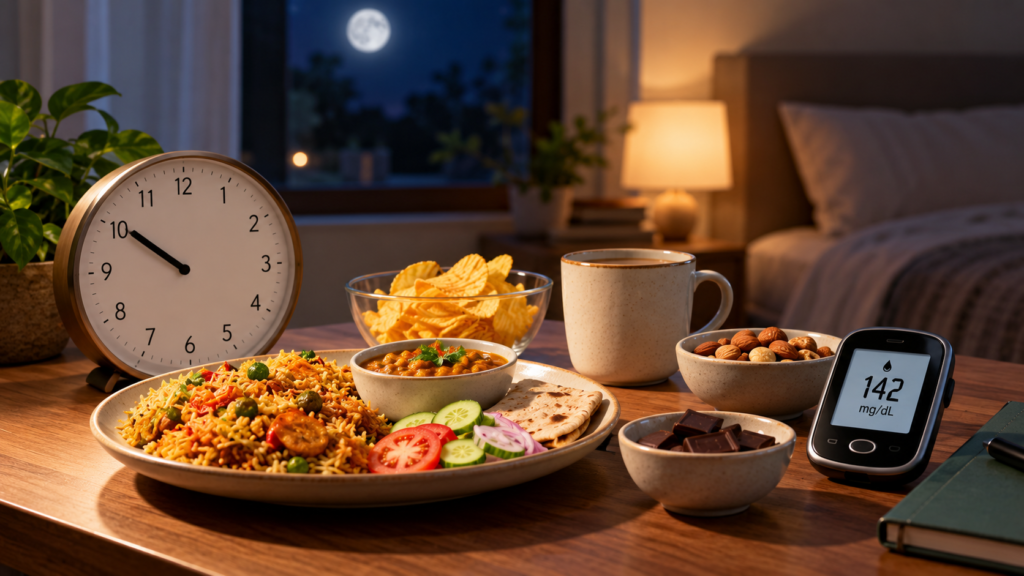
You go to bed after dinner, avoid late-night snacks and wake up expecting a normal fasting blood sugar reading. But your glucose monitor shows a higher number than you expected.
This can be confusing, especially when you have not eaten anything for several hours.
One possible explanation is the dawn phenomenon, a natural early-morning rise in blood glucose that can affect people with diabetes. However, it is not the only reason morning readings may be high. Overnight medication levels, evening meals, illness and other factors can also play a part.
Understanding the difference can help you have a more useful conversation with your healthcare team. It can also help you avoid making unnecessary changes to your meals or medication based on a single reading.
What Is the Dawn Phenomenon?
The dawn phenomenon is an increase in blood glucose that happens in the early hours of the morning, commonly between approximately 4 a.m. and 8 a.m.
During this period, the body releases hormones such as cortisol, growth hormone, glucagon and adrenaline. These hormones help the body prepare to wake up. They can signal the liver to release more glucose into the bloodstream.
In people without diabetes, the body usually releases enough insulin to keep blood glucose under control.
For someone with diabetes, the body may not produce enough insulin or may not respond to insulin effectively. As a result, glucose can remain elevated when they wake up.
This is why someone may notice a higher fasting blood sugar reading even after going through the night without eating.
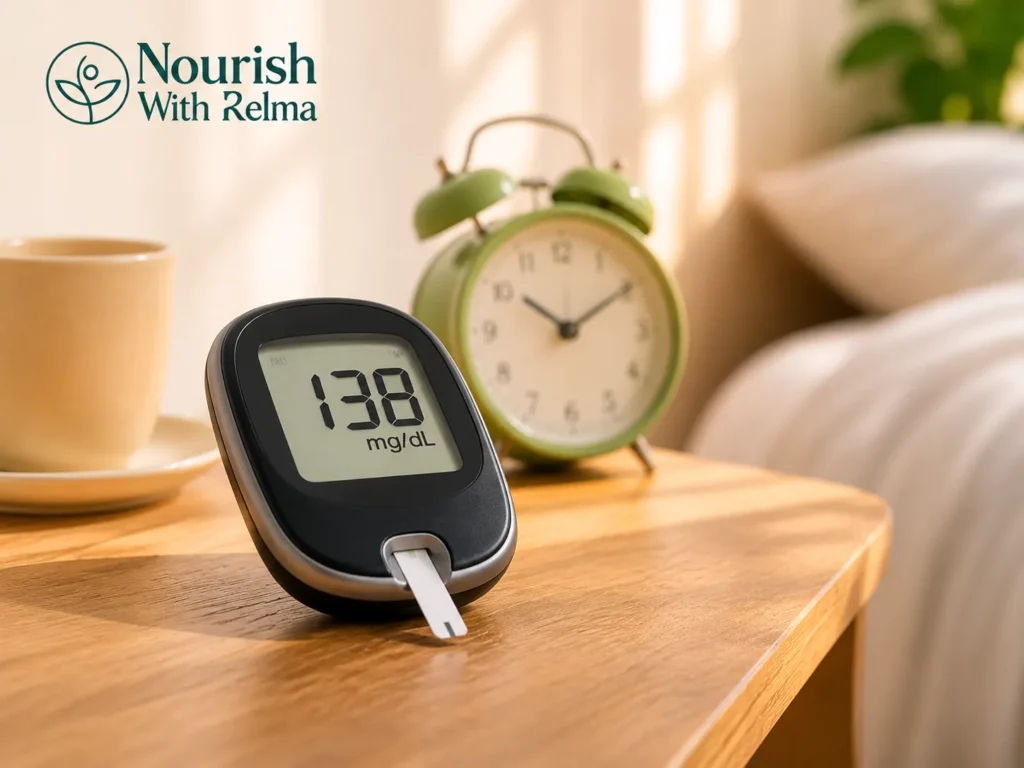
What happens inside the body during the early morning?
The liver plays an important role in maintaining blood glucose levels. It stores glucose and releases it when the body needs energy, including during periods when you are not eating.
While you sleep, your body continues to use energy. The liver releases glucose to help meet this requirement.
Towards morning, hormonal changes can increase the liver’s glucose output. Insulin normally helps regulate this process. When insulin production or insulin sensitivity is insufficient, glucose may rise more than expected.
In simple terms:
- Your body prepares to wake up.
- Hormones involved in the sleep-wake cycle increase.
- The liver releases glucose into the bloodstream.
- Insulin helps regulate the additional glucose.
- If insulin action is insufficient, morning blood sugar may become elevated.
The dawn phenomenon is not caused by eating breakfast before checking your glucose. It can happen while you are still asleep.
Why Does Blood Sugar Increase Overnight?
The dawn phenomenon is one explanation, but several factors can affect glucose levels while you sleep.
- Early-morning hormone changes
The body follows a daily sleep-wake rhythm. Hormones released towards morning help prepare it for the day.
These hormonal changes can increase glucose production by the liver. If insulin cannot balance this increase, morning blood sugar may rise.
- Medication or insulin levels may be insufficient overnight
Some diabetes medications and insulin work for a limited period. If their effect decreases before morning, blood glucose may rise.
For example, someone may have a glucose reading within their target range before going to bed but a higher reading when they wake up. The change may be related to the duration or timing of their prescribed treatment.
The timing and duration of medication can differ between individuals. Do not change a dose or timing without discussing it with your prescribing doctor.
- Evening meals and bedtime snacks
A large evening meal or a carbohydrate-containing snack close to bedtime may contribute to higher glucose levels during the night.
The effect depends on the meal, portion size, timing, medication and individual glucose response. Eating late does not automatically cause high morning blood sugar in everyone.
- Illness, stress and poor sleep
An infection, physical stress, emotional stress or disrupted sleep can affect blood glucose regulation.
For example, a person who has been unwell or sleeping poorly may notice changes in their glucose readings. Stress-related hormonal responses can also influence glucose levels.
If your morning readings change during a period of illness or poor sleep, record what is happening and discuss the pattern with your healthcare team.
- Changes in daily routine
Travel, shift work, changes in meal schedules and reduced physical activity can affect the usual pattern of eating, sleeping and medication.
These changes do not necessarily cause the dawn phenomenon, but they may make blood glucose patterns less predictable.
If your readings change after a significant routine change, consider recording the dates and circumstances so your healthcare professional can review them.
Is It Always the Dawn Phenomenon?
No. A high morning reading does not automatically mean you are experiencing the dawn phenomenon.
Your healthcare professional may consider several possible explanations.
Possible cause | What may happen |
Dawn phenomenon | Hormonal changes in the early morning increase glucose production |
Waning insulin effect | The effect of overnight insulin or medication may decrease before morning |
Evening food intake | A large dinner or bedtime snack may contribute to elevated overnight glucose |
Illness or stress | The body’s response to illness or stress may raise blood glucose |
Possible overnight low | In some cases, low blood glucose during the night may be followed by a higher morning reading |
The last situation is sometimes called the Somogyi effect. It has been discussed as a possible explanation for morning hyperglycemia, but it is considered uncommon and remains debated. A high morning reading alone cannot confirm that it has occurred.
The timing of glucose changes matters. Your healthcare professional may ask you to compare readings at bedtime, during the night and when you wake up. A continuous glucose monitor may also help identify overnight patterns.
Dawn phenomenon vs. high blood sugar throughout the night
These situations can look similar if you only check your glucose after waking up.
However, the patterns may be different:
- Dawn phenomenon: Glucose may remain relatively stable during the earlier part of the night and rise towards morning.
- High glucose throughout the night: Readings may already be elevated at bedtime or remain high for several hours.
- Medication effect wearing off: Glucose may increase as the effect of a prescribed medication or insulin decreases.
- Possible overnight low: Glucose may fall during the night before increasing again. This needs proper assessment rather than assumption.
These are general patterns, not a method for diagnosing yourself. Your doctor can interpret the readings alongside your treatment and medical history.
How Can You Identify the Cause of High Morning Blood Sugar?
Start by looking for a pattern rather than focusing on one reading.
A single high result may not tell you much about what happened overnight. Repeated readings, along with information about meals, activity, sleep and medication, can provide a clearer picture.
Here are some useful details to record:
- Bedtime glucose: What was your reading before going to sleep?
- Morning glucose: What was your reading when you woke up?
- Dinner: What did you eat, and approximately when?
- Late-night snacks: Did you eat anything after dinner?
- Physical activity: Were you more or less active than usual?
- Sleep: Did you sleep well, or were you awake during the night?
- Medication: Did you follow your prescribed medication schedule?
- Illness or stress: Were you unwell or under unusual stress?
A simple morning blood sugar tracking example
You can use a record like this to discuss your readings with your healthcare professional.
Day | Bedtime reading | Morning reading | Dinner and snack details | Sleep or other observations |
Monday | Record your reading | Record your reading | Note food and timing | Note sleep quality |
Tuesday | Record your reading | Record your reading | Note food and timing | Note sleep quality |
Wednesday | Record your reading | Record your reading | Note food and timing | Note sleep quality |
This is a record-keeping example, not a prescribed monitoring schedule. Follow the checking frequency recommended by your healthcare team.
Do not start waking up in the middle of every night to check your glucose without guidance. Ask your healthcare professional whether overnight checks or continuous glucose monitoring would be appropriate for you.

What is continuous glucose monitoring?
A continuous glucose monitor, often called a CGM, is a device that measures glucose levels throughout the day and night using a sensor placed on the body.
Unlike a single finger-prick reading, it can show how glucose changes over time. This may help your healthcare professional identify whether glucose rises gradually before waking, stays elevated overnight or follows another pattern.
A CGM may be useful for some people, but it is not necessary for everyone. Your doctor can advise whether it is appropriate for your situation.
What Can Help Manage Morning Blood Sugar?
There is no single meal plan or routine that works for everyone. The right approach depends on the reason for the elevated reading, your diabetes treatment and your overall health.
Some practical areas to discuss with your healthcare team include:
Review your evening meal
Look at the portion sizes and composition of your dinner. A meal plan that considers carbohydrate portions, fibre-rich foods and suitable protein sources may help support more consistent glucose management.
For example, an evening meal may include vegetables, a suitable protein source and a portion of rice, roti or another carbohydrate food. The right quantities depend on your individual requirements.
Pay attention to meal timing
Try to follow a consistent eating routine where practical. If you regularly eat very late, discuss whether changing your meal timing may be suitable.
Avoid making extreme food restrictions based on a single high reading.
Include suitable physical activity
Regular physical activity can support diabetes management. A walk after dinner may be appropriate for some people, depending on their health and treatment plan.
However, exercise can affect glucose differently depending on its intensity, timing and medication. People using insulin or medicines that can cause low blood sugar should ask their healthcare professional about safe activity.
Prioritise sleep and stress management
Irregular sleep and stress may affect glucose levels. A consistent sleep schedule and a relaxing bedtime routine may help support overall health.
These habits do not replace diabetes medication or medical care.
Review your medication with your doctor
If morning readings remain above your individual target, your doctor may review your medication, insulin dose or timing.
Never reduce, increase or stop prescribed diabetes medication on your own. Changes should be based on your glucose patterns and medical assessment.
Do Indian Dinner Choices Affect Morning Blood Sugar?
Many people assume that they need to stop eating rice, dosa or roti to prevent high morning blood sugar. That is not necessarily the right approach.
Carbohydrate-containing foods affect blood glucose, but the response depends on the amount eaten, the overall meal, preparation method, activity, medication and individual health factors.
The aim is not to label familiar foods as completely good or bad. It is to understand portions and how different meals fit into your overall nutrition plan.
Rice
Rice is a carbohydrate-rich food and can contribute to a rise in blood glucose after a meal. The portion size and foods eaten alongside it matter.
A meal containing rice, vegetables and a suitable protein source may be different from a meal consisting mainly of a large portion of rice. Individual glucose responses can vary.
Ragi
Ragi is commonly included in South Indian meals. Although it provides fibre and other nutrients, it still contains carbohydrates.
Ragi does not automatically prevent blood sugar increases. Portion size and the rest of the meal should also be considered.
Idli and dosa
Idli and dosa are familiar breakfast and meal options for many households. Their effect on blood glucose depends on portion size, preparation, accompanying foods and individual response.
The presence of sambar or other accompaniments can change the overall nutritional composition of the meal. It is not necessary to assume that every person with diabetes must avoid these foods.
Roti and chapati
Roti and chapati also contain carbohydrates. The type of flour, size, number of portions and accompanying dishes all influence the overall meal.
A personalized meal plan can help determine suitable portions rather than relying on a generic food restriction list.
Remember: No single food can reliably correct the dawn phenomenon. If your morning readings are repeatedly high, the underlying glucose pattern and treatment plan need to be reviewed.
Common Myths About High Morning Blood Sugar
There is a lot of conflicting advice about fasting glucose. These are a few misunderstandings worth clearing up.
Myth 1: High morning blood sugar always means I ate too much at night
Not necessarily. Hormonal changes, medication effects, illness and other factors can contribute to elevated morning readings.
Myth 2: Skipping dinner will solve the problem
Skipping meals is not a reliable way to manage morning glucose and may be unsuitable, particularly for people taking insulin or certain diabetes medications.
Myth 3: People with diabetes should never eat rice
Rice contains carbohydrates, but that does not mean everyone with diabetes must avoid it completely. Portion size and overall meal composition are important.
Myth 4: One high fasting reading means diabetes is uncontrolled
One reading cannot describe your overall glucose pattern. Repeated readings and other measures, such as HbA1c when recommended by your doctor, provide more useful information.
Myth 5: Taking extra medication at night will bring morning readings down
Taking more medication without medical guidance can cause dangerously low blood glucose, including during sleep. Medication adjustments should always be made with your prescribing doctor.

How Can Nutrition Guidance Help With Diabetes?
Food choices are one part of diabetes management. A nutrition plan should also consider your daily routine, food preferences, health history, activity levels and prescribed treatment.
A generic diet chart may not reflect how you eat or what your body needs.
For example, a working professional who eats dinner late may need a different meal-planning approach from someone who follows a regular home-cooked routine. Someone who prefers rice-based meals may also need a different approach from someone whose usual meals include more roti or millet-based dishes.
Personalized nutrition guidance can help consider:
- Your usual breakfast, lunch and dinner choices.
- Your preferred foods and cultural eating habits.
- Meal timing and portion patterns.
- Your daily work and activity routine.
- Your health history and nutrition requirements.
- Your prescribed diabetes treatment.
- Your practical challenges when planning meals.
At Nourish With Relma, the website describes personalized nutrition plans and an online consultation process. This includes sharing health information through an assessment form, discussing concerns during a one-to-one video call and receiving a plan based on the information provided.
If you are looking for nutrition guidance for diabetes, you can enquire about whether a consultation is suitable for your needs.
Nutrition guidance should complement your medical treatment. It should not replace prescribed medication, glucose monitoring or advice from your treating doctor.
What Should You Discuss During a Diabetes Nutrition Consultation?
If you are considering nutrition support, preparing a few details beforehand can make the discussion more useful.
Consider keeping the following information available:
- Your usual meal timings and food preferences.
- Recent glucose readings, if you already monitor them.
- Any dietary restrictions or food intolerances.
- Your daily work schedule and physical activity.
- Your current nutrition-related concerns.
- Your prescribed medication and relevant medical guidance.
You can also explain whether your concern is mainly high fasting glucose, after-meal glucose changes, difficulty planning dinner or confusion about carbohydrate portions.
Do not stop or delay medical treatment while seeking nutrition guidance. If your readings are persistently high, speak with your treating doctor as well.
When Should You Speak With a Healthcare Professional?
Speak with your diabetes care team if:
- Your fasting blood sugar is repeatedly above your recommended target.
- Your morning readings have changed without an obvious reason.
- You experience frequent low blood sugar episodes during the night.
- You are unsure whether your readings are related to meals, medication or early-morning hormone changes.
- You are considering changes to your diet, exercise routine or medication.
- You are experiencing increased thirst, frequent urination or unexplained changes in your health.
Your healthcare professional can review your glucose records, medication, health history and other relevant factors before recommending changes.
Seek urgent medical attention if high blood glucose occurs with symptoms such as vomiting, abdominal pain, difficulty breathing, confusion or severe drowsiness. These may indicate a serious complication, including diabetic ketoacidosis.
Do not wait for a routine nutrition appointment if you have symptoms of a medical emergency.
Frequently Asked Questions
1. Why is my blood sugar high in the morning even when I do not eat at night?
One possible reason is the dawn phenomenon. Early-morning hormones can signal the liver to release glucose. Other explanations include the effect of overnight medication wearing off, illness or elevated glucose that continued from the evening.
2. What time does the dawn phenomenon usually occur?
It commonly occurs in the early morning, approximately between 4 a.m. and 8 a.m. The timing can vary from person to person.
3. Can the dawn phenomenon happen in type 2 diabetes?
Yes. The dawn phenomenon can affect people with type 1 or type 2 diabetes. The underlying reason is that the body may not have enough effective insulin to balance the early-morning rise in glucose.
4. Does eating dinner late cause high fasting blood sugar?
A late or large meal may contribute to higher overnight glucose in some people. However, meal timing is not the only factor. Food quantity, carbohydrate content, medication, activity and individual glucose response also matter.
5. How can I know whether I have the dawn phenomenon?
A morning reading alone cannot confirm it. Your doctor may recommend checking glucose at different times or using a continuous glucose monitor to understand what happens overnight.
6. Should I skip dinner to prevent morning blood sugar spikes?
No. Skipping meals is not a reliable way to manage morning glucose and may be unsuitable, particularly for people taking insulin or certain diabetes medications. Discuss meal timing and portions with your healthcare team.
7. Should I change my insulin dose if my fasting blood sugar is high?
Do not change your insulin dose independently. Your doctor needs to review your glucose patterns and treatment before recommending any adjustment.
8. Can a dietitian help with morning blood sugar concerns?
A qualified dietitian can help review eating patterns and develop nutrition guidance that fits your health needs. Persistent high morning readings should also be discussed with your treating doctor because medication and overnight glucose changes may be involved.