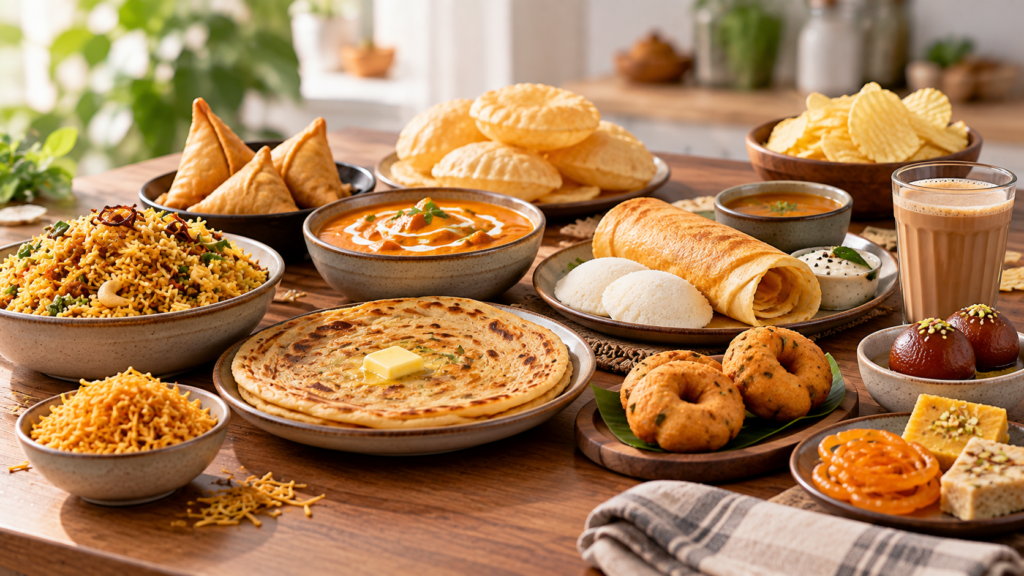
Rice, chapati, ragi, fruits and pulses are familiar parts of many Indian meals. Yet carbohydrates are often the first foods people consider reducing when they want to manage their weight or improve their health.
Low-carb diets have become popular for this reason. But does eating fewer carbohydrates automatically make your diet healthier?
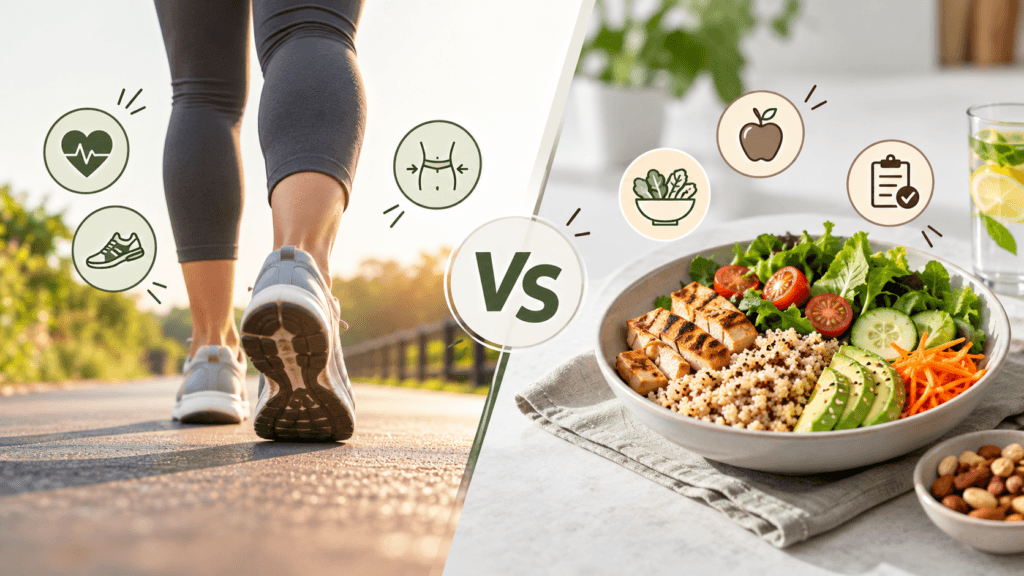
A low-carb diet reduces carbohydrate intake, while a balanced diet focuses on getting an appropriate range of nutrients from different food groups. These approaches do not have to be opposites. A balanced diet can include fewer refined grains and sugary foods while still providing carbohydrates from whole grains, vegetables, fruits and pulses.
The quality of your food choices, what replaces the carbohydrates you reduce and whether your meals meet your nutritional needs all matter. This guide compares both approaches and explains what research says about their suitability for long-term health.
What Is a Low-Carb Diet?
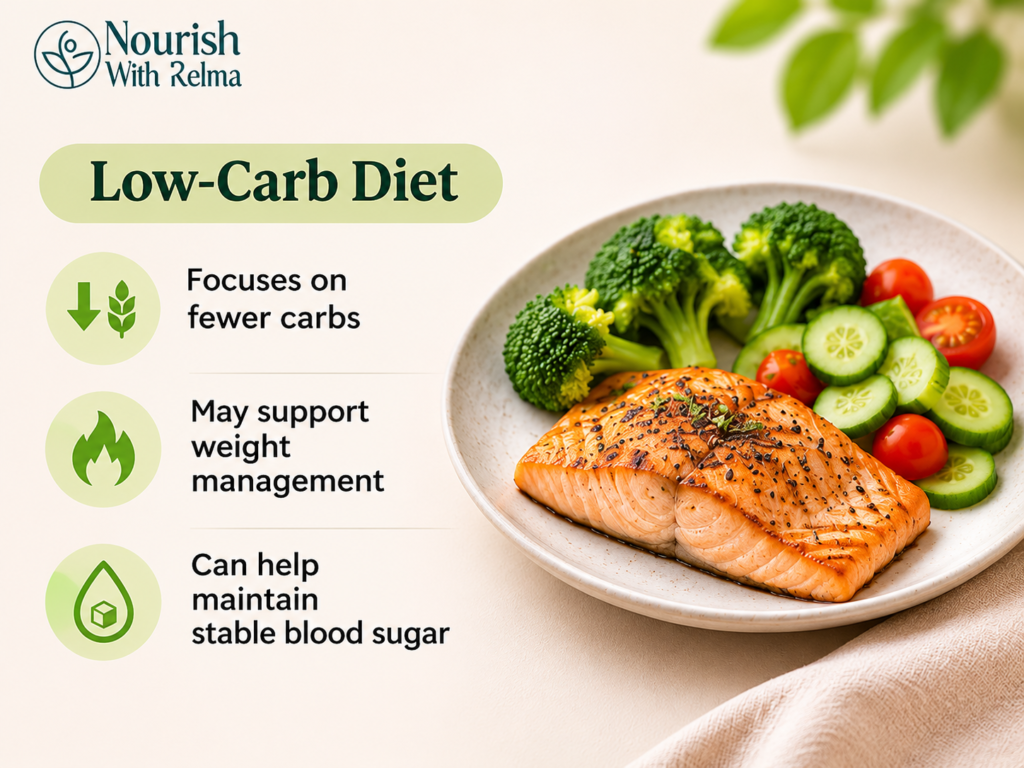
A low-carbohydrate diet is an eating pattern that reduces the amount of carbohydrate consumed compared with a person’s usual intake or a conventional dietary pattern.
Carbohydrates are found in many everyday foods, including:
- Rice, wheat, ragi and other grains.
- Bread, dosa, idli and other grain-based foods.
- Potatoes and other starchy vegetables.
- Fruits.
- Milk and some dairy products.
- Pulses, beans and lentils.
- Sugar, sweets and sweetened beverages.
Depending on the plan, a person may reduce portions of rice, chapati, bread or other carbohydrate-rich foods. Some approaches mainly cut back on refined grains, sweets and sugary drinks. More restrictive versions may also limit whole grains, fruits, starchy vegetables and pulses.
What replaces the reduced carbohydrates is important. A meal plan that includes vegetables, suitable protein sources, nuts, seeds and unsaturated fats differs considerably from one that relies heavily on processed meats, butter and foods high in saturated fat.
Is a Low-Carb Diet the Same as a Ketogenic Diet?
No. The terms are related, but they describe different eating patterns.
A low-carb diet reduces carbohydrate intake to some extent. A ketogenic diet is a much more restrictive form of carbohydrate reduction designed to produce a metabolic state called ketosis.
Not every low-carb diet produces ketosis. A person following a moderately reduced-carbohydrate eating pattern is not necessarily following a ketogenic diet.
This distinction matters when reading nutrition research because findings about ketogenic diets should not automatically be applied to every low-carb plan.
What Is a Balanced Diet?
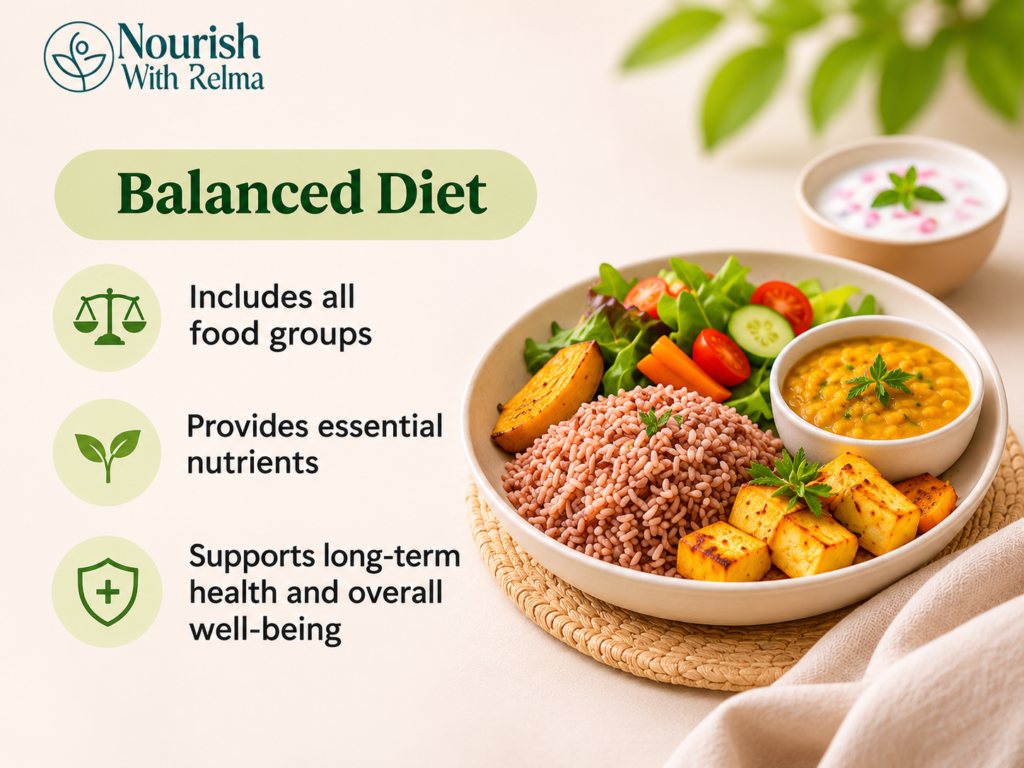
A balanced diet provides a suitable combination of carbohydrates, protein, fats, vitamins, minerals and dietary fibre. It includes a variety of foods rather than unnecessarily removing entire food groups.
A balanced Indian eating pattern may include:
- Whole grains such as rice, wheat, oats and millets.
- Pulses, lentils, beans and other legumes.
- Vegetables and fruits.
- Protein sources such as eggs, dairy, fish, chicken, soy and pulses.
- Nuts and seeds.
- Suitable amounts of healthy fats.
- Adequate water and other appropriate fluids.
A balanced diet does not mean eating unlimited quantities of every food. Portions, variety and food quality still matter.
The proportions of different foods can also change according to age, activity level, culture, personal preferences and health requirements. Someone with a specific medical condition may need to adjust their food choices while still maintaining an overall balanced eating pattern.
Low-Carb Diet vs Balanced Diet: Key Differences
Both approaches can include nutritious foods. Their main difference is how they manage carbohydrate intake and food variety.
Comparison Factor | Low-Carb Diet | Balanced Diet |
Main focus | Reduces carbohydrate intake | Provides a suitable variety of nutrients |
Carbohydrate intake | Deliberately restricted to some degree | Includes appropriate portions of carbohydrate-rich foods |
Grains | Portions or types may be restricted | Can include whole grains and millets |
Fruits | May be limited, depending on the plan | Includes suitable portions of whole fruits |
Pulses and legumes | May be restricted in stricter versions | Commonly included as sources of fibre and plant protein |
Protein | Often emphasised or increased | Included from suitable plant and animal sources |
Fats | May increase to replace some carbohydrate energy | Includes suitable amounts, with an emphasis on healthier fat sources |
Dietary fibre | May be lower if whole grains, fruits and legumes are unnecessarily restricted | Can provide fibre through vegetables, fruits, whole grains and pulses |
Meal flexibility | Depends on how restrictive the plan is | Often allows greater variety of everyday foods |
Long-term considerations | Requires attention to food quality and nutritional adequacy | Requires variety, suitable portions and consistency |
Individual suitability | May suit selected people with professional guidance | Can be adapted to a wide range of needs |
A low-carb diet is not automatically unhealthy, and a balanced diet is not automatically healthy simply because it contains different food groups. Both require suitable food choices and portions.
What Does Research Say About Low-Carb Diets and Long-Term Health?
There is no strong basis for claiming that every person will have better long-term health by choosing a low-carb diet over a balanced-carbohydrate eating pattern.
A Cochrane systematic review published in 2022 compared low-carbohydrate weight-reducing diets with balanced-carbohydrate weight-reducing diets. It included adults with overweight or obesity, both with and without type 2 diabetes.
The review found probably little to no difference in weight reduction between the two approaches over follow-up periods of up to two years. It also found probably little to no difference in several cardiovascular risk factors, including LDL cholesterol, blood pressure and HbA1c.
The researchers noted that information beyond two years was limited and that some possible adverse effects were not adequately reported. These findings therefore should not be interpreted as proof that every low-carb plan has the same long-term effects.
The World Health Organization’s 2023 carbohydrate guideline places particular emphasis on carbohydrate quality. It recommends that carbohydrates should come primarily from whole grains, vegetables, fruits and pulses. Its healthy-diet guidance also highlights adequacy, balance, moderation and diversity.
Potential Benefits and Limitations of a Low-Carb Diet
Some people find a low-carb approach useful for particular dietary goals, especially when it helps them reduce frequent consumption of refined carbohydrate foods and sugary drinks.
Possible Benefits
Depending on the foods included and the person’s circumstances, a low-carb approach may:
- Reduce intake of sweets and sugar-sweetened drinks.
- Encourage more deliberate food choices.
- Help some people manage their overall energy intake.
- Provide a structured way to monitor carbohydrate portions.
- Suit selected people with type 2 diabetes when planned with their healthcare team.
These are possible benefits, not guaranteed results. The effect depends on the degree of restriction, food quality and individual health status.
Limitations to Consider
A restrictive low-carb diet can become nutritionally unbalanced if it removes too many foods without suitable replacements.
Possible concerns include:
- Lower fibre intake if whole grains, fruits and pulses are restricted.
- Reduced variety in everyday food choices.
- Difficulty meeting some vitamin and mineral requirements.
- Constipation or other digestive discomfort in some people.
- Higher saturated fat intake if carbohydrates are replaced mainly with fatty meats, butter or high-fat processed foods.
- Difficulty maintaining the eating pattern during family meals, travel or social occasions.
Strict food rules can also create unnecessary stress around eating. If a diet makes everyday meals difficult or encourages extreme restriction, it may not be a suitable choice.
Potential Benefits and Limitations of a Balanced Diet
A balanced dietary pattern provides nutrients from a wider range of food groups. It can be adapted to different food preferences and cultural eating habits.
Possible Benefits
A balanced diet may help people:
- Include a variety of fibre-rich foods.
- Obtain carbohydrates from whole grains, fruits, vegetables and pulses.
- Include different protein sources.
- Maintain variety in everyday meals.
- Adapt food choices to family preferences.
- Build eating habits that can be followed over time.
A balanced diet can also be modified to suit particular health requirements. For example, someone may need to adjust portions or the distribution of carbohydrates across meals while keeping an overall balanced pattern.
Limitations to Consider
Eating from several food groups does not automatically guarantee a nutritious diet. Food quality and portion sizes still matter.
Common mistakes include:
- Eating portions that do not suit individual energy requirements.
- Relying heavily on refined grains.
- Consuming sugary drinks and sweets frequently.
- Eating too few vegetables and fruits.
- Neglecting suitable protein sources.
- Using excessive amounts of salt or saturated fat.
- Assuming that foods labelled healthy can be eaten in unlimited quantities.
A balanced diet is a framework for making food choices. Its quality depends on what you include and how well it meets your needs.
Which Approach Is More Suitable for Different People?
There is no single dietary pattern that is ideal for everyone. Medical history, nutritional requirements, food preferences, activity levels and the ability to maintain the routine all influence the decision.
People Who Prefer Flexible Eating
A balanced diet may be a practical starting point for people who want to continue eating familiar foods such as rice, chapati, dosa, idli, dal, fruits and vegetables.
They can work on improving meal variety, choosing suitable portions and including protein and fibre-rich foods regularly without removing entire food groups.
People Who Need to Monitor Carbohydrate Intake
Some people, including selected individuals with type 2 diabetes, may benefit from a more structured approach to carbohydrate portions.
A low-carb pattern may be one option, but it should be considered with a healthcare professional who understands the person’s medical history and treatment.
People taking insulin or certain glucose-lowering medicines may need medication review and blood glucose monitoring when making substantial changes to carbohydrate intake.
Physically Active Individuals
People who exercise regularly should consider their activity levels when deciding how much carbohydrate to include.
Carbohydrates contribute to energy availability during many forms of physical activity. A highly restrictive approach may not suit every training routine, especially when exercise is frequent or demanding.
People With Specific Health Conditions
People with diabetes, kidney disease, cardiovascular risk factors or other medical conditions should not choose a restrictive diet based only on general online advice.
Their dietary requirements, medication and other health considerations may affect which approach is suitable. Individual guidance is important before making major changes.
Practical Indian Food Examples: Can You Eat Rice on a Balanced Diet?
Yes. Rice can be part of a balanced diet. The important considerations are portion size, the overall meal composition and individual nutritional requirements.
A meal does not become unhealthy simply because it contains rice. It is useful to look at what accompanies it.
Meal | Balanced Meal Example | Lower-Carbohydrate-Style Alternative |
Breakfast | Idli with sambar and a suitable protein accompaniment | Egg- or paneer-based breakfast with vegetables |
Lunch | Rice with dal, vegetables, curd and a suitable protein source | A smaller rice portion with extra vegetables and protein |
Evening snack | Fruit with nuts or roasted chana | Nuts, curd or another suitable protein-rich snack |
Dinner | Chapati with vegetable curry and dal | Vegetable-based meal with paneer, tofu, eggs or another suitable protein source |
These examples illustrate different ways of structuring meals. They are not individual prescriptions. Suitable portions and food combinations depend on a person’s needs.
A Practical Example for a Working Adult in Mysuru
Consider someone who works in an office and usually eats idli or dosa for breakfast, rice and sambar for lunch, and chapati or rice for dinner.
They do not necessarily need to eliminate these familiar foods. They could first review their meal variety, include vegetables more regularly, add suitable protein sources and pay attention to portions.
Another person may prefer a lower-carbohydrate pattern and find it practical to reduce certain grain portions. That approach can also be considered, provided the replacement foods maintain nutritional adequacy.
The better choice is the one that fits the person’s health requirements and can be followed without unnecessary restriction.
Common Mistakes When Choosing Between Low-Carb and Balanced Diets
- Treating All Carbohydrates as Unhealthy
Carbohydrates come from many different foods. Whole grains, pulses, vegetables and fruits provide nutrients and fibre. Their nutritional contribution is different from that of sugary drinks and highly refined snacks.
Reducing refined carbohydrate foods may be useful for some people, but it does not mean every carbohydrate-rich food needs to be removed.
- Replacing Carbohydrates With Too Much Saturated Fat
Reducing carbohydrates does not automatically improve the quality of a diet. The replacement foods matter.
Regularly relying on butter, fatty processed meats and foods high in saturated fat can create other nutritional concerns. Consider suitable protein sources, nuts, seeds and unsaturated fats when planning meals.
- Removing Fruit and Pulses Without a Reason
Whole fruits and pulses provide fibre, vitamins, minerals and other useful nutrients. They should not be automatically excluded from a general healthy eating pattern.
If you have a medical reason to adjust these foods, discuss suitable alternatives with your healthcare professional.
- Following an Online Diet Without Checking Its Suitability
A diet that works for one person may not suit someone with a different medical history, medication routine or nutritional requirement.
Consider individual advice before following a restrictive plan.
- Expecting a Diet Label to Guarantee Results
The terms low-carb, balanced, keto and high-protein do not guarantee better health. The overall food choices, nutritional adequacy and ability to maintain the eating pattern matter.
When Should You Seek Professional Nutrition Guidance?
Individual nutrition guidance may be useful if you:
- Are unsure how much carbohydrate to include in your meals.
- Are managing diabetes or another condition that affects dietary requirements.
- Are considering a restrictive low-carb or ketogenic diet.
- Find it difficult to maintain a balanced eating routine.
- Want to improve food habits while managing work, family and exercise commitments.
- Are concerned about meeting your nutritional requirements.
People taking insulin or certain glucose-lowering medicines should speak with their healthcare team before significantly reducing carbohydrate intake. Medication requirements and blood glucose monitoring may need professional review. Do not stop or change prescribed medication independently.
Very-low-carbohydrate diets are not suitable for everyone. Medical history, treatment and nutritional needs should be considered before starting one.
How Can Nourish With Relma Help With a Personalised Diet Plan in Mysore?
Choosing between a low-carb diet and a balanced diet is only one part of building a suitable eating pattern. Your food preferences, health goals, daily routine, activity level and relevant medical information all influence what may be appropriate.
Nourish With Relma lists weight management and personalised nutrition plans among its areas of focus. Its website describes an online consultation process that includes appointment booking, an assessment form, a one-to-one video call and a personalised diet plan.
If you are looking for a diet plan in Mysore, you can explore Nourish With Relma to learn more about its nutrition guidance.
A personalised consultation can help you review your food habits, make practical changes and consider whether carbohydrate adjustments are appropriate for your circumstances. If you have a medical condition, dietary guidance should complement care from your treating healthcare professional.
Conclusion: Low-Carb Diet vs Balanced Diet: Which Is Better?
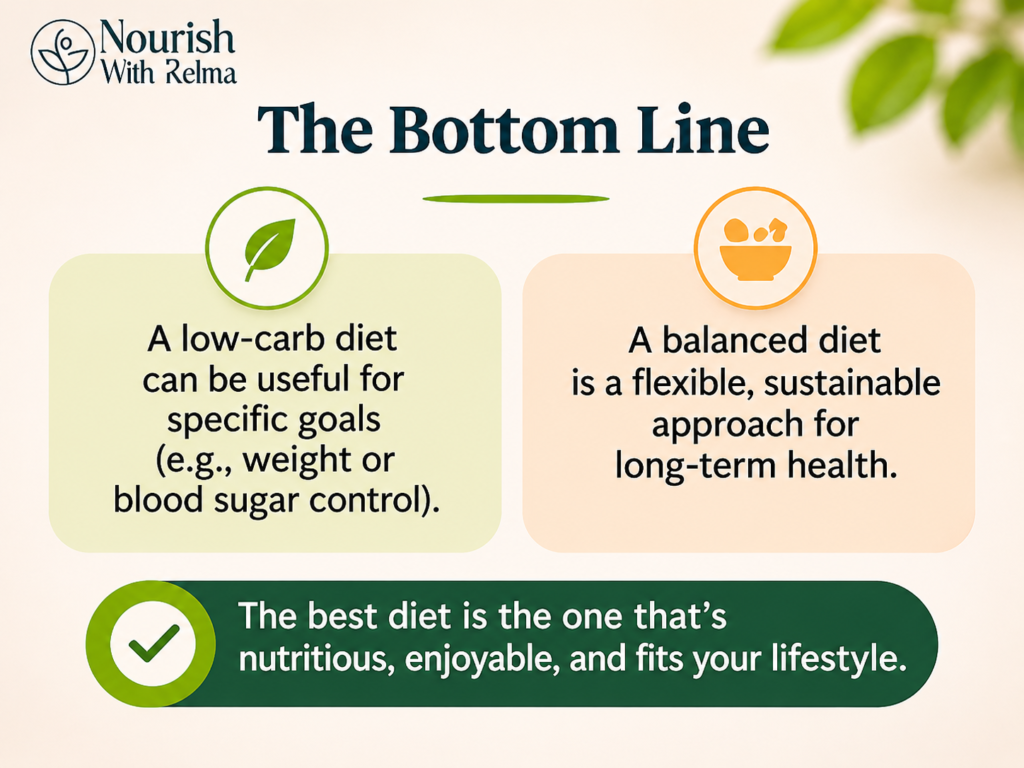
A low-carb diet and a balanced diet are not automatically competing approaches. A low-carb pattern reduces carbohydrate intake, while a balanced diet focuses on nutritional variety and adequacy.
A balanced eating pattern can also include sensible reductions in refined carbohydrates without removing nutritious sources such as whole grains, fruits, vegetables and pulses.
Research has not established that low-carbohydrate diets are consistently superior to balanced-carbohydrate diets for weight management over periods of up to two years. The quality of the foods you eat, the nutrients your meals provide and your ability to maintain the pattern are important considerations.
For many people, a balanced approach built around familiar foods is a practical starting point. Others may need or prefer a more structured carbohydrate intake with professional guidance.
If you are unsure which approach is appropriate, consider personalised nutrition guidance before making major dietary changes.
Frequently Asked Questions
1. Is a low-carb diet better than a balanced diet?
Not necessarily. A low-carb diet may suit some people, but research has not established that it is consistently better than a balanced-carbohydrate diet for weight management over periods of up to two years. Food quality, nutritional adequacy and individual health needs matter.
2. Can a balanced diet include rice and chapati?
Yes. Rice and chapati can both be part of a balanced eating pattern. Suitable portions, food variety and the inclusion of vegetables, pulses and protein sources help determine the overall quality of a meal.
3. What are the disadvantages of a low-carb diet?
A restrictive low-carb diet may reduce fibre and food variety if whole grains, fruits and pulses are unnecessarily excluded. Depending on food choices, it may also increase saturated fat intake or make the eating pattern difficult to maintain.
4. Is a low-carb diet the same as a keto diet?
No. A ketogenic diet is a very-low-carbohydrate eating pattern designed to produce ketosis. Low-carb diets vary in how much they restrict carbohydrates, and not all of them produce ketosis.
5. Can I follow a low-carb diet for a long time?
Long-term suitability depends on the diet’s composition, nutritional adequacy and your health circumstances. Strict carbohydrate restriction should be discussed with an appropriate healthcare professional, particularly if you have a medical condition or take medication.
6. Which diet is better for people with diabetes?
There is no single eating pattern that is best for everyone with diabetes. Some people may benefit from monitoring or reducing carbohydrate intake, but food choices, medication and blood glucose levels need to be considered with their diabetes healthcare team.
7. Do I need to stop eating carbohydrates to manage my weight?
No. Weight management does not require eliminating all carbohydrate-rich foods. A suitable eating pattern can include whole grains, pulses, fruits and vegetables while taking overall food intake and individual requirements into account.
8. Can a dietitian help me choose a diet plan in Mysore?
A qualified nutrition professional can review your food preferences, lifestyle, health goals and relevant medical information to help you understand which eating pattern may suit you. Nourish With Relma lists personalised nutrition and weight management among its service areas.