Intermittent fasting and calorie deficit are often discussed as two different ways to lose weight. One focuses on when you eat, while the other describes the relationship between the energy you consume and the energy your body uses.
The difference matters because intermittent fasting does not automatically create a calorie deficit. You can follow a fasting schedule and still consume enough energy to maintain your weight. You can also manage your food intake through regular meals without fasting.
So, when comparing intermittent fasting vs calorie deficit, which approach should you choose?
Research suggests that intermittent fasting is not consistently more effective than conventional calorie restriction when the overall energy reduction is similar. Your health, food preferences, daily schedule and ability to maintain the approach are important considerations.
Let’s look at how both approaches work, what research says about their results, and how to decide whether either one is suitable for your routine.
What Is Intermittent Fasting?
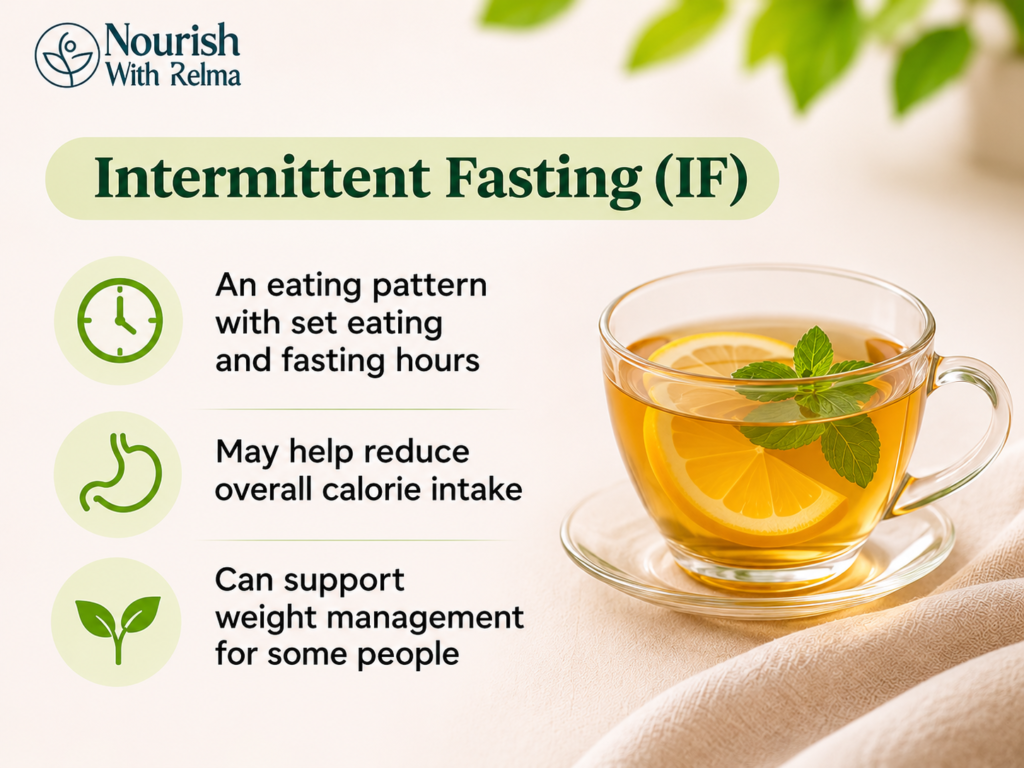
Intermittent fasting is an eating pattern that alternates between periods of eating and periods of fasting. It focuses mainly on meal timing rather than prescribing a specific list of foods.
Some commonly discussed approaches include:
- Time-restricted eating
This approach limits eating to a defined period during the day. For example, someone might eat within a 10-hour window and fast for the remaining hours.
- The 5:2 approach
A person eats normally on five days of the week and substantially reduces energy intake on the other two days.
- Alternate-day fasting
This pattern alternates between days of usual eating and days of fasting or considerably reduced food intake.
These methods are not interchangeable. They involve different levels of restriction and may affect people differently.
Some individuals find a defined eating window helpful because it reduces late-night snacking or gives their day more structure. However, a shorter eating window does not guarantee weight loss. If total food intake remains higher than the body’s energy requirements, a calorie deficit may not occur.
Food quality also matters. Meals still need to provide sufficient protein, fibre, vitamins, minerals and other essential nutrients.
What Is a Calorie Deficit?
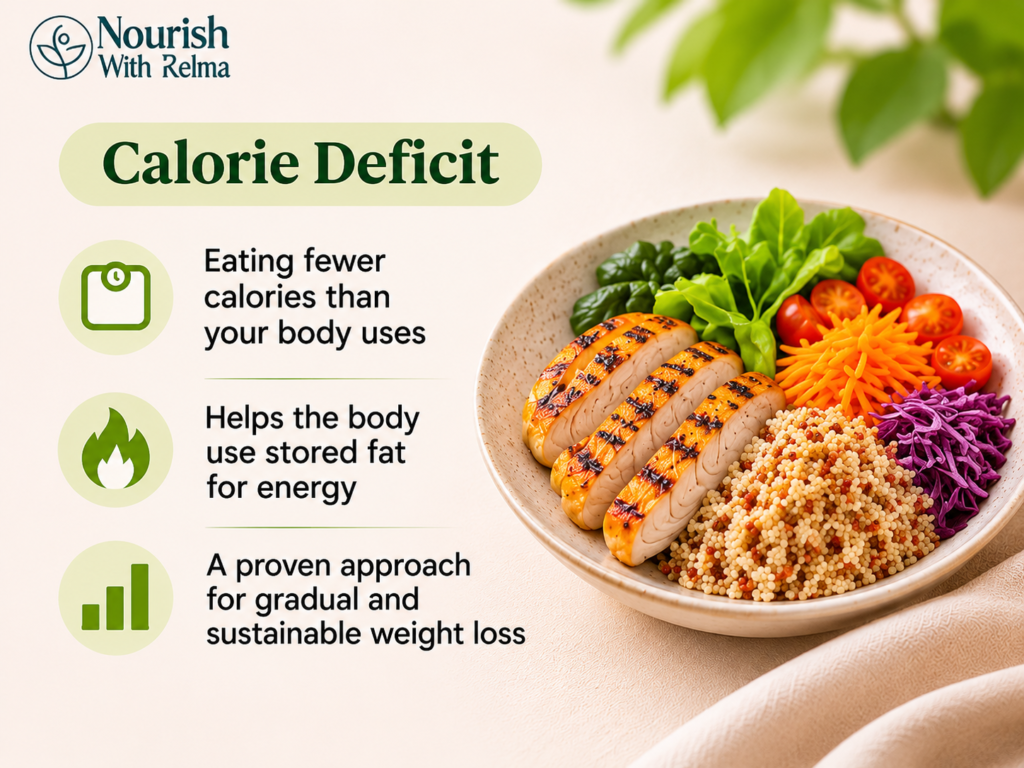
A calorie deficit occurs when the energy a person consumes through food and drinks is lower than the energy their body uses over time.
Your body uses energy for basic functions such as breathing, circulation and temperature regulation. It also uses energy for movement, exercise and digestion.
When energy intake remains below energy expenditure, the body draws on stored energy. This is the basic energy-balance principle behind weight loss.
Creating a calorie deficit does not necessarily mean counting every calorie or skipping meals. Some practical ways to manage overall food intake include:
- Reviewing portion sizes without making meals unnecessarily small.
- Including vegetables, pulses and other fibre-rich foods regularly.
- Adding suitable protein sources to meals.
- Being mindful of frequent high-energy snacks and sugary drinks.
- Adjusting portions according to activity levels and individual needs.
- Building regular physical activity into your week.
The aim is not to eat as little as possible. A suitable plan should provide adequate nourishment while supporting a realistic change in energy intake.
Intermittent Fasting vs Calorie Deficit: Key Differences
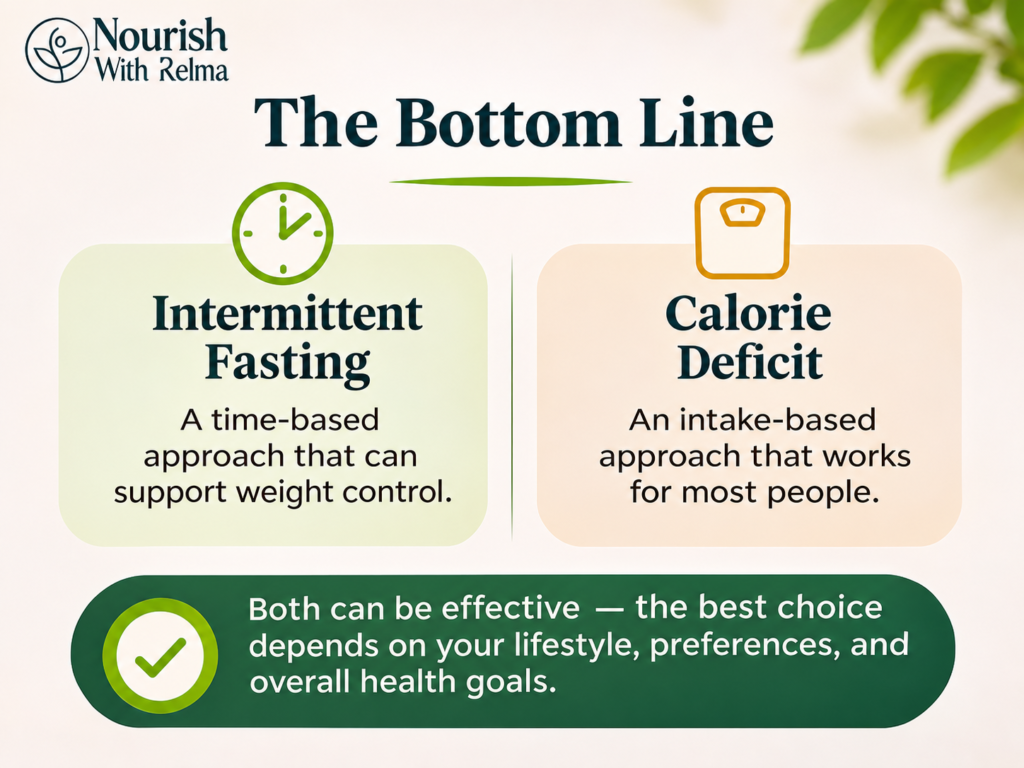
These two approaches are often compared as if they are competing methods. In reality, they describe different things. Intermittent fasting is an eating schedule, whereas a calorie deficit is an energy-balance condition.
Comparison Factor | Intermittent Fasting | Calorie Deficit |
Main idea | Sets periods for eating and fasting | Creates an energy intake below energy use |
Primary focus | Meal timing | Overall energy balance |
Meal schedule | Follows a defined eating window or fasting days | Can include regular meals and snacks |
Food choices | Does not automatically specify food quality | Can be achieved through different food patterns |
Calorie tracking | Not always required | May or may not involve tracking |
Meal flexibility | Can restrict when meals are eaten | Can be adapted to different meal schedules |
Possible challenge | Hunger, social schedules or difficulty meeting nutritional needs | Portion awareness, tracking fatigue or excessive restriction |
Suitability | Depends on health, medication, routine and preference | Depends on individual needs and nutritional adequacy |
Relationship to weight management | May help some people reduce overall food intake | Describes the energy balance associated with weight loss |
The key distinction is simple:
- You can follow a calorie deficit without intermittent fasting.
- You can follow intermittent fasting without creating a calorie deficit.
- You can combine both approaches, but fasting is not compulsory for weight management.
Does Intermittent Fasting Produce Better Weight-Loss Results?
Intermittent fasting has received considerable attention as a weight-management strategy. However, research does not establish it as a universally superior approach.
Several reviews help explain the current evidence.
What Did the 2025 BMJ Review Find?
A systematic review and network meta-analysis published in The BMJ in 2025 examined 99 randomised clinical trials involving 6,582 adults.
The researchers compared different intermittent fasting approaches with continuous energy restriction and unrestricted eating patterns.
The findings showed that both intermittent fasting and continuous energy restriction could reduce body weight compared with unrestricted eating. Alternate-day fasting showed a small advantage over continuous energy restriction in some comparisons, with an average difference of approximately 1.29 kg.
However, this finding does not mean that every person will lose more weight through alternate-day fasting. The review also highlighted limitations in longer-term evidence.
What Did the 2026 Nutrition Reviews Analysis Find?
A systematic review and network meta-analysis published in Nutrition Reviews in 2026 included 167 trials involving 11,998 participants.
The analysis found that most intermittent fasting approaches produced weight-loss results comparable to continuous energy restriction when the amount of energy reduction was similar.
The findings also suggested that the extent of energy restriction played an important role in weight change.
This should not be interpreted as a reason to follow severe restriction. Very restrictive eating patterns can create nutritional and health concerns and need appropriate clinical supervision.
What Did the 2026 Cochrane Review Find?
A Cochrane review published in February 2026 examined 22 studies involving 1,995 adults living with overweight or obesity.
Compared with traditional dietary advice, intermittent fasting appeared to make little to no difference to weight loss. The researchers also noted that the evidence had limitations, including short follow-up periods and uncertainty around some outcomes.
What Does This Mean for You?
Taken together, these reviews do not support the idea that intermittent fasting is automatically better than a conventional calorie-deficit approach.
Some people may prefer a defined eating window. Others may find regular meals and portion-based guidance easier to follow.
The more useful question is whether your chosen routine supports adequate nutrition and fits your health needs and everyday life.
Potential Benefits and Limitations of Intermittent Fasting
Intermittent fasting may suit some adults because it provides a clear structure around meal timing. However, the experience is not the same for everyone.
Possible Benefits
Depending on the individual and the fasting pattern, it may:
- Reduce late-night snacking.
- Make meal planning feel more structured.
- Reduce the number of food decisions during the day.
- Help some people reduce their overall energy intake.
These are possible practical advantages, not guaranteed health or weight-loss outcomes.
Limitations to Consider
A restricted eating window can make it difficult for some people to eat enough or distribute meals comfortably throughout the day.
Other challenges include:
- Hunger, headaches, fatigue or irritability, particularly while adapting.
- Difficulty managing family meals, work shifts or social occasions.
- Overeating during the eating window.
- Difficulty meeting protein, fibre and micronutrient requirements.
- Increased food-related anxiety or restrictive eating behaviours in people who are vulnerable to disordered eating.
A fasting schedule should not become a test of willpower. If it causes persistent discomfort, affects your daily functioning or encourages unhealthy eating behaviours, it may not be appropriate.
Potential Benefits and Limitations of a Calorie Deficit
A calorie deficit can be adapted to different food preferences, meal schedules and lifestyles. It does not require you to avoid eating at particular times.
Possible Benefits
A balanced approach may allow you to:
- Continue eating breakfast, lunch and dinner.
- Include familiar foods and family meals.
- Adjust portions instead of removing entire food groups.
- Plan meals around work, exercise and household routines.
- Make gradual changes that are easier to maintain.
Calorie management also does not always require detailed tracking. Some people prefer portion-based guidance and regular meal planning.
Limitations to Consider
A calorie deficit can become unsuitable when it is too restrictive or poorly planned.
Common difficulties include:
- Eating too little to meet nutritional requirements.
- Feeling excessively hungry or tired.
- Removing foods or food groups unnecessarily.
- Becoming overly focused on calorie numbers.
- Finding the plan difficult to maintain during busy periods.
Very-low-energy diets should not be used as a do-it-yourself weight-loss method. NICE guidance recommends that these approaches be considered only in specific circumstances as part of a specialist weight-management programme, with nutritional completeness and professional supervision.
Can You Combine Intermittent Fasting With a Calorie Deficit?
Yes. Some people combine a time-restricted eating pattern with an energy deficit.
For example, someone may choose a consistent daytime eating window and also make appropriate changes to food portions.
However, combining both approaches does not automatically make weight loss faster or more effective. A shorter eating window can make it harder to meet nutritional needs if meals are rushed, skipped or poorly balanced.
If you are considering this approach, the meals within your eating window should still provide a variety of nutrients.
A practical meal pattern may include:
- Protein: Dal, curd, paneer, eggs, fish or chicken, depending on your preferences.
- Vegetables and fruits: Sources of fibre, vitamins and minerals.
- Carbohydrates: Rice, chapati, millets or other suitable grain-based foods.
- Dietary fats: Nuts, seeds and appropriate quantities of cooking oils.
- Fluids: Water and other suitable drinks throughout the day.
The goal is to maintain nutritional adequacy, not to fit as little food as possible into a short period.
Practical Indian Food Examples for Weight Management
A weight-management plan should work with familiar foods and everyday routines. You do not need special diet products or complicated recipes to make thoughtful food choices.
Meal | Practical Food Options |
Breakfast | Idli with sambar, vegetable dosa, oats with curd, or eggs with whole-grain toast |
Lunch | Rice or chapati with dal, vegetables, curd and a suitable protein source |
Evening snack | Fruit with nuts, roasted chana, buttermilk or unsweetened curd |
Dinner | Chapati with vegetable curry and dal, or rice with sambar and vegetables |
Drinks | Water, unsweetened beverages and other suitable fluids |
These are general examples, not a prescribed meal plan. Portion sizes and food choices should reflect your appetite, activity level, health conditions and nutritional requirements.
Example: A Working Adult With a Busy Schedule
Consider someone in Mysore who works regular office hours and prefers having breakfast with family.
They may find it practical to continue eating three regular meals, plan a suitable evening snack and make balanced portion choices.
Another person may naturally prefer a later breakfast and an earlier dinner. A consistent eating window might suit that routine, provided they can meet their nutritional needs and have no medical reason to avoid fasting.
Neither pattern is automatically better. What matters is whether the person can follow it comfortably while maintaining a balanced diet.
Who Should Be Careful With Intermittent Fasting?
Intermittent fasting is not suitable for everyone. Certain groups need medical or specialist guidance before considering a fasting routine.
These include:
Pregnant or breastfeeding individuals: Nutritional requirements change during pregnancy and breastfeeding. Restrictive fasting should not be started without appropriate medical advice.
Children and teenagers: Growing bodies need adequate and regular nutrition. Intermittent fasting is not an appropriate general weight-loss strategy for this age group.
People with a current or previous eating disorder: Fasting may encourage restrictive eating patterns or worsen an unhealthy relationship with food.
People living with diabetes: Fasting can affect blood glucose levels, particularly for individuals using insulin or medicines that can cause low blood sugar. Speak with your healthcare team before changing meal timing. Do not change prescribed medication to follow a fasting schedule.
Older adults: Individual assessment is important, particularly when there is a risk of inadequate food intake or loss of muscle mass.
People with chronic health conditions or complex medication routines: Discuss restrictive eating patterns with your healthcare professional before making changes.
A calorie deficit also needs careful planning. People with increased nutritional requirements or specific medical needs may need a different approach rather than a general weight-loss plan.
Which Approach Should You Consider?
There is no single answer that works for everyone. Before choosing between intermittent fasting and a conventional calorie-deficit approach, consider the following questions.
- Does the Schedule Fit Your Day?
If you need regular meals because of work, exercise, family commitments or medication timing, a conventional meal pattern may be more practical.
If you naturally prefer a consistent eating window, time-restricted eating may be an option worth discussing with a qualified professional, provided it is suitable for your health.
- Can You Meet Your Nutritional Needs?
Whichever approach you consider, it should allow enough food variety, protein, fibre, vitamins, minerals and fluids.
A routine that regularly leaves you undernourished is not a suitable long-term solution.
- Does It Affect Your Relationship With Food?
A plan that creates anxiety, excessive restriction or repeated cycles of overeating and fasting may not be appropriate.
Your eating pattern should support your health without making every meal stressful.
- Can You Maintain It?
A routine that works for only a few days may be less useful than balanced habits you can continue.
Consider your working hours, family meals, social commitments and food preferences before making a decision.
- Do You Have a Health Condition or Take Medication?
If you have diabetes, another chronic condition or take medication that affects meal timing or blood glucose, discuss dietary changes with your healthcare team.
For many people, a balanced eating pattern with sensible portions, regular activity and practical meal planning can support weight management without requiring intermittent fasting.
How Can a Dietitian Help With Weight Management in Mysore?
Choosing a weight-management approach involves more than deciding when to eat. Your food preferences, daily routine, activity level, medical history and nutritional requirements all influence what may be suitable.
A personalised nutrition consultation can help you:
- Review your current eating habits.
- Identify practical areas for improvement.
- Understand portion sizes and meal balance.
- Plan meals around your work and family routine.
- Avoid unnecessary food restrictions.
- Recognise when medical input is needed.
Nourish With Relma lists weight management and personalised nutrition plans among its areas of focus. Its website describes an online consultation process involving appointment booking, an assessment form, a one-to-one video call and a personalised diet plan.
If you are looking for a weight loss diet in Mysore, you can explore the nutrition guidance available through Nourish With Relma.
The aim should be to identify an approach that supports your health and everyday routine, rather than follow a restrictive trend simply because it is popular.
Final Thoughts
Intermittent fasting and a calorie deficit are not two completely separate weight-loss methods. Intermittent fasting is a way of organising meal times, while a calorie deficit describes an energy balance.
Fasting may help some people manage their food intake, but current research does not show that it is consistently better than conventional dietary advice or continuous calorie restriction.
You do not have to skip breakfast, follow a strict fasting window or count every calorie to make thoughtful changes to your eating habits.
A suitable approach should provide enough nourishment, fit your health needs and be realistic to maintain. If you are unsure where to begin, consider personalised guidance from an appropriately qualified nutrition professional and medical advice when required.
Frequently Asked Questions
1. Is intermittent fasting better than a calorie deficit for weight loss?
Not necessarily. Intermittent fasting is an eating schedule, while a calorie deficit is an energy-balance condition. Research generally finds that intermittent fasting and continuous calorie restriction can produce similar weight-management outcomes when the overall energy reduction is comparable.
2. Can you lose weight with a calorie deficit without intermittent fasting?
Yes. Intermittent fasting is not essential for weight loss. A person can continue eating regular meals and still create an appropriate calorie deficit through balanced portions and practical changes to food choices.
3. Does intermittent fasting automatically create a calorie deficit?
No. A fasting window does not guarantee lower overall energy intake. If someone consumes enough food during the eating period to match or exceed their energy requirements, a calorie deficit may not occur.
4. Can you combine intermittent fasting and a calorie deficit?
Yes. Some people combine a defined eating window with appropriate portion adjustments. However, combining them does not guarantee better results and may make it harder to meet nutritional needs if meals become too restrictive.
5. Which approach is easier to maintain long term?
It depends on the individual. Some people prefer a structured eating window, while others find regular meals and portion-based guidance easier. A suitable approach should support adequate nutrition and fit the person’s routine.
6. Is intermittent fasting safe for everyone?
No. It may be unsuitable for pregnant or breastfeeding individuals, children and teenagers, people with a history of eating disorders, and some older adults. People with diabetes or those taking medicines that affect blood glucose should consult their healthcare team before fasting.
7. Do I need to count calories to follow a calorie deficit?
No. Calorie counting is one way to estimate energy intake, but it is not essential for everyone. Portion guidance, balanced meals and changes to everyday eating habits may also help manage overall intake.
8. Can a dietitian help me choose a weight-loss approach in Mysore?
A qualified nutrition professional can review your eating habits, food preferences, lifestyle and relevant health information to help identify a suitable approach. Nourish With Relma lists personalised nutrition and weight management among its service areas.