Experiencing bloating after drinking milk, stomach discomfort after a meal or an unexpected skin reaction after eating can make it difficult to identify what is happening. You may suspect a food intolerance or a food allergy, but the two conditions are not the same.
The main difference is the way the body responds to a particular food. A food allergy involves the immune system reacting to a food, while a food intolerance usually occurs when the body has difficulty digesting or processing a food or one of its components.
This distinction matters when deciding what to eat, which foods may need to be avoided and what kind of professional help is appropriate. Removing several foods without understanding the cause can also make it harder to maintain a balanced diet.
This guide explains food intolerance vs food allergy, their symptoms, how they are assessed and how nutrition guidance can help you manage food restrictions safely.
What Is a Food Intolerance?
Food intolerance occurs when the body has difficulty digesting or processing a particular food or ingredient. Unlike a typical food allergy, it does not usually involve the same immune-system response.
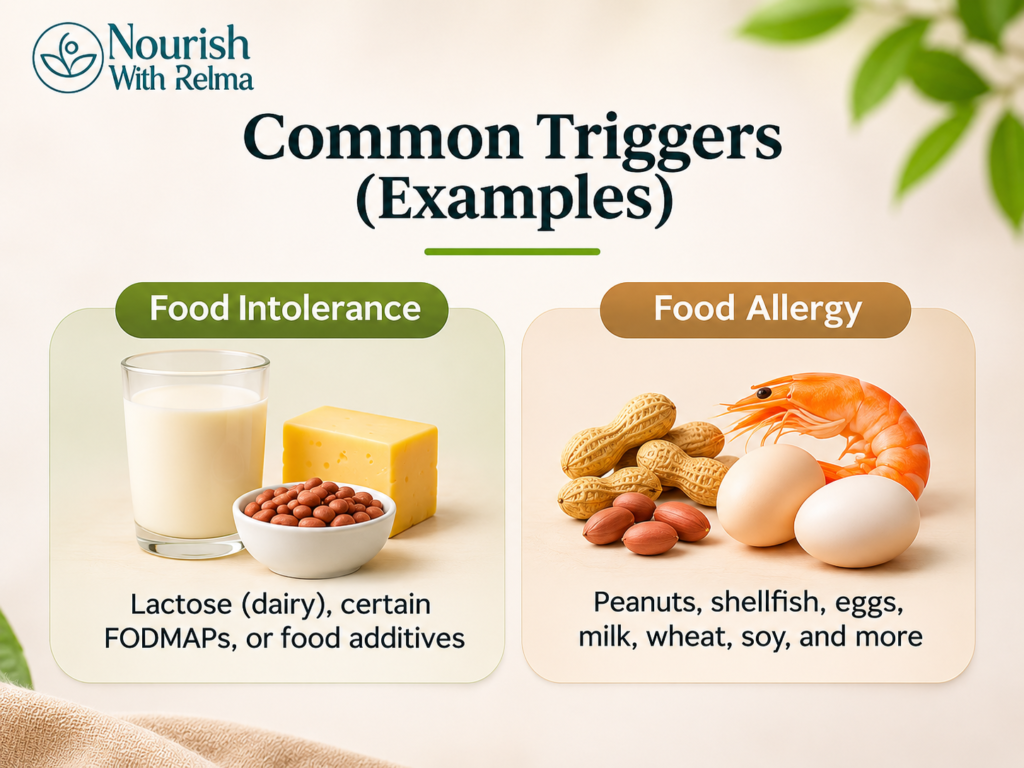
Lactose intolerance is a common example. Lactose is the natural sugar found in milk and dairy products. The small intestine produces an enzyme called lactase, which breaks down lactose. When the body does not produce enough lactase, some lactose remains undigested and can lead to digestive discomfort.
Common food intolerance symptoms
Symptoms vary depending on the food involved and the individual. They may include:
- Bloating or a feeling of fullness
- Excessive gas
- Abdominal cramps
- Stomach rumbling
- Nausea
- Diarrhoea
Symptoms often involve the digestive system and may develop several hours after eating. However, timing can vary.
The amount consumed may also influence symptoms. For example, someone with lactose intolerance might experience discomfort after drinking a large glass of milk but tolerate a smaller serving or certain lower-lactose dairy products.
Digestive symptoms do not automatically mean that a person has a food intolerance. Conditions such as irritable bowel syndrome, coeliac disease, infections and other gastrointestinal problems can produce similar symptoms. Persistent or unexplained symptoms should be discussed with a healthcare professional.
What Is a Food Allergy?
A food allergy occurs when the immune system mistakenly identifies a food as harmful and reacts to it. The reaction may affect the skin, digestive system, respiratory system or other parts of the body.
Some food allergies involve immunoglobulin E (IgE) antibodies. Others involve different immune pathways. This is one reason why allergic reactions do not always follow the same pattern or appear immediately.
Common food allergens
Foods that can trigger allergic reactions include:
- Milk
- Eggs
- Peanuts
- Tree nuts such as almonds, cashews and walnuts
- Fish
- Shellfish
- Soy
- Wheat
- Sesame
A person can develop an allergy to a food even if they have eaten it previously without problems.
Food allergy symptoms
Possible symptoms include:
- Itchy skin or hives
- Swelling of the lips, face, tongue or throat
- Nausea or vomiting
- Abdominal pain or diarrhoea
- Coughing or wheezing
- Difficulty breathing
- Dizziness or fainting
Some food allergies cause symptoms quickly, while certain non-IgE-mediated reactions can take longer to appear.
A severe allergic reaction is called anaphylaxis. It can become life-threatening and requires immediate emergency medical attention. Breathing difficulty, sudden swelling of the tongue or throat, faintness or collapse after eating should never be treated as ordinary digestive discomfort. Seek emergency help immediately.
Food Intolerance vs Food Allergy: Key Differences
Both conditions can cause symptoms after eating, but their underlying causes and management are different.
Comparison factor | Food intolerance | Food allergy |
Main cause | Difficulty digesting or processing a food component | Immune-system reaction to a food |
Common example | Lactose intolerance | Peanut or milk allergy |
Typical symptoms | Bloating, gas, cramps and diarrhoea | Hives, swelling, vomiting, wheezing or other allergic symptoms |
Timing | Often develops over hours, but varies | May occur quickly or be delayed, depending on the type |
Amount consumed | The quantity may influence symptoms | A small amount can sometimes trigger a reaction |
Potential severity | Can cause significant discomfort and affect food intake | Can range from mild to life-threatening |
Assessment | Depends on the suspected intolerance and may involve specific tests or dietary assessment | Medical history and appropriate allergy investigations |
Management | May involve adjusting the amount or type of food | Requires avoidance of the confirmed allergen and an appropriate allergy-management plan |
These are general differences, not a way to diagnose yourself. Symptoms can overlap, and the timing of a reaction alone cannot confirm whether it is an allergy or intolerance.
What Is the Difference Between Milk Allergy and Lactose Intolerance?
Milk allergy and lactose intolerance are often confused because both can cause symptoms after consuming milk. However, they involve different substances and processes.
Lactose intolerance
Lactose intolerance involves difficulty digesting lactose, the natural sugar in milk.
A person may experience:
- Bloating after drinking milk
- Gas or abdominal rumbling
- Stomach cramps
- Diarrhoea
The amount of lactose a person can tolerate varies. Some people can consume small portions or certain dairy products without significant symptoms, while others need more substantial dietary adjustments.
Milk allergy
Milk allergy involves an immune-system reaction to proteins in milk.
Symptoms may include hives, swelling, vomiting, breathing difficulties or a severe allergic reaction. The management approach is different from that of lactose intolerance.
One important point is that lactose-free milk is not automatically safe for someone with a milk allergy. It may still contain milk proteins, which can trigger an allergic reaction.
This distinction matters when choosing packaged foods, dairy alternatives and everyday meals. A suspected milk allergy should be assessed by an appropriate medical professional.
How Are Food Intolerance and Food Allergy Diagnosed?
The assessment depends on the symptoms, suspected food and medical history. There is no single test that can identify every type of food-related reaction.
Assessing a suspected food intolerance
A healthcare professional may ask about:
- Which foods appear to trigger symptoms
- How much of the food was consumed
- How long symptoms take to develop
- How frequently the symptoms occur
- Existing digestive conditions and medical history
For suspected lactose intolerance, a hydrogen breath test may be recommended. It measures hydrogen in the breath after a person consumes a lactose-containing drink.
A healthcare professional may also suggest a structured dietary assessment. Any elimination and reintroduction process should be planned carefully, particularly when several foods or important food groups are involved.
Assessing a suspected food allergy
A suspected food allergy should be evaluated by a doctor or an appropriate allergy specialist.
Depending on the clinical history, investigations may include:
- Skin-prick testing: A small amount of a suspected allergen is introduced into the skin to check for a reaction.
- Specific IgE blood testing: A blood sample is tested for antibodies associated with particular allergens.
- Medically supervised oral food challenge: When appropriate, a specialist may assess the response to a food under controlled medical supervision.
Test results must be considered alongside the person’s symptoms and medical history. A positive allergy test does not automatically mean that eating the food will cause a clinical allergic reaction.
Do not try a suspected allergen at home to see what happens. A food challenge, when needed, should take place under appropriate medical supervision.
Are commercial food sensitivity tests reliable?
Some commercial panels claim to identify multiple food intolerances or sensitivities through a single test. These results should not be treated as a confirmed diagnosis.
Food-specific IgG panels, for example, are not a reliable way to diagnose food allergies or decide which foods should be removed from the diet. Following unvalidated results can lead to unnecessary restrictions and nutritional gaps.
Discuss suitable tests with a qualified healthcare professional rather than relying on an online test result.
How Can Nutrition Help Manage Food Intolerance?
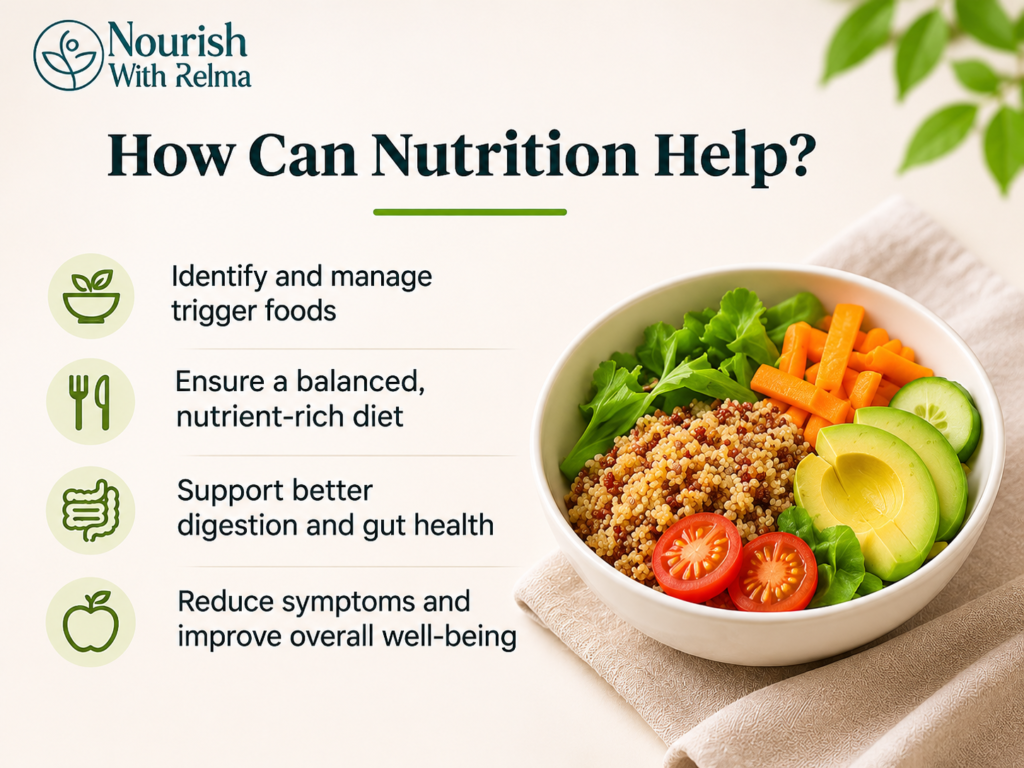
Nutrition guidance can help people with a confirmed or suspected food intolerance make suitable dietary adjustments without unnecessarily reducing food variety.
The right approach depends on the suspected food, symptoms, nutritional needs and individual tolerance.
- Record food and symptom patterns
Keep a record of meals, ingredients, portion sizes and symptoms. Include the time you ate and when the discomfort began.
This information may help a healthcare professional identify patterns. A food diary is a useful record, but it cannot independently confirm an allergy or intolerance.
- Make targeted dietary changes
Avoid removing several food groups at the same time without a clear reason.
For lactose intolerance, adjustments may include reducing lactose-containing foods, choosing suitable alternatives or changing portion sizes. Complete dairy avoidance is not necessary for everyone with lactose intolerance.
- Pay attention to essential nutrients
Removing a major food group can affect nutrient intake.
For example, if dairy products need to be limited, calcium and vitamin D intake should be considered. Depending on the individual’s requirements, suitable alternatives may include fortified plant-based drinks and other calcium-containing foods.
Check nutrition labels because the protein, calcium and vitamin content of alternatives can differ between products.
- Avoid unnecessary food restrictions
A diet that excludes many foods can become difficult to follow and may lack variety. Dietary changes should focus on identified triggers rather than removing foods simply because they are sometimes associated with digestive discomfort.
- Review dietary changes over time
Food tolerance can vary. Some digestive symptoms may also be linked to an underlying condition that needs medical assessment.
Follow-up with an appropriate healthcare professional can help determine whether dietary changes are still necessary and whether the diet remains nutritionally adequate.
How Is Nutrition Managed When Someone Has a Food Allergy?
Food allergy management is different from managing an intolerance. Once an allergy has been diagnosed, avoiding the confirmed allergen is an important part of reducing the risk of a reaction.
Nutrition guidance can help make food avoidance practical while maintaining dietary quality.
Read food labels carefully
Check the ingredient list for the confirmed allergen and ingredients that may contain it. Do not rely only on the front of the packaging.
Product ingredients can change, so check labels each time you purchase packaged food.
Plan suitable alternatives
When a food group or protein source must be avoided, suitable alternatives can help maintain nutrient intake.
For example, someone avoiding milk proteins may need other sources of calcium and protein. The right alternatives depend on the person’s overall diet, nutritional needs and medical advice.
Take cross-contact seriously
Cross-contact can occur when food comes into contact with an allergen during preparation, storage or serving.
People with diagnosed food allergies should follow their clinician’s advice on preventing cross-contact. When eating at restaurants, clearly communicate the allergy and ask about ingredients and food preparation.
Follow the medical allergy action plan
A dietitian can help with meal planning, but cannot replace allergy diagnosis or emergency treatment. People with food allergies should follow their medical action plan and use prescribed emergency medication as instructed.
Practical Indian Food Choices: What Should You Consider?
Food restrictions can be challenging when everyday meals contain several ingredients. Instead of avoiding familiar foods without a clear reason, identify the confirmed trigger and discuss suitable alternatives with a healthcare professional.
Everyday meal | Nutrition consideration |
Idli and sambar | Check ingredients if a specific pulse, spice or other ingredient is suspected to cause symptoms. |
Milk-based oats | For lactose intolerance, a suitable lactose-free or fortified alternative may be considered. For milk allergy, choose an option free from milk proteins. |
Rice, dal, vegetables and curd | If dairy is a confirmed trigger, consider an appropriate alternative while maintaining calcium and protein intake. |
Fruit and nuts | Someone with a diagnosed nut allergy must avoid the specific allergen and follow medical advice about cross-contact. |
Chapati, vegetables and paneer | Paneer contains milk proteins and may not be suitable for someone with a milk allergy. |
These examples are general food-planning considerations, not a personalised diet prescription. The appropriate choices depend on the confirmed trigger, nutritional requirements, food preferences and medical advice.

Common Mistakes to Avoid
Assuming every digestive symptom is a food intolerance
Bloating, cramps and stomach discomfort can have several causes. Repeated symptoms should be assessed rather than automatically blamed on one ingredient.
Treating food allergy and intolerance as the same condition
A food allergy can sometimes cause anaphylaxis. Managing a suspected allergy as though it were a mild digestive intolerance can be dangerous.
Removing several food groups without guidance
Eliminating dairy, wheat, pulses, nuts and other foods without a clear reason can make it harder to meet nutritional requirements.
Trusting every online food sensitivity test
Not all commercial food sensitivity tests are scientifically validated. Discuss suitable testing with a healthcare professional before making major dietary changes.
Reintroducing a suspected allergen at home
Never attempt a home food challenge when an allergy is suspected or diagnosed. Follow the advice of an appropriate medical specialist.
When Should You Consult a Dietitian in Mysore?
A dietitian may help when you need practical nutrition support alongside appropriate medical assessment.
Consider seeking nutrition guidance if:
- You have a confirmed food intolerance and need help planning meals.
- You are finding it difficult to choose alternatives after restricting a food group.
- Your diet has become limited or difficult to follow.
- You need help maintaining adequate protein, calcium, vitamin D or other nutrients.
- You want to organise food and symptom records before a medical appointment.
- You need help adapting everyday Indian meals to your dietary requirements.
If you suspect a food allergy, consult a doctor or allergist for diagnosis and medical management first. A dietitian can then help plan meals around the confirmed allergy.
How Nourish With Relma Can Support Personalised Nutrition
Food restrictions should not mean that every meal becomes complicated. A suitable nutrition plan considers the foods you can comfortably eat, your health requirements, lifestyle, preferences and nutritional needs.
Nourish With Relma lists digestive health, allergies and sensitivities among its areas of focus. Its website describes personalised nutrition plans and an online consultation process.
The online process includes booking an appointment, completing an assessment form, attending a one-to-one video call and receiving a personalised diet plan.
For someone looking for a dietitian for food intolerance in Mysore, nutrition guidance may help with meal planning, suitable food alternatives and maintaining dietary balance.
However, suspected food allergies require medical assessment. A nutrition consultation does not replace allergy testing, diagnosis or emergency treatment.
You can explore the available nutrition services at Nourish With Relma.
Frequently Asked Questions
1. What is the main difference between food intolerance and food allergy?
Food intolerance generally occurs when the body has difficulty digesting or processing a food component. A food allergy involves an immune-system reaction to a food and can sometimes cause a severe reaction.
2. Can food intolerance cause bloating and stomach pain?
Yes. Food intolerance may cause bloating, gas, abdominal cramps, nausea or diarrhoea. Similar symptoms can occur with other digestive conditions, so persistent discomfort should be assessed by a healthcare professional.
3. Is lactose intolerance the same as a milk allergy?
No. Lactose intolerance involves difficulty digesting lactose, the natural sugar in milk. A milk allergy is an immune reaction to milk proteins. Lactose-free milk may still contain milk proteins and is not automatically safe for someone with a milk allergy.
4. Can food allergies cause digestive symptoms?
Yes. Food allergies can cause nausea, vomiting, abdominal pain and diarrhoea. They may also cause skin, respiratory or other symptoms. Breathing difficulty or swelling of the throat or tongue after eating requires emergency medical attention.
5. How can food intolerance be diagnosed?
Assessment depends on the suspected food and symptoms. A healthcare professional may review eating habits, recommend a structured dietary assessment or arrange a specific test. A hydrogen breath test may be used when lactose intolerance is suspected.
6. Are online food intolerance tests reliable?
Not all commercial food sensitivity tests are scientifically validated. Food-specific IgG panels should not be used to diagnose food allergies or decide which foods must be eliminated. Discuss appropriate testing with a qualified healthcare professional.
7. Should I stop eating foods that cause discomfort?
Avoid making major or long-term dietary restrictions without understanding the cause. If you suspect an allergy, seek medical assessment and do not try the food again at home to test your reaction. For a suspected intolerance, professional guidance can help identify suitable dietary changes.
8. Can a dietitian help with food intolerance in Mysore?
Yes. A dietitian can help plan balanced meals, identify suitable food alternatives and reduce the risk of nutritional gaps when foods need to be limited. Suspected food allergies should first be assessed by an appropriate medical professional.