A sudden drop on the weighing scale can feel encouraging, especially when you have been trying to lose weight for some time. This is one reason crash diets, detox plans and highly restrictive eating routines attract attention. They often promise visible results within days or weeks.
But a quick change in body weight does not necessarily mean an equivalent amount of body fat has been lost. It also does not tell you whether the diet provides enough nutrients or whether you can maintain the eating pattern.
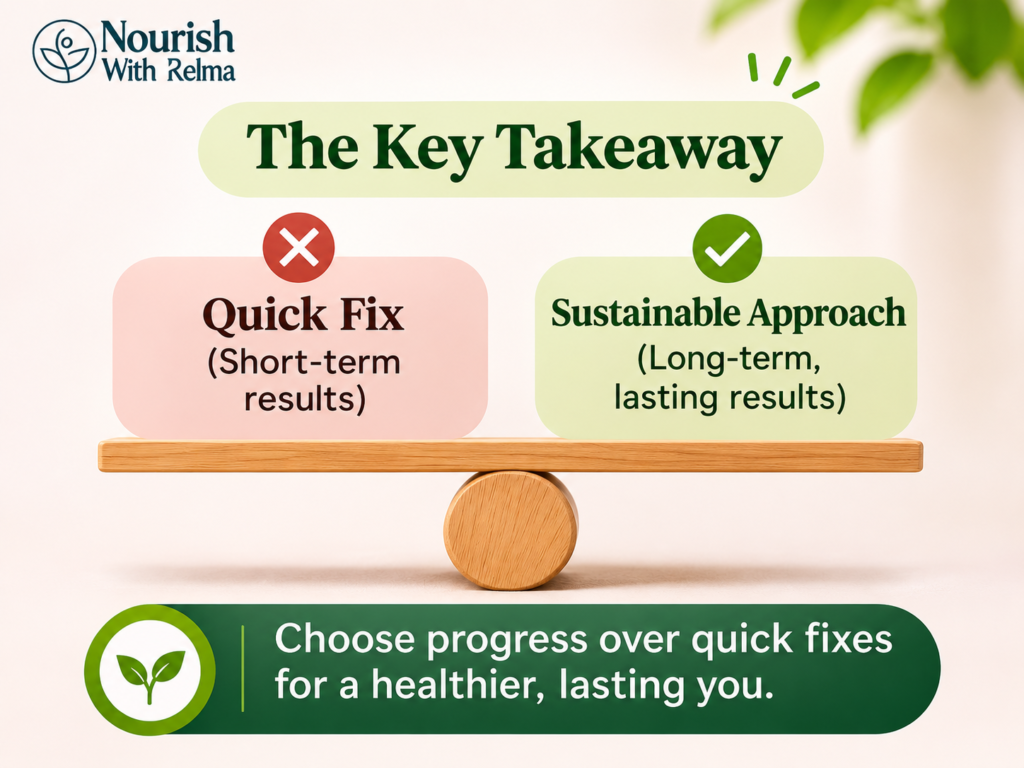
The difference between crash diets vs sustainable weight loss goes beyond speed. It involves food quality, nutritional adequacy, daily routine, physical activity and the ability to maintain healthy habits over time.
A crash diet generally relies on severe food restriction. Sustainable weight management takes a more flexible approach, using balanced meals and realistic changes that can fit into everyday life.
Understanding how these approaches differ can help you make a more informed decision about your health and eating habits.
What Is a Crash Diet?
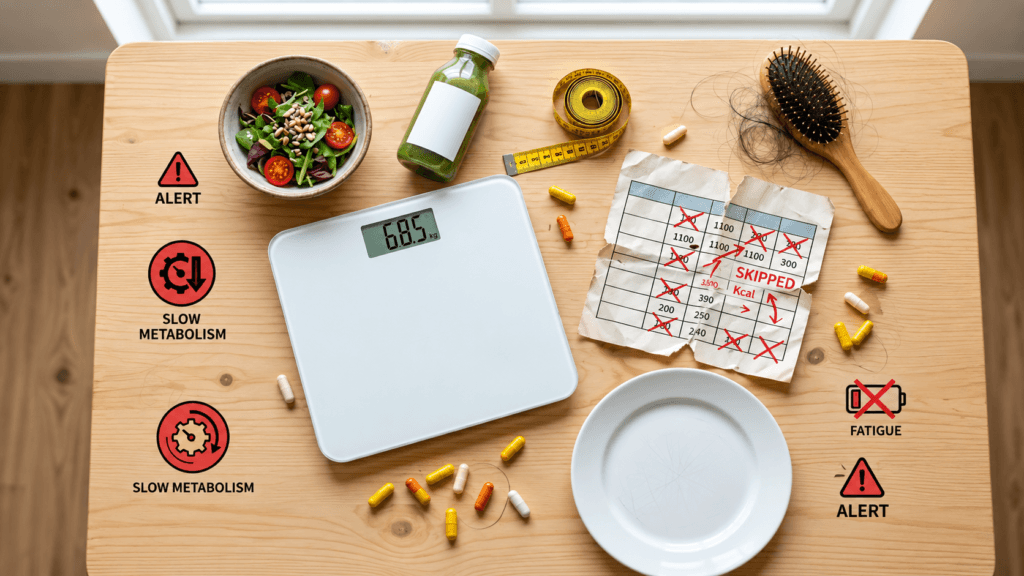
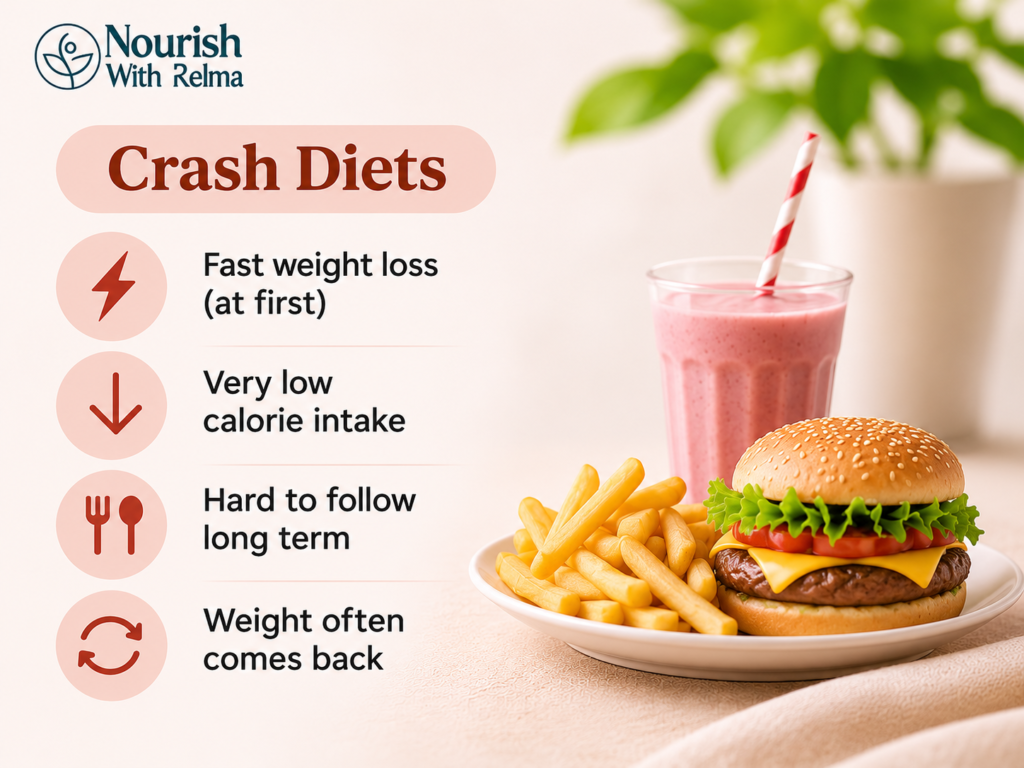
A crash diet is a highly restrictive eating plan intended to produce rapid weight changes. It may involve eating very little, skipping meals, eliminating entire food groups without a medical reason or relying on a limited selection of foods.
Examples of crash-diet practices include:
- Replacing most meals with juices or detox drinks.
- Eating only one or two types of food for several days.
- Skipping meals to sharply reduce food intake.
- Following very low-calorie plans without professional supervision.
- Avoiding carbohydrates or fats completely without considering nutritional requirements.
- Using unverified weight-loss products or supplements.
Not every calorie-controlled eating plan is a crash diet. Some low-energy diets are used in specific clinical situations, but they require proper assessment, nutritional planning and professional supervision. They should not be confused with self-directed restrictive dieting.
What Is a Calorie Deficit?
A calorie deficit occurs when the energy a person consumes through food and drinks is lower than the energy their body uses over time.
Your body uses energy for basic functions such as breathing, circulation and temperature regulation. It also uses energy for movement, exercise and digestion.
When energy intake remains below energy expenditure, the body draws on stored energy. This is the basic energy-balance principle behind weight loss.
Creating a calorie deficit does not necessarily mean counting every calorie or skipping meals. Some practical ways to manage overall food intake include:
- Reviewing portion sizes without making meals unnecessarily small.
- Including vegetables, pulses and other fibre-rich foods regularly.
- Adding suitable protein sources to meals.
- Being mindful of frequent high-energy snacks and sugary drinks.
- Adjusting portions according to activity levels and individual needs.
- Building regular physical activity into your week.
The aim is not to eat as little as possible. A suitable plan should provide adequate nourishment while supporting a realistic change in energy intake.
Why Do Crash Diets Produce Quick Changes on the Weighing Scale?
When food intake drops sharply, body weight can change for several reasons.
The body stores some carbohydrate as glycogen, and glycogen is stored alongside water. When carbohydrate intake falls significantly, glycogen stores and associated water may decrease. Changes in digestive contents and fluid balance can also affect the number on the scale.
As a result, an early reduction in weight does not necessarily represent the same amount of body-fat loss.
The amount and type of weight lost depend on the individual, the diet, activity levels and other factors. A weighing scale alone cannot explain exactly what has changed.
What Is Sustainable Weight Loss?
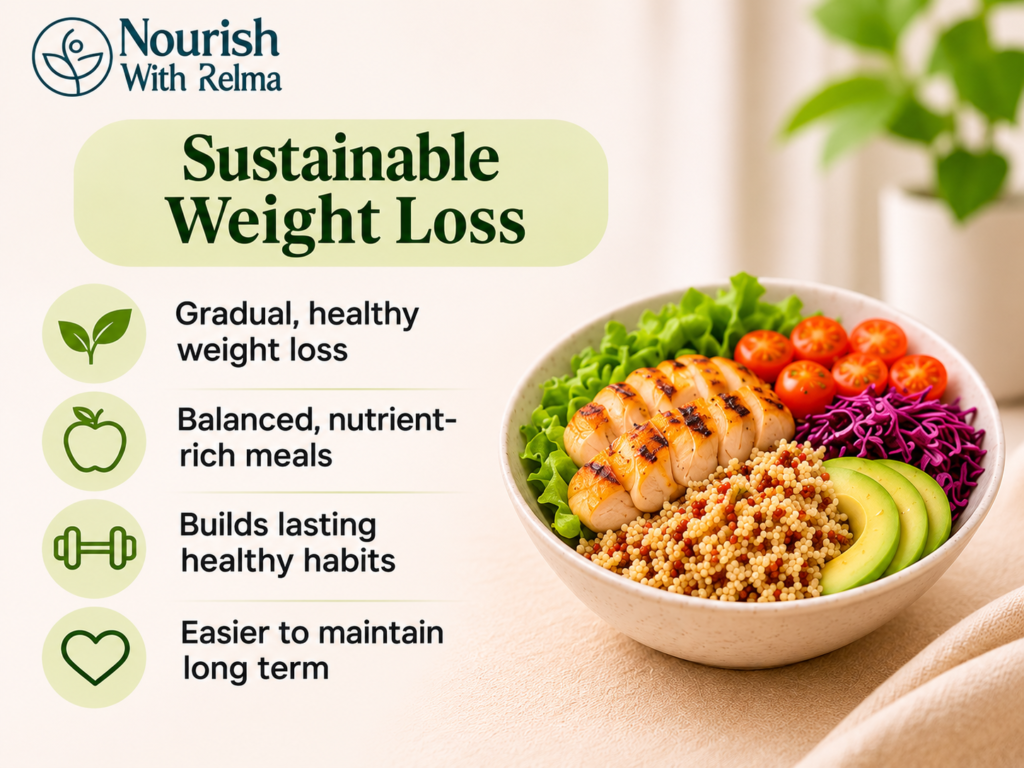
Sustainable weight loss focuses on gradual progress through eating habits and lifestyle changes that a person can realistically maintain.
Instead of relying on severe restrictions, this approach aims to create a balanced eating pattern that considers an individual’s food preferences, health needs, daily routine, budget and activity level.
A sustainable approach may involve:
- Eating a variety of foods from different food groups.
- Including suitable protein sources in meals.
- Eating vegetables, fruits, pulses and whole grains regularly.
- Choosing appropriate portions without unnecessary food restrictions.
- Drinking adequate water.
- Staying physically active in a way that suits personal ability.
- Getting sufficient sleep and managing stress.
- Reviewing progress and adjusting habits when needed.
Sustainable weight management does not require a perfect diet every day. It should accommodate family meals, work schedules, celebrations, restaurant visits and occasional changes in appetite.
It also recognises that health improvements are not limited to changes in body weight. Better food variety, regular activity and improved daily habits can be valuable even when the weighing scale changes slowly.
Crash Diets vs Sustainable Weight Loss: Key Differences
Both approaches aim to influence body weight, but they differ in how they address food, daily habits and long-term maintenance.
Comparison factor | Crash diets | Sustainable weight loss |
Main approach | Severe food restriction for rapid changes | Gradual, individualised eating and lifestyle changes |
Food variety | May severely limit food choices | Encourages varied and balanced meals |
Nutritional adequacy | May make nutrient requirements harder to meet | Considers nutritional needs across food groups |
Meal routine | May rely on skipped meals or rigid rules | Builds a practical routine around individual needs |
Flexibility | Often difficult to adapt to social and family meals | Can accommodate preferences and everyday situations |
Physical activity | May not account for energy and recovery needs | Considers activity, ability and recovery |
Monitoring | Often focuses heavily on quick scale changes | Can consider habits, health markers and longer-term progress |
Maintenance | May be difficult to continue after the restrictive phase | Builds habits intended to continue over time |
Professional support | Self-directed plans may lack appropriate oversight | Can include guidance and follow-up from qualified professionals |
The distinction is not that every restrictive plan is automatically unsafe or every gradual plan guarantees success. The nutritional quality, degree of restriction, health context and level of professional supervision all matter.
Why Crash Diets May Not Work Well in the Long Term
A crash diet may seem straightforward at first, but maintaining a highly restrictive routine can become difficult. Several factors may contribute to this.
- The Eating Pattern May Be Difficult to Maintain
A plan that removes familiar foods or requires constant hunger can be hard to follow alongside work, family responsibilities and social activities.
For example, someone who regularly eats rice, chapati, dal, vegetables and curd may find a plan based on only a few foods difficult to continue. When the restrictive phase ends, returning to previous eating habits may be more likely if practical alternatives have not been developed.
- Nutrient Intake May Become Inadequate
Severely limiting food variety can make it harder to obtain enough protein, fibre, vitamins, minerals and other nutrients.
The exact risk depends on which foods are excluded, how restrictive the plan is, how long it is followed and the person’s nutritional requirements.
A diet that removes several food groups without a clear reason deserves particular caution. It may be difficult to maintain a balanced intake when too many foods are excluded.
- Rapid Weight Changes Can Be Misleading
A quick reduction on the scale may partly reflect changes in water balance and stored carbohydrate rather than only body-fat loss.
When normal eating resumes, some of that weight may return as fluid and glycogen stores are replenished. This does not mean that every kilogram regained is body fat.
Looking only at short-term scale changes can therefore give an incomplete picture of progress.
- Restriction Can Affect Everyday Well-Being
Some people may experience tiredness, dizziness, constipation, difficulty concentrating or reduced exercise performance when following an excessively restrictive diet.
These effects are not inevitable for everyone, but they should not be ignored.
If a diet causes persistent symptoms or makes normal daily activities difficult, do not treat those effects as evidence that the plan is working. Seek advice from an appropriate healthcare professional.
- The Plan May Not Build Long-Term Eating Habits
A short-term menu may tell someone exactly what to eat for a few days without helping them make food choices independently.
Long-term weight management often involves practical skills such as:
- Planning meals around a busy schedule.
- Choosing suitable portions.
- Managing meals while eating outside.
- Including protein and vegetables regularly.
- Adapting food choices during travel or social events.
These skills are more useful over time than depending indefinitely on a strict temporary menu.
What Makes Sustainable Weight Loss More Practical?
A sustainable approach focuses on changes that fit into everyday life. It does not require expensive speciality foods or a completely separate menu from the rest of the family.
Build Balanced Meals
A useful starting point is to include a combination of vegetables, protein-rich foods and suitable cereal or millet portions.
For example, an everyday meal might include:
- Rice or chapati.
- Dal, sambar, beans, eggs, fish, chicken, paneer or another suitable protein source.
- A serving of vegetables or leafy greens.
- Curd, where appropriate.
The proportions and food choices will vary according to individual requirements. The goal is not to follow one fixed plate for everyone, but to make meals varied and nutritionally balanced.
Include Protein Sources Regularly
Protein contributes to the maintenance and repair of body tissues and is an important part of a balanced eating pattern.
Everyday options may include:
- Dal and green gram.
- Chickpeas and rajma.
- Eggs.
- Milk, curd and paneer.
- Fish and chicken.
- Tofu and other suitable plant-based options.
The amount required varies with age, body size, health status and activity level. People with kidney disease or certain medical conditions may need individual advice before making major changes to protein intake.
Choose Fibre-Rich Foods
Vegetables, fruits, pulses, beans, nuts and whole grains provide dietary fibre and contribute to a varied eating pattern.
Instead of relying only on refined cereal products, you may include ragi, jowar, whole-wheat chapati, oats or other whole grains according to preference and availability.
Increase fibre gradually and drink adequate water. People with certain digestive conditions may need a more individualised approach.
Make Room for Foods You Enjoy
A sustainable eating pattern should not make every favourite food feel forbidden.
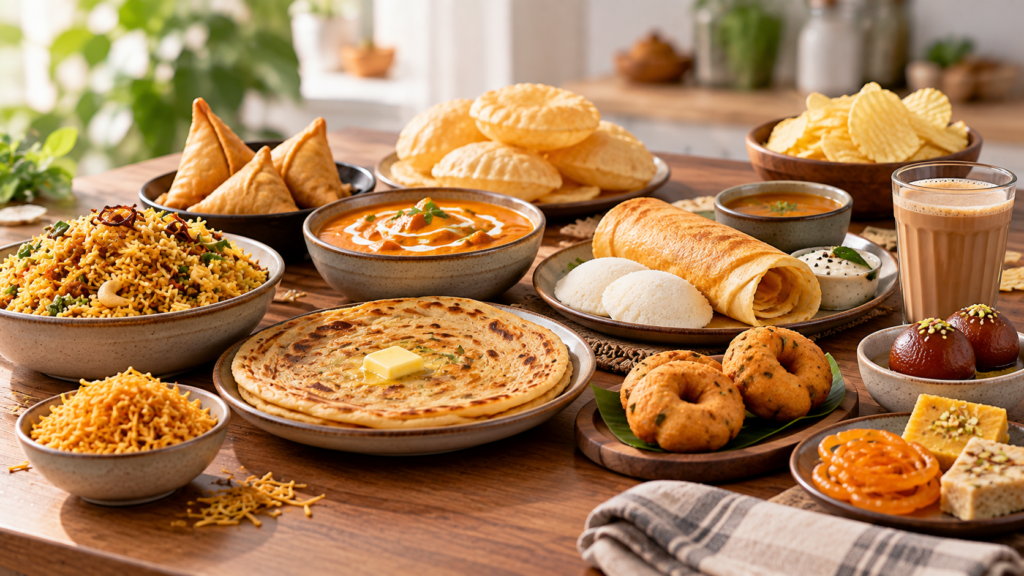
Familiar foods such as dosa, idli, rice dishes, chapati, occasional sweets and restaurant meals can fit into an overall balanced eating pattern. Their frequency and portions can be adjusted according to individual requirements.
A flexible approach may be easier to maintain than a plan built around strict rules and guilt.
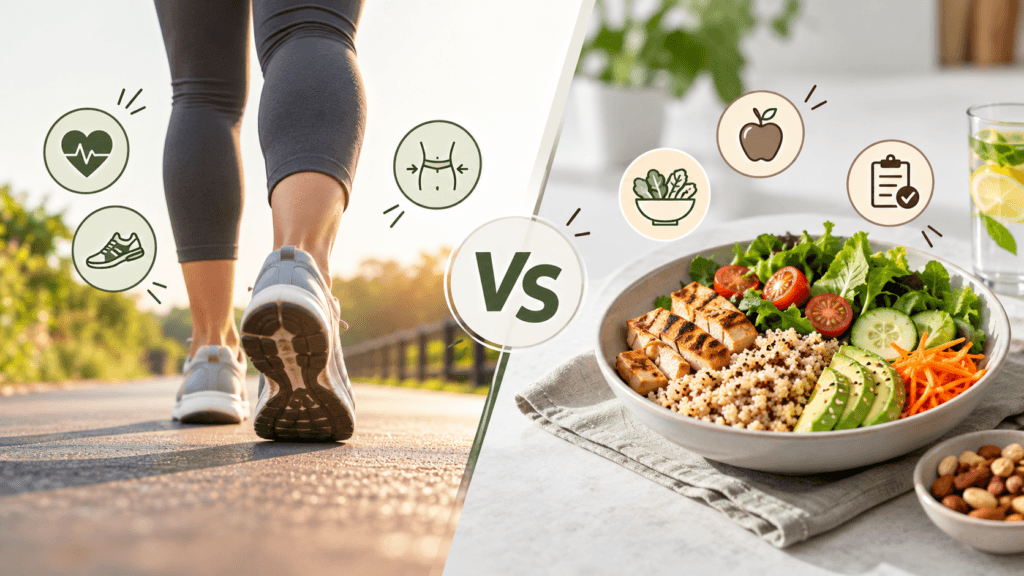
Combine Nutrition With Realistic Physical Activity
Walking, cycling, swimming, strength exercises and other suitable activities can contribute to overall health.
The right activity depends on fitness, physical ability, health conditions and personal preference.
Someone with a desk-based job could begin with short walking breaks and gradually build a routine. Another person may prefer a structured exercise programme.
Consistency and suitability matter more than copying someone else’s workout.
Consider Sleep and Stress
Sleep and stress are relevant parts of weight management. Busy schedules, irregular sleep and ongoing stress can influence daily routines, appetite and food choices.
A practical plan should consider these factors rather than focusing only on what goes onto a meal plate.
Practical Indian Food Examples: Crash Diet Thinking vs Balanced Choices
Everyday food choices can be approached in a more flexible way without relying on extreme restrictions.
Meal | Restrictive crash-diet pattern | More balanced everyday option |
Breakfast | Only juice or black coffee | Idli with sambar or vegetable dosa with a suitable protein source |
Lunch | Skipping lunch or eating only a small salad | Rice or chapati with dal, vegetables and curd or another protein source |
Evening snack | Avoiding food despite hunger | Fruit, roasted chana, curd or another suitable snack |
Dinner | Only soup regardless of hunger or nutritional needs | A balanced meal with vegetables, a protein source and a suitable cereal portion |
Drinks | Depending on detox drinks | Water as the usual hydration choice, with other drinks according to individual needs |
A balanced meal does not have to be complicated. It can use familiar ingredients and fit household preferences.
For example, a working professional in Mysore may prefer a quick breakfast, a packed lunch and a simple dinner. A sustainable plan should account for those practical circumstances instead of prescribing meals that are difficult to prepare or access.
These examples are general food-planning suggestions, not an individualised diet prescription.
Is Sustainable Weight Loss Always Slow?
Sustainable weight management generally avoids unnecessary rapid restriction, but it does not mean everyone will lose weight at exactly the same pace.
Progress can differ because of:
- Age and body composition.
- Medical conditions and medicines.
- Hormonal factors.
- Sleep and activity levels.
- Food intake and daily routines.
- Individual health circumstances.
Some people may notice improvements in eating habits or health markers before seeing a major change on the scale. Others may need a different plan or additional medical support.
The US Centers for Disease Control and Prevention notes that people who lose weight gradually and steadily are more likely to keep it off than those who lose weight faster. This is general guidance, not a target that is appropriate for every individual. A healthcare professional can help determine what is suitable for a person’s circumstances.
Can a Very-Low-Calorie Diet Ever Be Appropriate?
Some medically supervised weight-management programmes use low-energy or very-low-energy diets for selected people with specific clinical needs.
These are different from online crash diets or unsupervised meal-skipping routines.
For example, NICE guidance in the UK recommends that very-low-energy diets, below 800 kilocalories per day, should only be considered within a specialist weight-management service for people living with obesity who have a clinically assessed need for rapid weight loss.
The guidance also recommends that such diets should be nutritionally complete, limited to a maximum of 12 weeks and accompanied by ongoing clinical support and supervision. They should not be used as a long-term weight-management strategy.
This guidance is specific to the UK healthcare system, but it illustrates why medically supervised low-energy programmes should not be confused with self-directed crash dieting.
Do not start a very-low-calorie diet based on a social media post, a friend’s experience or a generic meal chart. Discuss your circumstances with an appropriate healthcare professional first.
Who May Need Extra Care Before Trying to Lose Weight?
Weight-loss advice is not suitable for everyone in the same way. Professional assessment is particularly important for:
- People with diabetes or those taking medicines that can affect blood glucose.
- People with thyroid disorders or other medical conditions.
- People who are pregnant or breastfeeding.
- People with a history of disordered eating or an eating disorder.
- Older adults or people at risk of losing muscle or nutritional status.
- People recovering from surgery or illness.
- Anyone experiencing unexplained weight changes or persistent symptoms.
Children and teenagers also need age-appropriate clinical guidance rather than adult weight-loss diets.
If weight is a concern, a healthcare professional can help determine whether weight loss is medically appropriate and whether other health goals should take priority.
When Can a Weight Loss Dietitian in Mysore Help?
If you have tried several restrictive diets and find it difficult to maintain the changes, working with a qualified nutrition professional may help you develop a more practical eating routine.
A weight-management consultation may consider:
- Your usual food choices and meal timings.
- Work routine, sleep and physical activity.
- Food preferences and household eating patterns.
- Relevant medical history and medications.
- Nutritional adequacy and possible dietary gaps.
- Realistic goals and a plan for maintaining progress.
Nourish With Relma presents personalised nutrition guidance designed around individual health goals, lifestyle and food preferences. Its website describes an online consultation process involving appointment booking, an assessment form, a one-to-one video call and a personalised diet plan.
For people looking for a weight loss dietitian in Mysore, the important step is to choose a qualified professional whose guidance is evidence-informed, realistic and appropriate to their health needs.
You can explore the nutrition services and consultation information at Nourish With Relma.
Frequently Asked Questions
1. What is the difference between a crash diet and sustainable weight loss?
A crash diet uses severe food restrictions to produce rapid weight changes. Sustainable weight loss focuses on balanced eating habits and realistic lifestyle changes that can be maintained over time.
2. Why do people often regain weight after a crash diet?
A restrictive plan may be difficult to continue. When someone returns to their previous eating routine, weight can increase again. Some early changes on the scale may also reflect water and stored carbohydrate rather than body fat alone.
3. Are crash diets safe for everyone?
No. Highly restrictive diets can make it difficult to meet nutritional needs and may cause problems such as fatigue or dizziness. People with medical conditions, those taking medication, pregnant or breastfeeding individuals, and people with a history of disordered eating should seek professional advice before making major dietary changes.
4. Is gradual weight loss better than rapid weight loss?
Gradual, steady weight loss is generally more likely to be maintained than faster weight loss. However, the appropriate pace depends on individual health circumstances. No single rate is suitable for everyone.
5. Can I lose weight while eating rice, dosa and chapati?
Yes. These familiar foods can fit into a balanced eating pattern. Overall food variety, portions, preparation methods, protein sources, vegetables and individual nutritional needs matter more than automatically eliminating a particular staple food.
6. What should I eat for sustainable weight management?
A varied eating pattern may include vegetables, fruits, pulses, whole grains, suitable protein sources, nuts and seeds, along with adequate water. The right food choices and portions depend on individual health needs, preferences and activity levels.
7. When should I consult a weight loss dietitian in Mysore?
Consider consulting a qualified nutrition professional if you need help planning balanced meals, have repeatedly followed restrictive diets, have specific health concerns or want a practical eating routine that fits your lifestyle.
8. Can a dietitian help me maintain weight after losing it?
A qualified nutrition professional may help you review food habits, plan a suitable maintenance routine and make adjustments as your needs change. Follow-up support can be useful because maintaining weight changes may require ongoing attention.