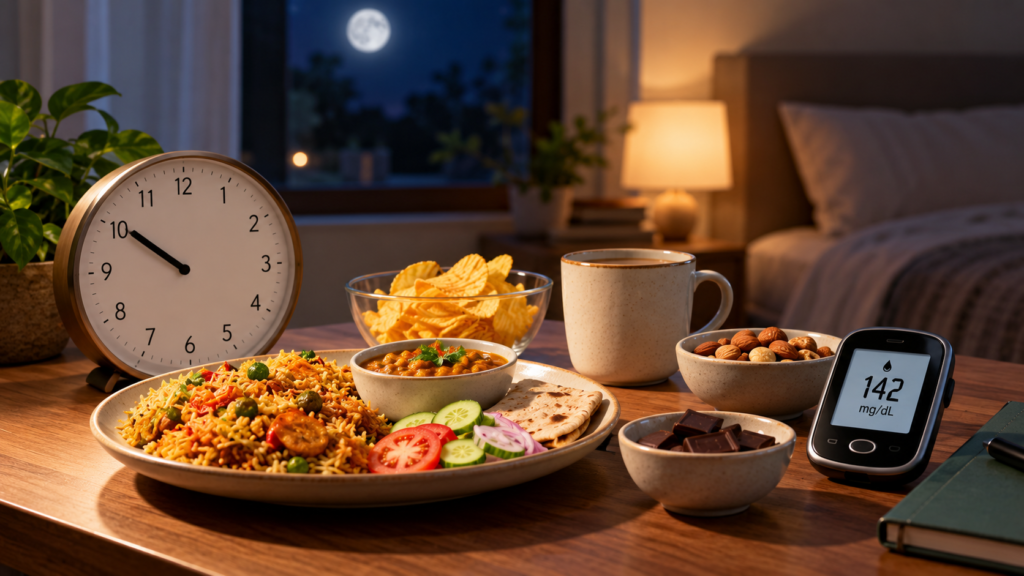
Dinner is over, the day is finally slowing down, and suddenly you want something sweet.Maybe it is chocolate. Maybe it is ice cream, biscuits, cake or a sweetened drink. You may not have felt particularly hungry earlier, yet the desire for something sugary becomes difficult to ignore once evening arrives.
If this happens regularly, you may wonder: Why do I crave sweets at night?There is no single explanation.Late-night sugar cravings can be influenced by what and how much you ate during the day, how well you slept, stress, emotional cues, learned habits and the way you restrict certain foods. In some situations, frequent hunger or cravings can also be related to an underlying health condition or medication.
That means the answer is not always “you need more willpower.” It is often more useful to look at what happened throughout the day.
Why do I crave sweets at night?
Nighttime sweet cravings can happen for several reasons.
You may have eaten too little earlier in the day. You may have had meals that did not keep you satisfied for long. You may be tired and looking for a quick source of energy or something enjoyable after a demanding day. Or you may have developed a routine in which watching television, finishing dinner or going to bed is automatically followed by something sweet.
Sleep can also influence appetite. NIDDK notes that getting too little sleep may increase hunger, calorie intake and the tendency to choose less healthy foods, and sleep loss may affect appetite-regulating hormones and brain responses to rewarding foods.
So if you regularly crave sweets at 10 or 11 p.m., look beyond the dessert itself. Your daytime routine may be part of the pattern.
Why Does Rice Get Blamed for Weight Gain?
Is a sweet craving the same as hunger?
Not always.Hunger is a physical need for food. It can build gradually and may be satisfied by a range of foods.A craving is a strong desire for a particular food. You may want chocolate specifically, even though other foods are available.The two can occur together. If you have eaten very little during the day, you may genuinely be hungry and also prefer a quick, highly palatable food.
Before deciding what to do, ask yourself:
- When did I last eat?
- Did I eat enough during the day?
- Would I be comfortable eating a regular meal or snack?
- Am I physically hungry, or do I mainly want one specific sweet food?
- Am I tired, stressed, bored or looking for something enjoyable to end the day?
There is no need to judge the answer. The purpose is simply to understand what is
Common reasons you may crave sweets at night
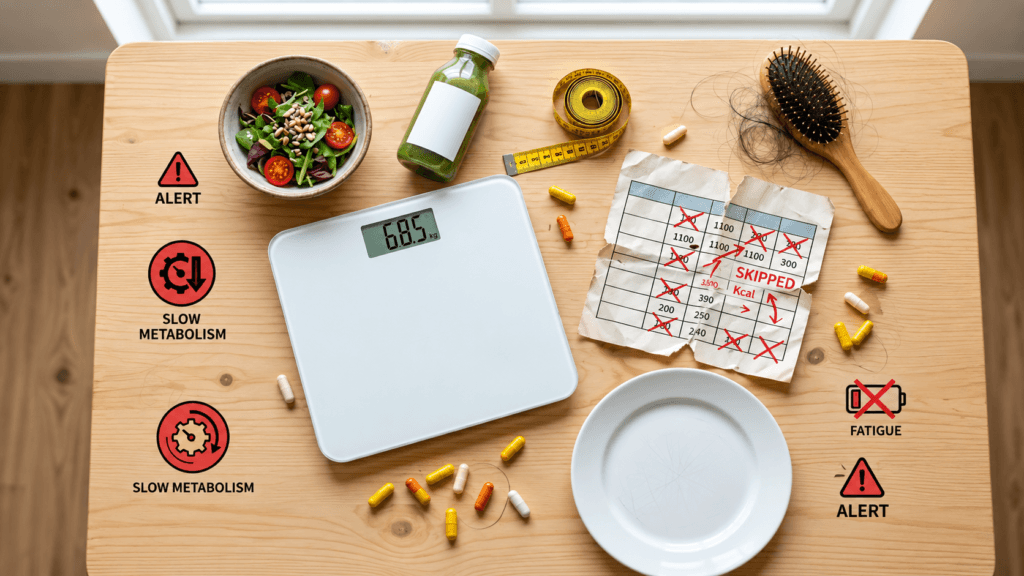
You may not be eating enough during the dayOne of the first things to examine is your daytime intake.For example, someone may have coffee in the morning, a very small lunch and a light evening meal because they are trying to lose weight. By late evening, hunger has accumulated.At that point, a sweet food can seem particularly appealing.This is one reason a restrictive eating pattern can become difficult to maintain. The problem may not be the fact that you ate dessert at night. The bigger issue may be that your body was not adequately nourished earlier.
Instead of immediately removing the evening snack, look at the entire day’s food intake.Your meals may not be keeping you satisfiedThe composition of a meal can affect how satisfying it feels.A meal built around highly refined carbohydrates or sugary foods may be less satisfying for some people than a meal that also contains sources of protein, fibre and other nutrient-dense foods.This does not mean carbohydrates are the problem. Carbohydrates are an important part of many healthy eating patterns.The more useful question is whether your meals are balanced enough to fit your hunger, activity level and nutritional needs.
For example, depending on your individual needs, a meal might include:
- A carbohydrate source such as rice, roti, dosa or another grain
- A protein source such as dal, beans, eggs, dairy, fish, chicken or another suitable option
- Vegetables or other fibre-rich foods
- Appropriate fats
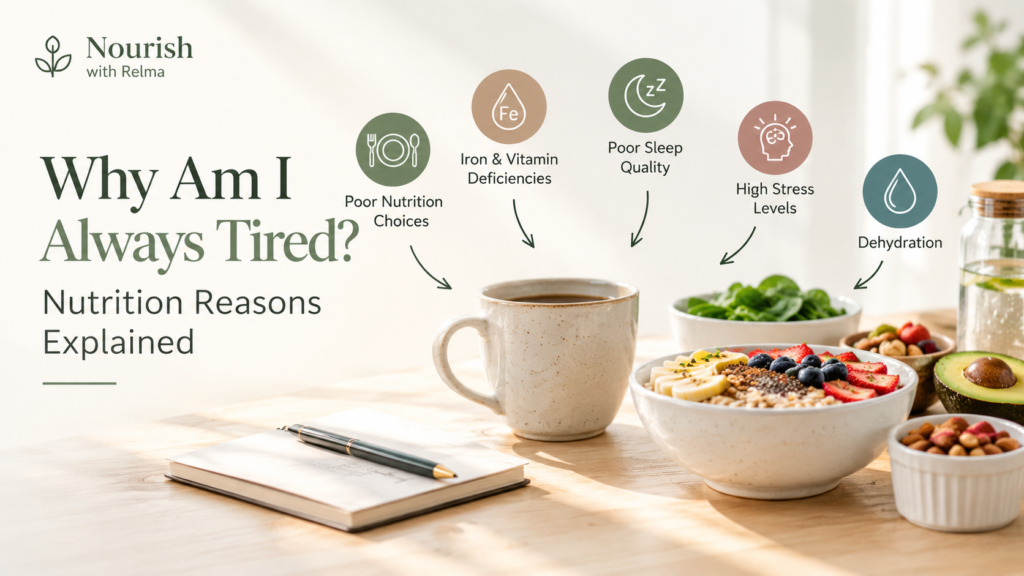
The exact combination and portion sizes should depend on the person’s health needs, preferences and overall diet.Lack of sleep can make nighttime cravings harder to manageSleep is easy to overlook when discussing food cravings.When you do not get enough sleep, appetite and food preferences can change. NIDDK explains that sleep deprivation may disrupt appetite regulation and may increase the desire for tasty foods.That does not mean every person who sleeps poorly will crave sugar.
But if your pattern looks like this:Short sleep → tired during the day → irregular eating → stronger evening cravingsthen sleep may be one part of the problem.Adults generally need adequate regular sleep, although individual needs vary. NIDDK notes that adults aged 18 to 64 are generally advised to get 7 to 9 hours of sleep per night.If you regularly struggle with sleep, address that issue rather than relying only on food restriction.
Stress can change the way you eatHave you noticed that your craving becomes stronger after a stressful day?Food can become part of how people cope with emotions. NIDDK notes that people may eat or snack when they are bored, sad, angry, happy or stressed, even when they are not physically hungry.Evening can make this pattern more noticeable.During the day, work, commuting, family responsibilities and other tasks may keep your attention occupied. At night, there are fewer distractions.that is when the thought appears:“I deserve something sweet.”The craving may be partly about the food and partly about wanting a break, comfort or a small reward.
Can your menstrual cycle affect sweet cravings?
Some people notice changes in appetite or food preferences around their menstrual cycle.
Premenstrual symptoms can include changes in appetite, mood and sleep. Recent reporting has also highlighted that some women experience increased hunger or sweet cravings around the premenstrual period.
If you notice that cravings appear around the same point in your cycle each month, record the pattern rather than assuming that something is wrong.
If premenstrual symptoms are severe or interfere with everyday life, speak with a healthcare professional.

What about blood sugar and diabetes?
It is common to see claims online that every sugar craving means your blood sugar is “low.”That is too simple.A craving for sweets by itself does not establish hypoglycemia or diabetes.Low blood glucose can cause symptoms such as hunger, shakiness, tiredness, dizziness, irritability and a rapid heartbeat, but those symptoms have to be interpreted in context.
People with diabetes may have specific nutritional and medication-related considerations. Someone experiencing repeated symptoms that suggest low blood glucose should discuss them with their healthcare professional rather than trying to diagnose the cause through cravings alone.If you have diabetes and regularly experience nighttime hunger, cravings or suspected low blood glucose, your meal timing, medication, physical activity and glucose readings may all be relevant.Does eating sugar at night automatically cause weight gain?No single food or eating time determines a person’s health or body weight.
Overall energy intake, dietary pattern, physical activity, sleep, medications, health conditions and many other factors can influence weight. NIDDK notes that regularly taking in more calories than the body uses can contribute to weight gain, while lifestyle and sleep are also relevant factors.The concern with frequent sugary foods is not that sugar becomes uniquely harmful simply because the clock has passed a particular hour.The bigger issue is the overallpattern.If late-night sweets regularly add substantial amounts of added sugar and calories to an already adequate diet, reducing that pattern may be useful.WHO recommends reducing free sugar intake to less than 10% of total energy intake, with a conditional recommendation to reduce it further to below 5%.
What can you do when you crave sweets at night?
Start by investigating the pattern rather than trying to suppress the craving immediately.Look at what you ate earlierAsk whether breakfast, lunch and snacks were adequate for your needs.If you regularly skip meals or eat very little during the day, the evening craving may be partly a response to accumulated hunger.
Make your main meals satisfyingA balanced meal can include carbohydrates, protein, vegetables or fruit and appropriate fats according to your individual nutritional needs.If your dinner leaves you hungry an hour later, the answer may be to review the meal rather than simply telling yourself not to eat.Keep a short food-and-craving diary
For several days, write down:
- Meal times
- What you ate
- Approximate portions
- When the craving appeared
- What you wanted to eat
- How hungry you felt
- Your mood at the time
- How much you slept the previous night
Patterns often become easier to see when they are written down.
Check your sleep
If cravings are particularly strong after nights of poor sleep, that connection is worth paying attention to.Work on a consistent sleep routine and discuss persistent sleep problems with a healthcare professional when necessary.
Notice emotional triggers
If the craving appears after stressful work, an argument, loneliness or boredom, food may be serving an emotional role.A short walk, shower, conversation, reading or another relaxing activity may sometimes provide the break you were actually looking for.
You do not need to use these activities to “earn” food or punish yourself for wanting sweets. The goal is simply to have more than one way to respond to stress.
Keep sweets in perspective
You do not necessarily need to ban sweets completely.For some people, a planned portion of a preferred sweet can fit comfortably into an overall balanced diet. The appropriate amount depends on the person’s nutritional needs, health conditions and overall eating pattern.
Should you completely avoid sweets?
Usually, a blanket rule is not necessary.
Trying to eliminate every sweet food can make food feel unnecessarily restrictive. For some people, strict rules may increase preoccupation with the foods they are trying to avoid.
A more practical approach is to consider:
- How often you eat sweets
- How much you usually eat
- Whether you are genuinely hungry
- Whether sweets are replacing balanced meals
- Whether sugary drinks or packaged snacks are a major source of added sugar
- Whether the habit is affecting your health goals
WHO recommends limiting free sugars as part of an overall healthy diet.
The goal is not to make every food decision perfect.
It is to build an eating pattern that you can maintain.
What are some better options when you are genuinely hungry at night?
If you are physically hungry before bed, eating something may be reasonable.Instead of automatically reaching for sweets, consider a snack that fits your overall eating plan.
Depending on your individual needs, examples might include:
- Fruit with unsweetened or low-sugar yogurt
- A small portion of nuts with fruit
- Milk or another suitable dairy alternative
- A simple whole-food snack containing protein and carbohydrates
There is no single “best” nighttime snack for everyone.Someone with diabetes, food allergies, digestive problems, kidney disease or another health condition may need different advice.
What if I crave chocolate every night?
A specific craving for chocolate may be partly related to taste preference and habit.If chocolate is your usual food while watching television, for example, the evening environment may itself become a cue.
Try changing one part of the routine.You could have tea without automatically pairing it with chocolate, move away from the kitchen after dinner, or decide beforehand whether you actually want a portion of chocolate.If you are genuinely hungry, address the hunger instead of treating the chocolate craving as a discipline problem.
When should recurring cravings be discussed with a healthcare professional?
An occasional sweet craving is generally not a medical diagnosis.
However, it is worth getting professional advice if your eating pattern is accompanied by symptoms such as:
- Frequent excessive hunger
- Unexplained weight changes
- Excessive thirst
- Frequent urination
- Shakiness or dizziness
- Episodes of loss of control while eating
- Significant distress around food
- Repeated nighttime eating that interferes with sleep or daily life
People with diabetes or those taking medicines that affect blood glucose should be particularly careful about trying to manage suspected blood-sugar problems through diet alone.
If you feel that your eating is becoming difficult to control or you frequently eat unusually large amounts of food with a sense of loss of control, discuss it with a healthcare professional. NIDDK identifies loss of control over eating and recurrent episodes of eating unusually large amounts as features that can occur with binge-eating disorder.

Can a dietitian help with late-night sugar cravings?
Yes, nutrition counselling can be useful when nighttime cravings are part of a broader eating pattern.
A dietitian can look at your meals across the whole day instead of focusing only on the sweet food you eat at night.
That may include reviewing:
- Meal timing
- Portion sizes
- Protein and fibre intake
- Hunger patterns
- Snacking
- Sleep habits
- Food preferences
- Work schedule
- Physical activity
- Health conditions
- Dietary restrictions
Nourish With Relma currently describes its approach as personalized nutrition planning and lists weight management, diabetes, stress management, sleep disorders and digestive health among the areas covered on its website.
For someone in Mysuru who wants help understanding recurring food cravings, a personalized consultation can be more useful than following a generic “stop sugar cravings” diet from the internet.
The bottom line
If you keep asking yourself, “Why do I crave sweets at night?”, start by looking at the entire day.Did you eat enough?Were your meals satisfying?
Did you sleep well?Were you under unusual stress?Have sweets become part of your evening routine?
Are you following very strict food rules?Sometimes the answer is surprisingly simple. A person who spends the day eating too little may reach the evening genuinely hungry. Someone who sleeps poorly may notice stronger appetite and food cravings. Someone under stress may use sweets as a familiar source of comfort. And someone who eats dessert at the same time every night may simply have developed a strong habit.You do not need to label yourself as having “no willpower.”Instead, look for the pattern.If the cravings are frequent, difficult to control or accompanied by other symptoms, speak with a qualified healthcare professional or dietitian. The right approach depends on the reason behind the cravings, your overall diet and your individual health needs.however, it is worth getting professional advice if your eating pattern is accompanied by symptoms such as:
- Frequent excessive hunger
- Unexplained weight changes
- Excessive thirst
- Frequent urination
- Shakiness or dizziness
- Episodes of loss of control while eating
- Significant distress around food
- Repeated nighttime eating that interferes with sleep or daily life
People with diabetes or those taking medicines that affect blood glucose should be particularly careful about trying to manage suspected blood-sugar problems through diet alone.
If you feel that your eating is becoming difficult to control or you frequently eat unusually large amounts of food with a sense of loss of control, discuss it with a healthcare professional. NIDDK identifies loss of control over eating and recurrent episodes of eating unusually large amounts as features that can occur with binge-eating disorder.
FAQS
Why do I crave sweets at night?
Nighttime sweet cravings can be influenced by daytime food intake, hunger, sleep, stress, emotional eating and learned habits. Looking at the entire day’s eating pattern is often more useful than focusing only on the dessert.
Does craving sugar at night mean I am hungry?
Not necessarily. A craving can be a desire for a particular food, while hunger is a physical need for food. However, genuine hunger and food cravings can occur together.
Why do I crave sweets after dinner even when I am full?
The craving may be related to habit, taste preference, stress, boredom or the routine associated with finishing dinner. If you regularly feel physically hungry after dinner, your overall meal pattern may also need review.
Can lack of sleep cause sugar cravings?
Poor sleep can affect appetite and increase the desire for highly rewarding foods. NIDDK notes that insufficient sleep can increase hunger and the tendency to choose less healthy foods.
Should I stop eating sweets completely?
Not necessarily. A complete ban is not required for everyone. The overall amount and frequency of added/free sugar, along with the rest of the diet, are more important considerations.
Can stress cause nighttime cravings?
Stress can influence eating behaviour, and some people snack or eat when stressed even when they are not physically hungry.
Can diabetes cause sugar cravings at night?
A craving for sweets alone does not diagnose diabetes or low blood glucose. People with diabetes or symptoms suggestive of low blood glucose should discuss the pattern with their healthcare professional.
Can a dietitian help with nighttime sugar cravings?
A dietitian can review your overall eating pattern, meal timing, hunger, food preferences and health needs and help identify practical dietary changes.