If you are trying to manage your weight, you may be unsure whether changing your eating habits is enough or whether you should seek medical support. The answer depends on your health, weight history and the concerns you want to address.
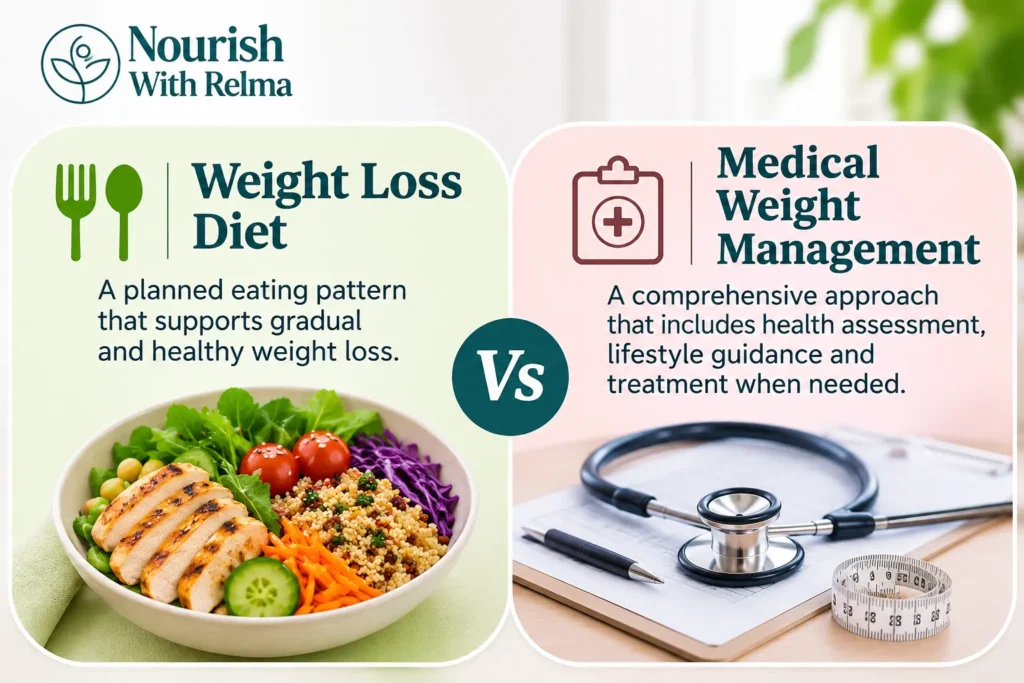
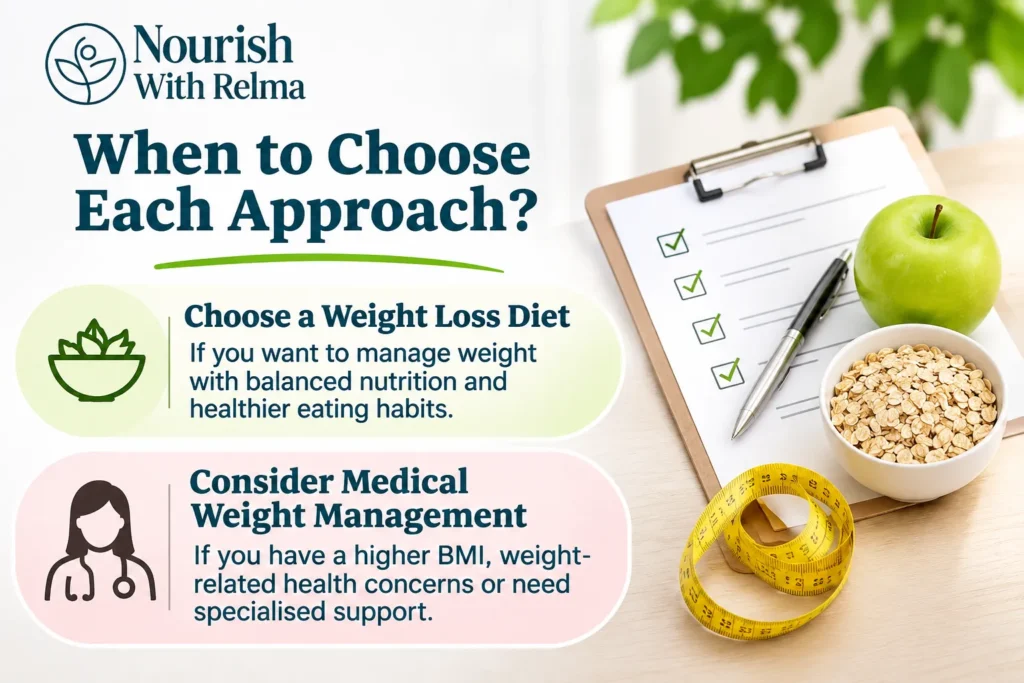
A weight loss diet focuses on food choices, portion sizes and daily eating habits. Medical weight management takes a wider approach. It may include a health assessment, lifestyle guidance, monitoring of weight-related conditions and, when appropriate, prescription treatment or specialist care.
Both approaches have a role. Some people may begin with nutrition counselling, while others need a doctor’s assessment before making significant changes to their routine.
If you are searching for a Weight Loss Diet vs Medical Weight Management: Which Is Better in Mysore?, understanding the difference can help you choose the right kind of support.
What Is a Weight Loss Diet?
A weight loss diet is a planned eating pattern designed to support gradual weight reduction while providing the nutrients your body needs. It usually involves reviewing food choices, meal portions, eating frequency and overall energy intake.
A suitable plan should reflect your daily routine. Your work schedule, activity level, food preferences, budget and health requirements all affect what is practical.
For example, a person who skips breakfast and frequently eats packaged snacks at work may benefit from planning regular meals. Someone who eats traditional Indian meals may need guidance on balancing portions of rice or chapati with vegetables, dal, curd and protein-rich foods.
A balanced eating pattern can include:
- Vegetables and fruits in different varieties.
- Protein sources such as dal, beans, eggs, dairy, fish, chicken, tofu or paneer.
- Whole grains and other fibre-rich foods.
- Nuts, seeds and suitable sources of dietary fat.
- Enough water throughout the day.
- Meal timings that fit your routine.
You do not automatically need to stop eating rice, avoid dinner or eliminate carbohydrates to manage your weight. The overall quality and quantity of your food intake matter more than removing a familiar food without a nutritional reason.
What Is Medical Weight Management?
Medical weight management is a healthcare-led approach to assessing and treating weight-related concerns. A qualified medical professional considers a person’s overall health before deciding which interventions may be appropriate.
Body weight can be affected by several factors, including eating habits, physical activity, sleep, medicines, medical conditions, genetics and social circumstances. A medical assessment helps identify concerns that may need attention.
Depending on the individual’s needs, medical weight management may include:
- Reviewing weight history and previous weight-management attempts.
- Assessing relevant medical conditions and health risks.
- Checking whether prescribed medicines may affect weight.
- Discussing nutrition, physical activity, sleep and behaviour changes.
- Monitoring relevant health indicators and treatment response.
- Considering prescription weight-management medicines when clinically appropriate.
- Referring the person for specialist care or discussing metabolic and bariatric surgery when indicated.
Medication and surgery are not necessary for everyone. A doctor should assess the person’s circumstances and explain the expected benefits, possible risks, limitations and follow-up requirements before recommending treatment.
Weight Loss Diet vs Medical Weight Management: Key Differences
The main difference is the type of assessment and care involved. Nutrition guidance concentrates on eating habits and dietary needs. Medical weight management considers wider health concerns and may include clinical treatment.
Area | Weight loss diet with nutrition guidance | Medical weight management |
Main focus | Food choices, portions and meal patterns | Overall health and weight-related medical concerns |
Assessment | Eating habits, food preferences and nutrition needs | Medical history, weight history and relevant health risks |
Support | Meal planning and nutrition education | Medical assessment, lifestyle support and treatment decisions |
Medication | A dietitian does not prescribe medicines unless separately qualified and authorised as a medical practitioner | A doctor may consider prescription treatment when appropriate |
Monitoring | Dietary habits and agreed nutrition goals | Health indicators, treatment response and possible side effects |
Suitable for | People seeking structured nutrition guidance | People who need medical assessment or broader clinical care |
These options can complement each other. Someone receiving medical treatment may also need a dietitian’s help to maintain adequate nutrition and develop eating habits that fit the treatment plan.
Can a Weight Loss Dietitian Help You Manage Your Weight?
A qualified dietitian can help you turn general nutrition advice into an eating plan that suits your food preferences, health needs and everyday routine.
The process should begin with understanding how you currently eat. A professional can then identify practical changes instead of giving you a standard chart that may not suit your circumstances.
- Reviewing your current eating habits
A dietitian may ask about your usual meals, snacks, beverages, eating-out habits and food preferences. They may also discuss your work routine, activity levels and previous attempts to change your eating pattern.
This information helps identify areas where adjustments may be useful.
- Planning meals around your routine
Your meal plan should be realistic. Someone working long hours may need different meal arrangements from someone who prepares food at home.
For people who prefer Indian meals, nutrition guidance can involve adjusting portions and combinations of familiar foods. There may be no need to replace every traditional meal with unfamiliar alternatives.
- Maintaining nutritional adequacy
Reducing food intake without considering nutrition can leave gaps in your diet. A suitable plan considers protein, fibre, vitamins, minerals and overall dietary variety.
Your individual requirements may differ depending on your age, health status, activity and other factors.
- Making the plan practical
Family meals, weekends, celebrations and eating outside the home are part of everyday life. A useful plan should account for these situations instead of expecting you to follow a rigid routine every day.
- Reviewing and adjusting your plan
Your schedule, food preferences and health requirements may change over time. Follow-up consultations can help review your eating habits and decide whether the plan needs adjustment.
A dietitian does not replace a doctor when diagnosis or medical treatment is required. If you have a diagnosed condition or take prescription medicines, coordinate your nutrition plan with your healthcare team when appropriate.
When Should You Consider Medical Weight Management?
Consider speaking with a doctor if weight-related concerns occur alongside other health issues or if repeated attempts to manage your weight have not addressed your concerns.
A medical assessment may be useful if you:
- Have type 2 diabetes, high blood pressure, high cholesterol or sleep apnoea.
- Experience unexplained or sudden changes in weight.
- Suspect that a medical condition or medicine may be affecting your weight.
- Have ongoing symptoms that need investigation.
- Have been advised to consider prescription treatment or specialist care.
- Are considering a medically supervised weight-management programme or surgery.
A doctor may review your medical history, measurements and health risks before deciding whether tests or specialist referrals are needed.
Body mass index (BMI) can be one part of this assessment, but it does not show every aspect of body composition or health. It should be interpreted alongside other relevant information.
Avoid assuming that weight changes automatically indicate a thyroid, hormonal or metabolic condition. A healthcare professional can assess whether further investigation is needed.
Can Diet and Medical Treatment Work Together?
Yes. Nutrition counselling can form part of a medical weight-management programme.
For example, a doctor may recommend a treatment plan that includes medical monitoring and lifestyle changes. A dietitian can then help the person maintain an appropriate eating pattern and make food choices that support the treatment plan.
Nutrition guidance may be particularly useful when someone is making significant changes to food intake or using a prescribed weight-management medicine. Depending on the treatment, the person may need advice about hydration, protein intake, meal size and overall nutritional adequacy.
The Endocrine Society of India’s 2025 clinical practice guideline discusses non-pharmacological, pharmacological and surgical approaches to obesity management. It supports individualised care and explains that treatment decisions should take account of the person’s circumstances. The World Health Organization’s guidance on GLP-1 medicines also discusses the role of behavioural and lifestyle support alongside medication.
Do not start, stop or change a prescription medicine because of an online article or diet plan. Discuss treatment choices and possible side effects with the doctor responsible for your care.

What Does a Sustainable Weight Management Plan Look Like?
A sustainable plan should support your health and fit into your daily life. Extreme food restrictions and short-term promises are poor substitutes for a plan that you can maintain.
Build balanced meals
Include vegetables, protein-rich foods and suitable portions of grains or other carbohydrate sources. The exact proportions depend on your nutritional requirements and health circumstances.
Keep familiar foods on your menu
You can include foods such as rice, idli, dosa, chapati, sambar, dal, vegetables and curd in a balanced eating pattern. Portion sizes and combinations may need adjustment, but removing familiar foods is not automatically necessary.
Include protein-rich foods
Protein helps maintain and repair body tissues. Suitable sources include pulses, beans, dairy products, eggs, fish, chicken, soy and paneer. Choose options that match your dietary preferences.
Increase fibre gradually
Vegetables, fruits, legumes, whole grains, nuts and seeds provide dietary fibre. If your current intake is low, increase it gradually and drink enough fluids.
Choose physical activity you can manage
Walking, cycling, swimming and strength exercises are possible options. Choose activities that suit your current fitness and health status. If you have a medical condition or have been inactive for a long time, ask a healthcare professional before starting a demanding exercise routine.
Consider sleep and daily routines
Sleep, stress and work schedules can affect your ability to follow a consistent eating and activity routine. Small changes to your daily schedule may make the plan easier to maintain.
Look beyond the weighing scale
Progress can also involve changes in food habits, stamina, strength, activity levels or relevant health indicators. Your healthcare professional can help decide which measures are meaningful for your situation.
Common Weight Loss Mistakes to Avoid
Some weight-loss methods promise quick results but may be difficult to maintain or may not provide adequate nutrition.
Be cautious about these habits:
- Skipping meals to compensate for eating more: This can make regular eating patterns harder to maintain.
- Removing entire food groups without a medical reason: Unnecessary restrictions may reduce dietary variety.
- Following another person’s diet chart: Their health needs, food preferences and daily routine may be different from yours.
- Relying on detox drinks or fat-burning products: Be cautious of products that promise dramatic results without reliable evidence.
- Trying very-low-calorie diets without supervision: These are not suitable as do-it-yourself long-term plans and may require clinical oversight.
- Expecting the same results as someone else: Individual responses to nutrition and lifestyle changes vary.
- Stopping prescribed medicines to lose weight naturally: Never change a prescribed treatment without discussing it with your doctor.
If a diet leaves you persistently weak, unwell or excessively restricted, seek professional advice rather than continuing it without review.
How to Choose the Right Weight Management Support in Mysore
If you are looking for a weight loss dietitian in Mysore, consider the qualifications and approach of the professional before booking a consultation.
Look for someone who:
- Has verifiable education and relevant training in nutrition and dietetics.
- Asks about your eating habits, medical history and personal goals.
- Explains why particular dietary changes are being recommended.
- Considers your cultural food preferences and daily routine.
- Avoids guaranteed weight-loss claims and unnecessary food restrictions.
- Recommends medical assessment when your concerns fall outside their professional scope.
- Clearly explains consultation and follow-up arrangements.
If you have a diagnosed medical condition, take regular medication or have unexplained changes in weight, speak with your doctor as well. Coordinated support from a doctor and dietitian may be appropriate in some situations.
How Nourish With Relma Can Support Your Nutrition Goals
Nourish With Relma, led by Relma Gangam, provides nutrition guidance for people who want support with their eating habits and weight-management goals. The website describes a consultation process involving health goals, medical history, an individual discussion and a personalised diet plan.
Nutrition counselling may help you understand your current food habits, plan balanced meals and make dietary changes that fit your routine.
If you are considering nutrition support in Mysore, visit the Nourish With Relma website to review the available services and consultation details.
For diagnosis, prescription treatment or decisions about weight-management medicines, consult an appropriately qualified medical practitioner. Nutrition guidance can support medical care, but it does not replace it.
Final Thoughts
A weight loss diet and medical weight management serve different purposes. Nutrition guidance can help you improve your eating habits, while medical care can assess health conditions and determine whether additional treatment is needed.
The right starting point depends on your health and individual requirements. If you are unsure which support you need, discuss your concerns with a doctor and consider consulting a qualified dietitian for nutrition guidance.
Sustainable weight management begins with an appropriate plan and realistic changes that you can maintain.
Frequently Asked Questions
1. What is the difference between a weight loss diet and medical weight management?
A weight loss diet focuses mainly on food choices, meal portions and eating habits. Medical weight management includes a broader health assessment and may involve lifestyle support, medical monitoring, prescription treatment or specialist care when appropriate.
2. Can a dietitian help with weight loss without medication?
Yes. A qualified dietitian can provide nutrition education, meal planning and guidance on sustainable eating habits. Whether medication is necessary is a separate medical decision that should be discussed with a doctor.
3. When should I consult a doctor for weight management?
Speak with a doctor if you have weight-related health conditions, unexplained weight changes, persistent symptoms or concerns about medicines or other medical factors affecting your weight.
4. Is a personalised weight loss diet better than a generic diet chart?
A personalised plan can account for your food preferences, health needs, schedule and lifestyle. A generic chart may not address these individual factors. Neither approach guarantees a particular result.
5. Can medical weight management include nutrition counselling?
Yes. Nutrition counselling can be part of a broader medical weight-management plan. A dietitian may help you maintain adequate nutrition and develop practical food habits alongside medical care.
6. Do I need to stop eating rice to manage my weight?
Not necessarily. Rice can be included in a balanced eating pattern. Portion size, meal composition, activity levels and individual nutritional needs are more relevant than automatically eliminating a familiar food.
7. How do I find a weight loss dietitian in Mysore?
Look for a professional with verifiable qualifications in nutrition and dietetics, an individualised approach, clear consultation information and a willingness to recommend medical assessment when needed.
8. Can I manage my weight through diet alone?
Some people may benefit from nutrition and lifestyle changes, while others may need medical assessment or additional treatment. The appropriate approach depends on individual health needs and should be discussed with qualified professionals.