Feeling tired even after getting enough sleep? Noticing unexpected weight changes, hair thinning or irregular periods? These symptoms can have several causes, and hormonal changes are one possibility.
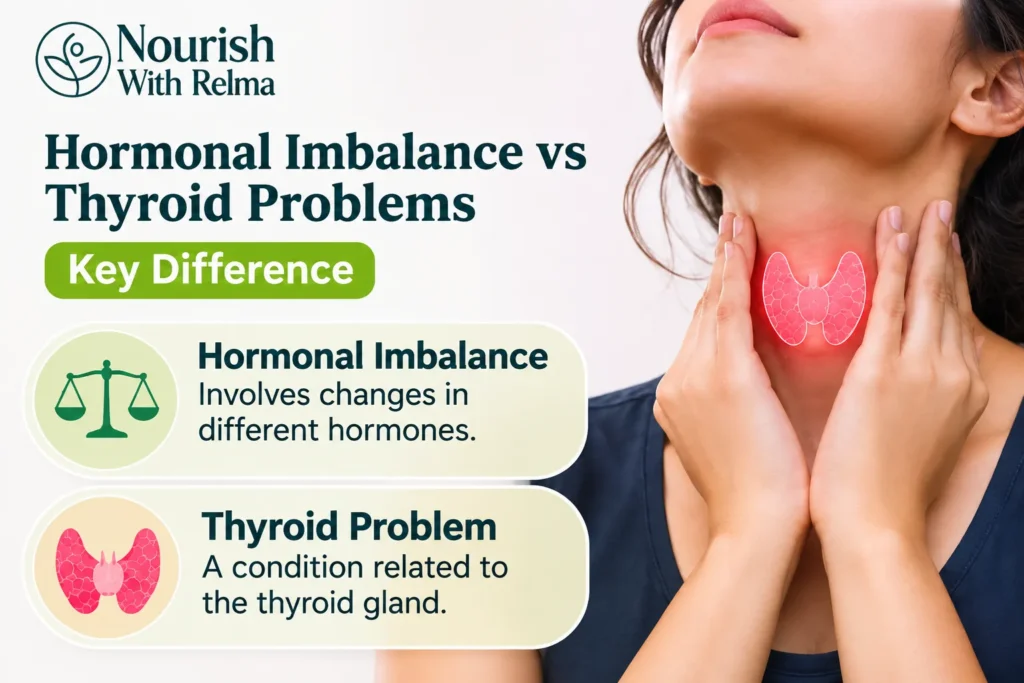
The thyroid may also be involved. It is one of the glands in the endocrine system and produces hormones that influence how the body uses energy. A thyroid disorder is a specific medical condition, while hormonal imbalance is a broader term that can refer to changes involving different hormones.
Understanding the difference can help you decide when to seek medical advice and what kind of nutrition support may be useful. If you are looking for a Hormonal Imbalance vs Thyroid Problems: Symptoms & Diet in Mysore, it is worth starting with an important point: food can support general health, but it cannot diagnose or independently treat an underlying hormone disorder.
What Is Hormonal Imbalance?
Hormones are chemical messengers produced by glands and certain organs. They travel through the bloodstream and help regulate functions such as metabolism, reproduction, growth, sleep, mood and blood sugar.
The term hormonal imbalance generally refers to a hormone being produced in an unusually high or low amount, or not having its expected effect on the body. It is not a diagnosis by itself. The underlying reason needs to be identified.
Different parts of the endocrine system may be involved:
- Thyroid gland: Produces thyroid hormones that influence metabolism.
- Ovaries: Produce reproductive hormones, including oestrogen and progesterone.
- Pancreas: Produces insulin, which helps regulate blood glucose.
- Adrenal glands: Produce hormones such as cortisol and aldosterone.
- Pituitary gland: Helps regulate several other hormone-producing glands.
Because these hormones have different functions, symptoms can vary widely. A person experiencing tiredness, weight changes or irregular periods may need a different assessment from someone experiencing excessive thirst, unexplained sweating or changes in menstrual cycles.
What Are Thyroid Problems?
The thyroid is a small, butterfly-shaped gland located at the front of the neck. It produces two main hormones: thyroxine (T4) and triiodothyronine (T3).
These hormones influence how the body uses energy and affect several organs. When the thyroid produces too little or too much hormone, normal body functions can change.
Two common thyroid conditions are hypothyroidism and hyperthyroidism.
- Hypothyroidism: An Underactive Thyroid
Hypothyroidism occurs when the thyroid does not produce enough thyroid hormones. Some body processes may slow down, and symptoms can develop gradually.
Possible symptoms include:
- Persistent tiredness or low energy
- Unexplained weight gain
- Feeling unusually cold
- Constipation
- Dry skin or thinning hair
- Difficulty concentrating
- Low mood
- Heavy or irregular menstrual periods
Not everyone experiences the same symptoms. Tiredness and weight gain, for example, can also occur for reasons unrelated to thyroid function. Blood tests and a medical assessment are needed to investigate the cause.
- Hyperthyroidism: An Overactive Thyroid
Hyperthyroidism occurs when the thyroid produces more hormones than the body needs. This can make certain body processes work faster.
Possible symptoms include:
- Unexplained weight loss, sometimes despite increased appetite
- A fast or irregular heartbeat
- Feeling unusually hot or sweating more than usual
- Shaky hands or tremors
- Nervousness or irritability
- Difficulty sleeping
- Frequent bowel movements
- Muscle weakness
Some people also notice swelling around the neck. Symptoms can differ depending on the cause and severity of the condition.
Hormonal Imbalance vs Thyroid Problems: What Is the Difference?
The main distinction is the scope of the terms. Hormonal imbalance is a broad description of changes in hormone levels or activity. A thyroid disorder specifically affects the thyroid gland or its hormone regulation.
Comparison | Hormonal imbalance | Thyroid problems |
Meaning | A broad term for changes involving hormones | A condition affecting thyroid function |
Possible systems involved | Reproductive, adrenal, pancreatic, pituitary and other endocrine systems | Thyroid gland and its hormone regulation |
Symptoms | Depend on the hormone involved | May include fatigue, weight changes, temperature sensitivity and menstrual changes |
Assessment | Tests depend on the suspected cause | Often includes TSH and T4 blood tests |
Management | Depends on the underlying condition | May involve prescribed treatment and monitoring |
A thyroid disorder can cause hormone-related symptoms, but it is not the only possible explanation.
For example, irregular periods may be related to PCOS, thyroid disease, pregnancy, stress, changes in body weight or perimenopause. A healthcare professional can help determine which possibilities need to be investigated.
Can Thyroid Problems Cause Hormonal Symptoms?
Yes. Thyroid hormones influence metabolism and several aspects of reproductive health. When thyroid hormone levels are too low or too high, some people experience changes in their menstrual cycle, energy levels, weight or fertility.
However, these symptoms are not specific to thyroid disease.
If you have persistent fatigue, unexplained weight changes or changes in your menstrual cycle, discuss them with a doctor. Avoid assuming that the thyroid is responsible before an assessment. Treating the wrong cause can delay appropriate care.
Changes in Your Routine
A plan may have been created around one routine, but everyday life can change.
A new work schedule, frequent travel, exams, family responsibilities or changes in physical activity can all affect the way you eat. A follow-up gives you an opportunity to discuss those changes instead of trying to force an old plan into a completely different routine.
How Are Hormonal and Thyroid Problems Diagnosed?
Diagnosis begins with understanding the symptoms and medical history. A doctor may ask about your menstrual cycle, medications, family history, recent weight changes and other health concerns.
There is no single blood test that checks every hormone in the body. The tests recommended will depend on what the doctor suspects.
Thyroid function tests
Common thyroid investigations include:
- TSH (thyroid-stimulating hormone): Produced by the pituitary gland, TSH signals the thyroid to produce thyroid hormones. It is commonly used as an initial thyroid function test.
- T4: A major hormone produced by the thyroid. Free T4 may be measured to assess the amount available to body tissues.
- T3: May be measured in selected cases, particularly when an overactive thyroid is suspected.
- Thyroid antibody tests: May be recommended when an autoimmune thyroid condition is suspected.
Doctors interpret these results alongside symptoms and medical history. An individual result should not be used to diagnose a condition without clinical guidance.
Tests for other hormone-related concerns
When symptoms suggest another endocrine or reproductive condition, a doctor may recommend specific tests. These could include blood glucose, prolactin or selected reproductive hormone tests.
The timing of some tests matters. Menstrual-cycle stage, pregnancy and certain medicines can affect how results are interpreted. It is best to follow your doctor’s instructions rather than ordering a large group of hormone tests independently.

How Can Nutrition Support Hormonal and Thyroid Health?
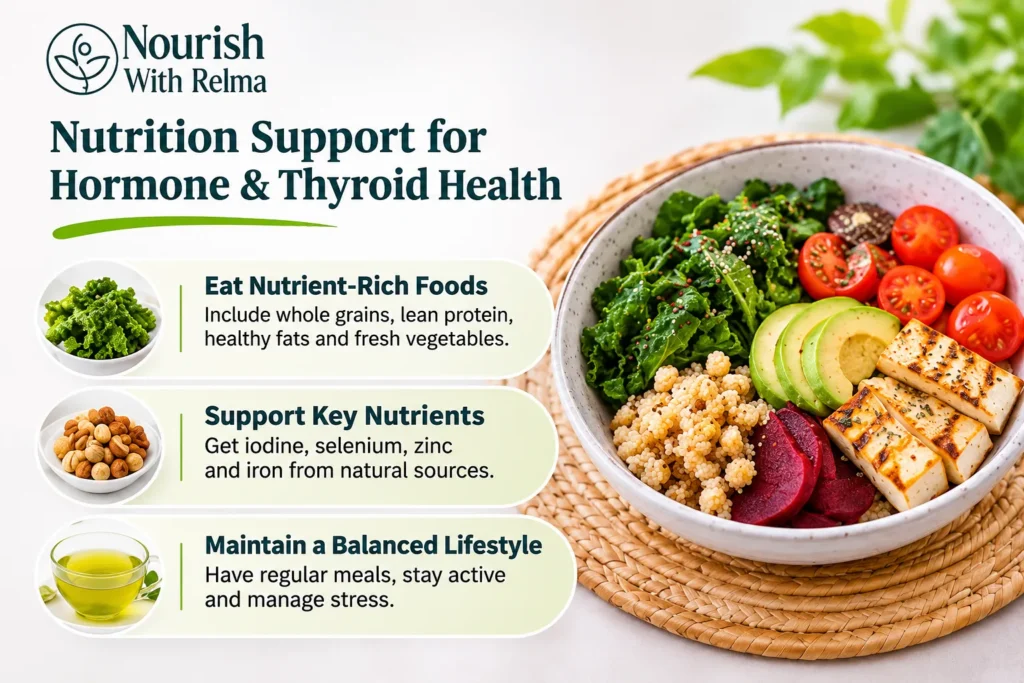
Food provides the energy, protein, fats, vitamins and minerals the body needs for its normal functions. A balanced eating pattern can support general health, but no single diet corrects every hormonal concern.
Your nutritional needs may also change if you have a diagnosed thyroid condition, take medication or have another health concern. A dietitian can help plan meals around those needs.
- Include a Variety of Whole Foods
Build everyday meals around a mix of food groups. You do not need expensive products or special ingredients to eat well.
Practical choices include:
- Whole grains such as oats, ragi and whole wheat
- Pulses and legumes such as dal, chickpeas and rajma
- Vegetables, including leafy greens
- Fruits such as guava, papaya and oranges
- Protein foods such as eggs, milk, curd, paneer, fish, chicken, tofu or pulses
- Nuts and seeds in suitable portions
Eating a variety of foods makes it easier to obtain different nutrients.
- Include Protein in Your Meals
Protein helps maintain and repair body tissues. Including a protein source in regular meals can also make meals more satisfying.
Some familiar Indian meal options are:
- Idli with sambar
- Dosa with sambar and curd
- Dal with rice and vegetables
- Chickpea or rajma curry with whole grains
- Eggs with whole-wheat toast
- Paneer or tofu with vegetables
The amount of protein you need depends on factors such as your age, activity level and health status.
- Choose Fibre-Rich Foods
Vegetables, fruits, beans, lentils, oats, millets and whole grains provide dietary fibre. Fibre supports digestive health and can help make meals more filling.
For example, you could serve rice or chapati with dal, vegetable poriyal and curd. This creates a more balanced meal than relying mainly on refined carbohydrates.
You do not need to eliminate rice simply because you are concerned about hormonal health. Portion sizes and the overall balance of your meals matter.
- Get Enough Iodine, but Avoid Excess
Iodine is an essential mineral that the thyroid uses to produce thyroid hormones. Iodised salt is a common dietary source in India. Dairy products, eggs and seafood can also provide iodine.
Taking extra iodine does not automatically improve thyroid function. High-dose iodine supplements and kelp products may cause problems in some people, including those with certain thyroid conditions.
Use iodised salt as part of a balanced diet, and speak with your doctor before taking iodine supplements.
- Be Careful With Supplements and Restrictive Diets
You may come across advice recommending that everyone with a thyroid or hormone concern should avoid gluten, dairy, soy or entire food groups. These restrictions are not necessary for everyone.
Supplements can also interact with medicines or provide more of a nutrient than your body needs. If you suspect a deficiency, ask your healthcare professional whether testing or supplementation is appropriate.
Choose dietary changes based on your health needs rather than following every recommendation you see online.
Foods to Include in a Balanced Indian Eating Pattern
There is no single food that cures hormonal imbalance or restores thyroid function. Instead, aim for variety and meals that suit your nutritional needs.
Food group | Everyday examples | Nutritional contribution |
Whole grains and millets | Ragi, oats, whole wheat and millets | Energy and fibre |
Pulses and legumes | Moong dal, toor dal, chickpeas and rajma | Plant protein and fibre |
Vegetables | Spinach, beans, carrots and gourds | Fibre, vitamins and minerals |
Fruits | Guava, papaya, oranges and apples | Fibre and micronutrients |
Protein foods | Eggs, fish, chicken, paneer, tofu and curd | Protein for tissue maintenance |
Nuts and seeds | Almonds, walnuts, flaxseeds and pumpkin seeds | Healthy fats and other nutrients |
Your choices may need to be adjusted if you have food allergies, a diagnosed medical condition or specific dietary requirements.
A Simple Example of a Balanced South Indian Meal Plan
The following is an example of how familiar South Indian foods can fit into a balanced eating pattern. It is not a prescribed thyroid diet or a treatment plan.
Meal | Example |
Breakfast | Idli with sambar and a serving of fruit |
Mid-morning | Guava or another seasonal fruit |
Lunch | Rice or chapati, dal, vegetable poriyal, curd and a protein option |
Evening snack | A small portion of nuts or roasted chana |
Dinner | Dosa with sambar, or chapati with vegetables and paneer or dal |
Adjust portions and food choices to your appetite, activity level and medical needs. If you have a diagnosed condition, your doctor or dietitian can help determine whether you need a different plan.
If You Take Thyroid Medication, Pay Attention to Timing
People prescribed levothyroxine for hypothyroidism are commonly advised to take it consistently on an empty stomach, usually 30–60 minutes before breakfast, with water. Food and coffee can affect how the medicine is absorbed.
Calcium and iron supplements can also interfere with absorption and may need to be taken several hours apart. Follow the instructions provided by your prescribing doctor or pharmacist, as advice can vary with the medicine and your circumstances.
Do not change your dose, stop your medication or replace it with food or supplements without medical advice.
Common Mistakes to Avoid When Managing Hormonal Health
Assuming every symptom is a thyroid problem
Fatigue, weight changes and hair loss can have many causes. A thyroid test may be appropriate, but symptoms alone cannot confirm a thyroid disorder.
Following a restrictive online diet
Removing several food groups without a clear reason can make it harder to meet your nutritional needs. Be cautious of diets that promise to correct hormones quickly.
Taking supplements without checking your needs
High-dose iodine and other supplements may not be suitable for everyone. Discuss them with your healthcare professional, especially if you have a thyroid condition or take medication.
Delaying medical assessment
Nutrition can support general health, but it cannot identify the cause of persistent symptoms. Consult a doctor if symptoms continue or interfere with daily life.
When Should You Consult a Doctor or Dietitian?
Speak with a doctor if you experience persistent tiredness, unexplained weight changes, unusual sensitivity to heat or cold, a rapid or irregular heartbeat, menstrual changes, neck swelling or other symptoms that concern you.
Seek urgent medical attention for severe symptoms such as chest pain, fainting or a very rapid or irregular heartbeat accompanied by feeling seriously unwell.
A doctor can investigate the cause and recommend treatment if needed. A qualified dietitian can then help you plan meals around your health requirements, medication instructions, food preferences and routine.
Nutrition Guidance for Hormonal Health in Mysore
If you are unsure what to eat while managing a hormone-related concern, a personalised approach may be more useful than following a general online diet chart.
Nourish With Relma offers nutrition guidance and meal-planning support. Its website includes hormonal health and thyroid-related nutrition among its areas of focus.
Nutrition support can help you work on practical eating habits that fit your food preferences and daily routine. If you have a diagnosed thyroid condition, your meal plan should complement the care provided by your doctor.
If you are looking for a hormonal imbalance diet in Mysore, visit Nourish With Relma to learn more about its nutrition services and consultation process.
Conclusion
Hormonal imbalance and thyroid problems are related, but they do not mean the same thing. Hormonal imbalance is a broad term that can involve different glands, while a thyroid disorder specifically affects thyroid function.
Symptoms such as tiredness, weight changes, hair thinning and menstrual irregularities can occur for several reasons. A medical assessment and appropriate tests can help identify the cause.
A varied diet can support general health, but no single food or restrictive diet can cure a thyroid disorder or correct every hormonal concern. Combine appropriate medical care with realistic nutrition habits, and seek personalised guidance when you need help planning your meals.
Frequently Asked Questions
1. What is the difference between hormonal imbalance and thyroid problems?
Hormonal imbalance is a broad term describing changes in hormone levels or activity. A thyroid problem is a specific condition affecting the thyroid gland and its hormone production. Thyroid disorders can cause hormone-related symptoms, but other glands and conditions can also be involved.
2. What are the common symptoms of thyroid problems in women?
Symptoms may include tiredness, unexplained weight changes, hair thinning, dry skin, temperature sensitivity, menstrual changes and mood changes. An underactive and overactive thyroid can cause different symptoms. A medical assessment is needed to determine the cause.
3. Can hormonal imbalance cause weight gain?
Some hormone-related conditions, including hypothyroidism, can contribute to weight changes. However, weight is also influenced by food intake, activity, sleep, medication and other health conditions. Discuss unexplained weight gain with a healthcare professional instead of assuming hormones are responsible.
4. Which test checks for thyroid problems?
Doctors commonly use a TSH blood test as an initial assessment. Depending on the results and symptoms, they may also request free T4, T3 or thyroid antibody tests. The appropriate tests depend on the individual clinical situation.
5. What foods are good for thyroid health?
Some people find ongoing nutrition support useful for weight-management goals, particularly when they need help adapting meals, portions and eating habits to their routine. Follow-up requirements vary between individuals.
6. Should I avoid rice if I have a thyroid problem?
Not necessarily. Rice can be part of a balanced diet. Consider suitable portions and combine it with protein foods, vegetables and pulses. A complete food-group restriction is not generally required simply because someone has a thyroid condition.
7. Can diet alone cure thyroid problems or hormonal imbalance?
No. Nutrition can support overall health and complement medical care, but it cannot be relied upon to cure thyroid disorders or every hormone-related condition. Some conditions require prescribed medication, monitoring or other medical treatment.
8. Can a dietitian help with hormonal health in Mysore?
A qualified dietitian can help with meal planning, balanced food choices and nutrition goals based on your health needs. If you have symptoms of a possible hormonal or thyroid disorder, consult a doctor for diagnosis and treatment. Nutrition guidance can complement that care.