Feeling bloated after a meal is common. Your abdomen may feel tight or unusually full, your clothes may feel uncomfortable around your waist, or you may notice more gas than usual. Sometimes the discomfort settles within a few hours. For others, it keeps returning and comes with abdominal pain, constipation or diarrhoea.
When digestive discomfort happens regularly, it can be difficult to work out whether a particular food is responsible or whether something like irritable bowel syndrome (IBS) may be involved.
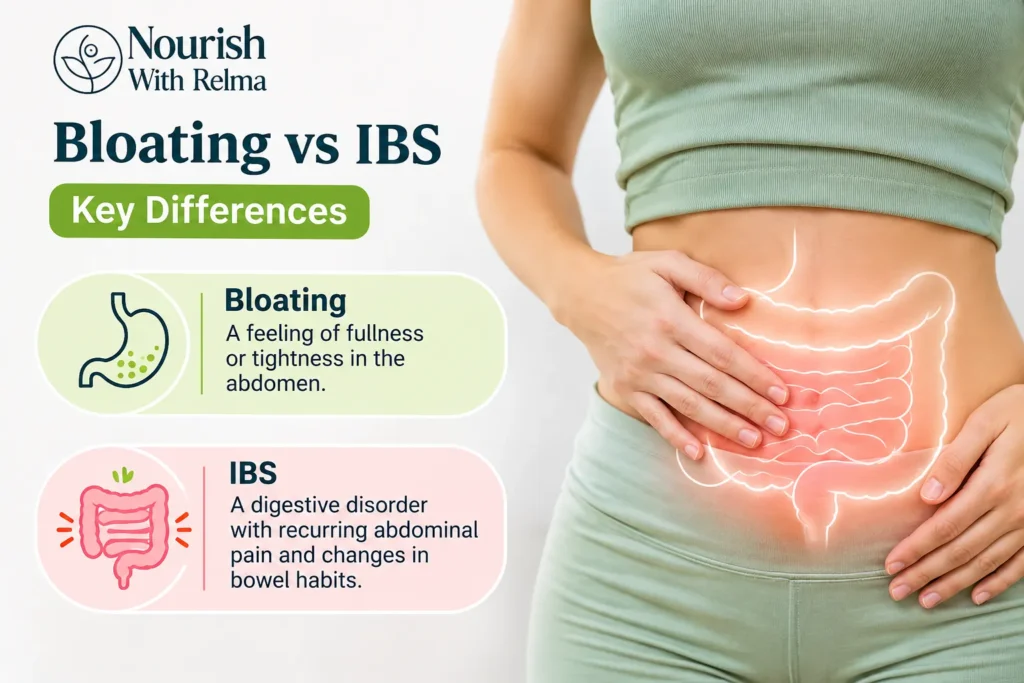
Bloating and IBS are related, but they are not the same. Bloating is a symptom with several possible causes. IBS is a digestive disorder associated with recurring abdominal pain and changes in bowel habits.
Understanding the difference between Bloating vs IBS: Symptoms, Differences & Diet Tips can help you decide when to seek medical advice and how to approach food choices without unnecessarily restricting your diet.
What Is Bloating?
Bloating is a feeling of fullness, tightness or pressure in the abdomen. Some people also notice that their stomach looks larger than usual. It may occur with gas, rumbling sounds, discomfort or frequent passing of wind.
Bloating can happen occasionally, particularly after a large meal or certain foods. It may also be related to constipation, food intolerance, digestive conditions or changes around the menstrual cycle.
Some common contributors include:
- Eating large meals or eating too quickly.
- Swallowing air while eating or drinking.
- Drinking fizzy beverages.
- Constipation.
- Difficulty digesting certain foods, such as lactose in people with lactose intolerance.
- Eating foods that produce more gas during digestion.
- Digestive conditions such as IBS or coeliac disease.
Occasional bloating does not automatically mean you have a medical condition. However, frequent, persistent or worsening bloating should be discussed with a healthcare professional.
What Is Irritable Bowel Syndrome (IBS)?
Irritable bowel syndrome, commonly called IBS, is a disorder of gut-brain interaction. It affects how the digestive system functions and is associated with recurring abdominal pain and changes in bowel movements.
People with IBS may experience:
- Abdominal pain or cramps.
- Bloating and excess gas.
- Constipation.
- Diarrhoea.
- Alternating constipation and diarrhoea.
- A feeling that the bowel has not emptied completely.
- Changes in stool frequency or appearance.
Symptoms can come and go. Some people notice that abdominal discomfort changes after a bowel movement or becomes worse after particular meals.
IBS is different from inflammatory bowel disease (IBD). IBS does not cause the intestinal inflammation and tissue damage associated with conditions such as Crohn’s disease and ulcerative colitis.
A doctor should assess recurring digestive symptoms. Self-diagnosis can overlook other conditions that cause similar problems.
Bloating vs IBS: What Is the Difference?
The main distinction is that bloating is a symptom, while IBS is a recognised digestive disorder.
Feature | Bloating | Irritable Bowel Syndrome (IBS) |
Meaning | A feeling of fullness, pressure or swelling in the abdomen | A digestive disorder involving recurring abdominal pain and altered bowel habits |
Main experience | Fullness, gas or visible abdominal swelling | Abdominal pain with constipation, diarrhoea or changes in bowel habits |
Duration | Can be occasional or persistent | Usually recurring over time |
Possible causes | Gas, constipation, food intolerance, large meals and digestive conditions | Complex gut-brain interactions and other contributing factors |
Bowel changes | May occur, but are not essential | Commonly involve changes in stool frequency or form |
Diagnosis | Depends on the underlying cause | Based on symptom patterns, clinical assessment and appropriate investigations |
Dietary approach | Depends on the cause and individual triggers | May involve personalised dietary changes and, in selected cases, a structured low FODMAP approach |
You can experience bloating without having IBS. At the same time, bloating is a common symptom among people who have IBS.
If bloating is your only symptom, do not assume that you have IBS. A doctor can consider other possible explanations.
How Can You Recognise Possible IBS Symptoms?
IBS symptoms differ between individuals. The pattern and frequency of symptoms are often more useful than one isolated episode of discomfort.
- Repeated abdominal pain
People with IBS often experience abdominal pain or cramps associated with bowel movements. The pain may improve after passing stool or become worse around the time of a bowel movement.
- Changes in bowel habits
Some people experience constipation, while others have diarrhoea. Some experience both at different times.
- Frequent bloating and gas
The abdomen may feel tight, full or swollen. Gas and rumbling sounds can also occur.
- A feeling of incomplete bowel emptying
You may feel that you still need to pass stool even after using the toilet.
- Symptoms that fluctuate
IBS symptoms may vary from day to day. Food, stress, sleep and other individual factors may influence how someone feels.
These symptoms can overlap with other digestive conditions. A doctor can assess the pattern and decide whether further investigations are needed.
What Causes Bloating and IBS?
Bloating can have several causes. There is no single explanation that applies to everyone.
Common contributors to bloating
Eating habits: Eating quickly, having large meals or drinking fizzy beverages may increase discomfort or the amount of air swallowed.
Constipation: When bowel movements become less frequent or stools are difficult to pass, some people experience increased bloating.
Food intolerance: Some people have difficulty digesting particular foods or ingredients. Lactose intolerance is one example.
Digestive conditions: IBS, coeliac disease and other gastrointestinal conditions can cause bloating.
What contributes to IBS?
The exact cause of IBS is not fully understood. Research suggests that several factors may be involved:
- Changes in communication between the gut and brain.
- Increased sensitivity in the digestive tract.
- Changes in intestinal movement.
- Previous gastrointestinal infections in some people.
- Changes in gut bacteria.
- Stress and other psychological factors that can influence digestive symptoms.
IBS is not simply caused by eating the wrong food or experiencing stress. It is a complex condition, and managing it may require more than one approach.
Which Foods May Trigger Bloating or IBS Symptoms?
Food triggers are individual. A food that causes discomfort for one person may be tolerated well by someone else.
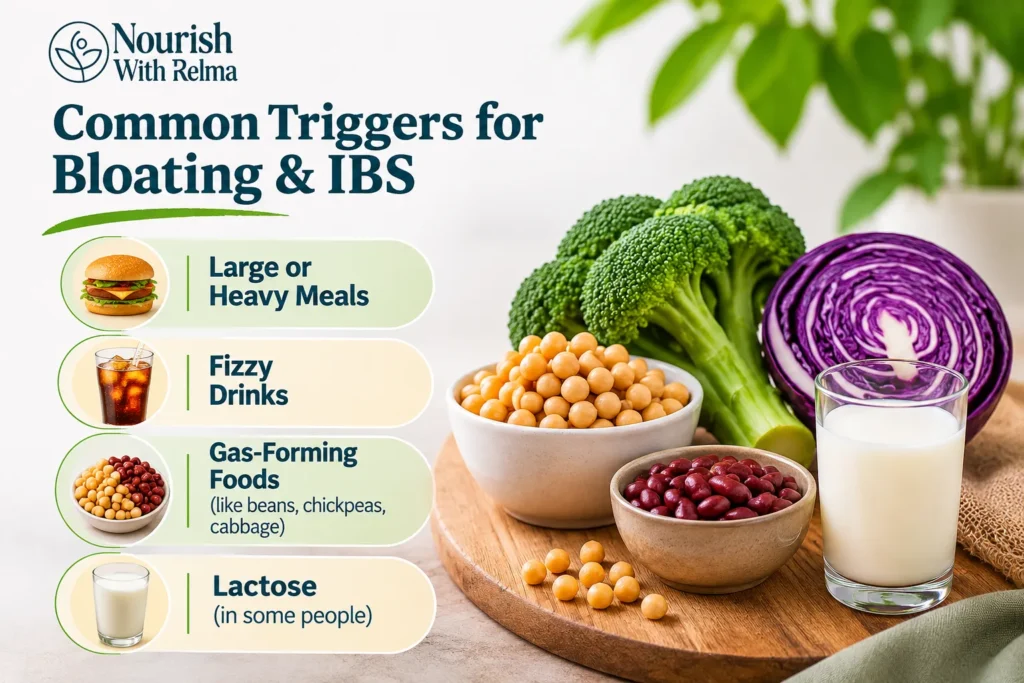
Some foods and drinks that may contribute to gas or bloating include:
- Beans, chickpeas and certain lentils.
- Cabbage, cauliflower and some other vegetables.
- Onions and garlic.
- Milk and some dairy products in people who have difficulty digesting lactose.
- Fizzy drinks.
- Large or high-fat meals.
- Certain fruits and sweeteners containing fermentable carbohydrates.
This does not mean that everyone should avoid these foods. Pulses, vegetables, fruits and dairy products can provide valuable nutrients. Removing them without a clear reason may make your diet less varied.
Everyday Indian foods and digestive comfort
If you experience bloating after meals, start by observing your own food patterns rather than eliminating several food groups.
For example:
- If a large serving of rajma or chana causes discomfort, review the portion and preparation method.
- If milk repeatedly causes symptoms, discuss whether lactose intolerance could be involved.
- If meals containing onion and garlic seem to trigger discomfort, record the pattern and discuss suitable alternatives.
- If you eat very large meals after long gaps, observe whether smaller, more regular meals feel more comfortable.
Food tolerance varies. These examples are intended to help you observe patterns, not to suggest that everyone with IBS must avoid these foods.
What Is the Low FODMAP Diet?
FODMAP stands for fermentable oligosaccharides, disaccharides, monosaccharides and polyols. These are types of carbohydrates that may be poorly absorbed in the small intestine. In some people, they can contribute to gas, bloating, abdominal discomfort and changes in bowel habits.
A low FODMAP diet is a structured dietary approach that may help some people manage IBS symptoms. It is usually carried out in three stages.
- Short-term reduction
Certain high-FODMAP foods are temporarily reduced. This stage should be limited in duration and planned with appropriate professional guidance.
- Reintroduction
Foods are gradually tested, usually one FODMAP group at a time, to understand which foods and portions are tolerated.
- Personalisation
The diet is adjusted to include as many tolerated foods as possible while managing symptoms. The aim is to avoid unnecessary long-term restrictions.
A low FODMAP diet is not intended to be a permanent, highly restrictive eating plan. It should be considered after appropriate medical assessment and preferably followed with a dietitian who understands the approach.
Do not start eliminating wheat, dairy, pulses, fruits and vegetables all at once. Such restrictions can reduce dietary variety and make it harder to identify the actual trigger.
Practical Eating Habits That May Help Manage Bloating
Not every digestive concern requires a specialised diet. Depending on the underlying cause, a few everyday adjustments may help improve comfort.
Eat at a comfortable pace
Take time to chew your food. Eating too quickly may increase the amount of air you swallow and make it harder to notice when you are comfortably full.
Review meal sizes
If large meals leave you uncomfortable, try adjusting the portion and observe whether your symptoms change. Smaller, more regular meals may suit some people.
Stay hydrated
Drink water regularly throughout the day. Adequate fluid intake is particularly important when constipation contributes to discomfort.
Increase fibre gradually
Fibre supports bowel health, but increasing it suddenly can cause gas and bloating in some people. Oats, fruits, vegetables and pulses provide fibre. Adjust the amount gradually according to your tolerance.
Maintain regular physical activity
Walking and other comfortable physical activities may support bowel regularity and general digestive health.
Notice individual food patterns
Keep a food and symptom diary for a short period. Record what you ate, when symptoms occurred, bowel movements and other relevant factors. Look for repeated patterns rather than assuming one episode proves a food intolerance.
Pay attention to stress and sleep
Stress and poor sleep can influence digestive symptoms, particularly in people with IBS. Relaxation practices, consistent sleep routines and appropriate support may form part of an overall management plan.
Bloating and IBS: Common Mistakes to Avoid
Eliminating too many foods
Avoid removing multiple food groups without identifying a reason. Restrictive diets can affect nutritional adequacy and make everyday eating unnecessarily difficult.
Assuming bloating means IBS
Bloating can occur for many reasons. IBS involves a broader pattern of symptoms and requires clinical assessment.
Following a low FODMAP diet permanently
The low FODMAP approach includes a reintroduction and personalisation stage. Long-term restriction without guidance is not the goal.
Ignoring persistent symptoms
Repeated bloating, abdominal pain or changes in bowel habits should not be dismissed as normal digestion. A medical professional can help investigate the cause.
Relying on supplements or home remedies alone
Digestive symptoms can have different causes. A probiotic, herbal product or supplement may not be appropriate for everyone. Discuss persistent symptoms and supplement use with a healthcare professional.
When Should You See a Doctor for Bloating or Digestive Problems?
Occasional bloating may settle on its own. However, consult a doctor if it occurs regularly, does not improve or is accompanied by ongoing changes in bowel habits.
Medical assessment is particularly important if you notice:
- Unintentional weight loss.
- Blood in your stool or rectal bleeding.
- Persistent or worsening abdominal pain.
- Repeated vomiting.
- A noticeable abdominal lump or swelling.
- New or ongoing changes in bowel habits.
- Symptoms that interfere with daily activities.
Severe, sudden abdominal pain, vomiting blood, fainting or an inability to pass stool or gas with marked abdominal swelling requires urgent medical attention.
A doctor may review your symptoms, medical history and family history. Depending on the findings, they may recommend blood tests, stool tests or other investigations. The aim is to assess whether IBS is likely and investigate other conditions when appropriate.
How Can a Dietitian Help With Digestive Problems?
Once medical concerns have been assessed, nutrition guidance may help you understand how food habits relate to your digestive symptoms.
A dietitian can help with:
- Reviewing your regular eating pattern.
- Identifying possible food and portion-related triggers.
- Improving meal balance and fibre intake where appropriate.
- Planning meals around your food preferences and nutritional needs.
- Making dietary changes without unnecessary restrictions.
- Providing guidance on a structured approach such as the low FODMAP diet, when appropriate and within their expertise.
Dietary management should be individualised. Someone experiencing constipation may need a different approach from someone who frequently has diarrhoea. A person with a food intolerance may also need different guidance from someone with diagnosed IBS.
A dietitian does not replace a doctor’s role in diagnosing digestive conditions.
Digestive Health and Nutrition Guidance at Nourish With Relma
Recurring bloating or digestive discomfort can make everyday food choices frustrating. You may be unsure whether to change portion sizes, adjust fibre intake or investigate a possible food intolerance.
Nourish With Relma focuses on personalised nutrition guidance and practical food habits. If you are looking for a Bloating vs IBS: Symptoms, Differences & Diet Tips in Mysore, you can explore the nutrition guidance available through Nourish With Relma.
A personalised approach can help you review your eating habits and work towards a practical meal routine that considers your preferences and nutritional needs. If you have ongoing or concerning digestive symptoms, seek medical assessment first and use nutrition support as a complement to appropriate healthcare.
Conclusion
Bloating and IBS are connected, but they are not the same. Bloating is a symptom that can result from gas, constipation, food intolerance and several digestive conditions. IBS is a disorder associated with recurring abdominal pain and changes in bowel habits.
Understanding your symptom pattern is more useful than immediately removing foods from your diet. Keep track of recurring symptoms, make gradual food adjustments and seek medical advice if the problem persists or warning signs appear.
Medical assessment and personalised nutrition guidance can help you make informed decisions about food and digestive health.
Frequently Asked Questions
1. What is the difference between bloating and IBS?
Bloating is a symptom that causes abdominal fullness, pressure or swelling. IBS is a digestive disorder involving recurring abdominal pain and changes in bowel habits, such as constipation or diarrhoea. Bloating can be one symptom of IBS, but it does not automatically mean someone has the condition.
2. Can you have bloating without IBS?
Yes. Bloating can occur because of gas, constipation, eating habits, food intolerance, menstrual changes or other digestive conditions. A person does not need to have IBS to experience bloating.
3. What are the common symptoms of IBS?
Common symptoms include recurring abdominal pain, bloating, constipation, diarrhoea, changes in stool frequency and a feeling of incomplete bowel emptying. Symptoms can vary from person to person.
4. Which foods commonly cause bloating?
Beans, chickpeas, certain lentils, onions, garlic, cabbage, cauliflower, fizzy drinks and some dairy products may contribute to bloating in certain people. Individual tolerance differs, so avoid eliminating these foods unless there is a clear reason.
5. Is the low FODMAP diet good for IBS?
A low FODMAP diet may help some people with IBS. It involves a short-term reduction phase followed by food reintroduction and personalisation. It is best undertaken with guidance from a suitably trained dietitian after medical assessment.
6. When should I see a doctor for bloating?
Consult a doctor if bloating is frequent, persistent, worsening or accompanied by changes in bowel habits. Seek prompt medical attention for warning signs such as blood in the stool, unexplained weight loss or significant abdominal pain.
7. Can a dietitian help with IBS and digestive problems?
A dietitian can help review eating patterns, assess possible food triggers, plan balanced meals and provide appropriate dietary guidance. A doctor should assess and diagnose suspected IBS or other digestive conditions.
8. Where can I find a dietitian for digestive problems in Mysore?
You can explore Nourish With Relma for personalised nutrition guidance. If you have persistent digestive symptoms or suspect IBS, consult a doctor for medical assessment before beginning a restrictive diet.