Why Does Rice Get Blamed for Weight Gain?
Rice is primarily a source of carbohydrate, and carbohydrates have become an easy target in many popular weight-loss diets.
You may have heard claims such as:
- “Carbs should not be eaten after 6 p.m.”
- “Rice turns into fat at night.”
- “Your metabolism stops at night.”
- “You should eat only roti for dinner if you want to lose weight.”
- “Brown rice is always good and white rice is always bad.”
These statements are much more complicated than they sound.
Carbohydrates are an important source of energy. WHO states that carbohydrates should generally form a significant part of a healthy diet, with preference for carbohydrate sources such as whole grains, vegetables, fruits and pulses.
Rice can therefore fit into a healthy eating pattern.
The more useful question is not simply:
“Can I eat rice at night?”
It is:
“How much rice am I eating, what am I eating with it, and how does that dinner fit into my overall diet?”
What Actually Influences Weight Gain?
Body weight is affected by many factors.
NIDDK identifies lifestyle habits, food and beverage intake, physical activity, sleep, medications, health conditions, family history and genetics among factors that can influence weight.
From a nutrition perspective, overall energy intake matters.
If someone consistently consumes more energy than their body uses over time, some of that excess energy can be stored and body weight may increase.
That can happen with any food.
For example, a large dinner containing:
- A large serving of rice
- A rich curry
- Fried side dishes
- A sugary drink
- Dessert
may provide considerably more energy than a moderate serving of rice paired with vegetables and a protein source.
The rice itself is only one part of that meal.
the answer. The purpose is simply to understand what is
“Don’t eat rice at night. You will gain weight.”
It is a common piece of diet advice, particularly for people trying to lose weight. Some people switch from rice to roti at dinner, while others stop eating carbohydrates after a particular time of day.
But does rice actually become more fattening just because you eat it at night?
No. Eating rice at night does not automatically cause weight gain.
Weight is influenced by the overall balance between energy consumed and energy used over time, along with factors such as physical activity, sleep, medications, health conditions and other lifestyle factors. NIDDK specifically identifies the idea that grain foods such as rice are inherently fattening as a nutrition myth.
That does not mean portion size and meal timing are irrelevant.
A very large rice-based dinner, combined with calorie-dense sides, desserts and additional evening snacks, can contribute to excess calorie intake. The important distinction is that the problem is the overall eating pattern, not the clock alone.
Does the Time You Eat Rice Matter?
Meal timing can be relevant to eating patterns, but it is not accurate to say that rice suddenly becomes fattening after a particular hour.
Your body continues to use energy while you sleep. Weight management is not controlled by a simple switch that changes when the clock reaches 8 p.m.
NIDDK recommends looking at the overall eating pattern and energy balance rather than treating individual foods as inherently fattening.
That said, the time you eat can indirectly affect your diet.
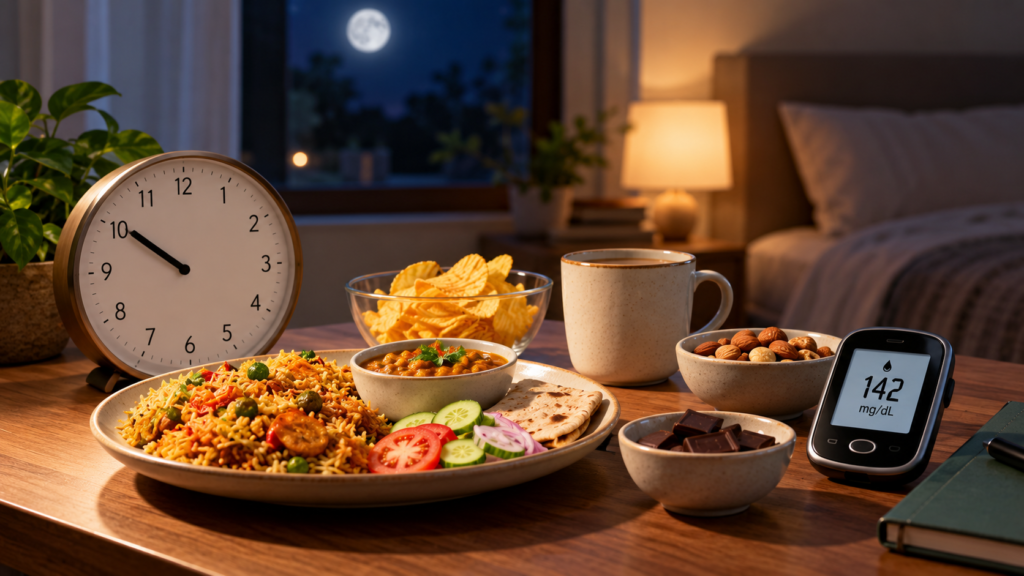
For example, someone who regularly eats a very large dinner at 10:30 p.m. after eating very little all day may consume more food overall than someone who eats balanced meals throughout the day.
Late-night eating can also sometimes go along with:
- Larger portions
- Mindless eating while watching television
- Additional snacks
- Sugary drinks
- Desserts
- Irregular sleep
So the question should not be reduced to “rice at night: yes or no?”
Look at the complete pattern.
Portion Size Matters More Than the Clock
One of the easiest ways to understand this is to compare two dinners.
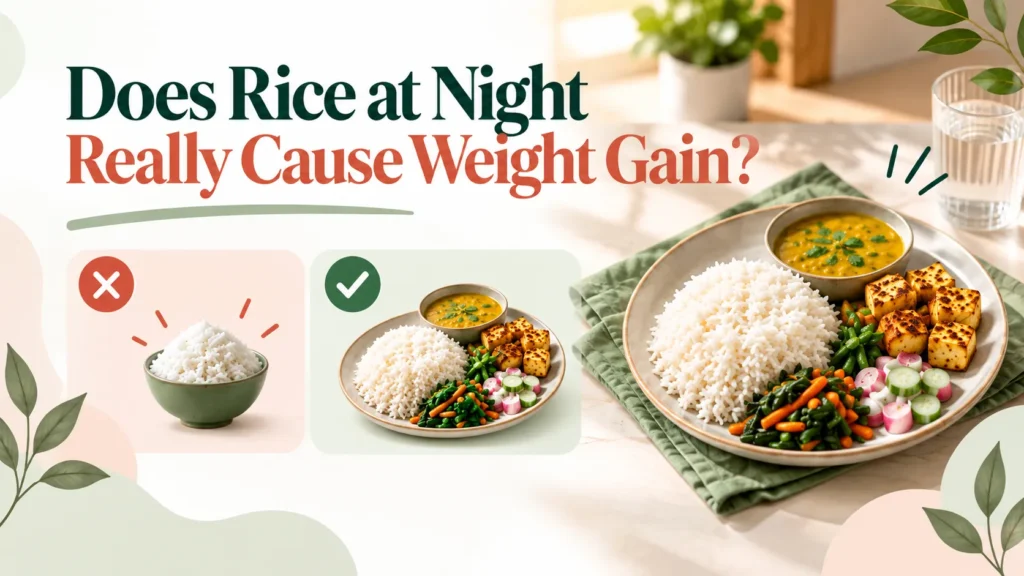
Dinner A
A large bowl of rice, a rich curry, fried side dishes and dessert.
Dinner B
A moderate serving of rice, dal or another protein source, vegetables and a suitable amount of healthy fat.
Both meals contain rice.
But they are not nutritionally or energetically equivalent.
The amount of rice also matters.
A serving that is appropriate for one person may be too much or too little for another because energy requirements vary according to factors such as body size, activity level, age, health status and goals.
This is why giving everyone one fixed rule such as “never eat more than half a cup of rice” is not appropriate.
Your portion should fit the rest of your meal and your individual nutritional needs.
NIDDK’s healthy eating guidance includes whole grains alongside vegetables, fruits and protein foods as components of a healthy eating pattern.

White Rice vs Brown Rice: Does It Matter?
White and brown rice are not nutritionally identical.
Brown rice is a whole grain because it retains more of the grain’s original components, including the bran and germ. White rice has undergone more processing.
WHO recommends obtaining carbohydrates primarily from whole grains, vegetables, fruits and pulses.
Whole-grain choices can therefore be useful additions to a healthy diet.
But that does not mean white rice must be completely removed.
Portion size and the overall eating pattern still matter.
Can Rice Be Part of a Weight-Loss Diet?
Yes. Rice can fit into a weight-management plan when the overall diet meets the person’s nutritional and energy needs.
NIDDK’s weight-management guidance includes grains such as brown rice as part of a healthy eating plan.
The key is not to treat rice as a special exception.
Think about your complete day:
Breakfast → lunch → snacks → dinner → beverages → desserts
If dinner contains rice but the rest of the day’s eating pattern is balanced and appropriate for your needs, there is no general rule requiring rice to be removed simply because dinner occurs at night.
How Much Rice Should You Eat at Dinner?
There is no single portion that is correct for everyone.
Your appropriate portion depends on factors such as:
- Your energy requirements
- Physical activity
- Age
- Body size
- Weight-management goals
- Other foods in the meal
- Health conditions
- Individual nutritional needs
Instead of following a random internet serving size, consider the whole plate.
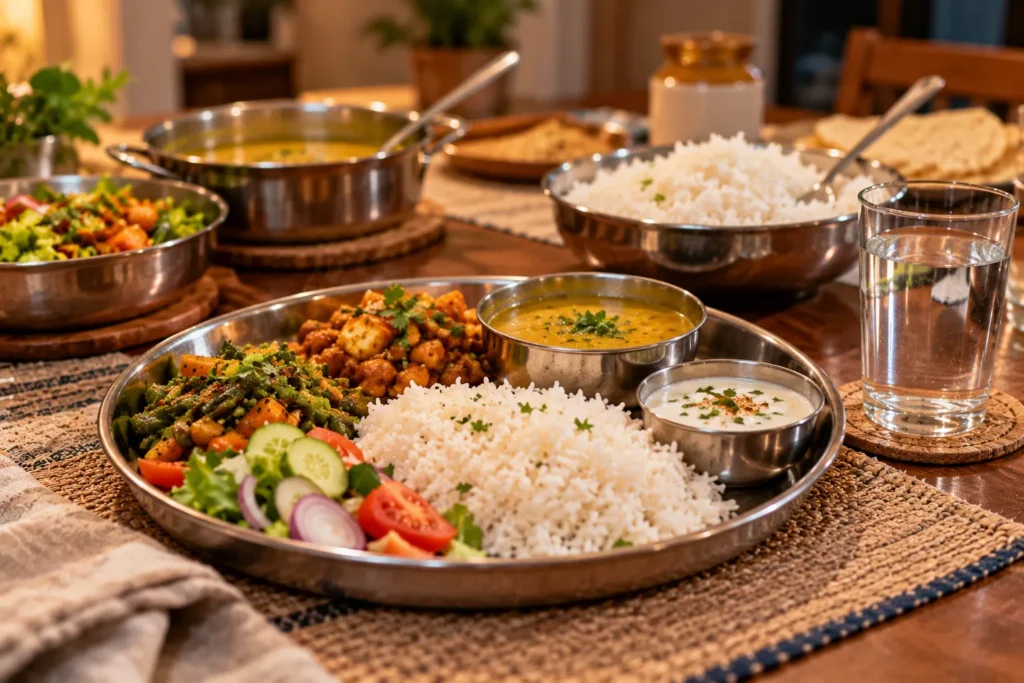
A practical meal might include:
A suitable portion of rice + a protein source + plenty of vegetables + an appropriate amount of fat.
For someone who is very physically active, the carbohydrate portion may need to be different from someone who is largely sedentary.
Likewise, someone with a medical condition affecting blood glucose may need individualized advice
Is Rice at Night Different for People With Diabetes?
If you have diabetes, the question becomes more specific.
Rice is a carbohydrate-containing food, so the amount and type of carbohydrate can matter for blood glucose management.
But “never eat rice at night” is not a universal diabetes recommendation.
Your response to a meal can depend on:
- Portion size
- Type of rice
- Other foods eaten with it
- Total carbohydrate intake
- Physical activity
- Medications
- Individual blood glucose response
People with diabetes should follow the meal-planning advice provided by their healthcare team rather than adopting a blanket rice restriction from social media.
If you are unsure how rice fits into your diabetes meal plan, individualized nutrition advice is more appropriate than a universal rule.
Does Eating Rice at Night Cause More Fat Storage?
This is where nutrition discussions often become oversimplified.
You may hear that carbohydrates eaten at night are automatically stored as fat because you are less active while sleeping.
The body does not work that simply.
Your body continues using energy during sleep for essential functions such as breathing, circulation and other physiological processes.
The larger issue for long-term weight change is the overall energy balance and eating pattern.
NIDDK explains that consistently taking in more calories than the body uses can lead to weight gain over time.
Therefore, saying “rice after 7 p.m. becomes fat” is not an accurate way to explain weight gain.
What If You Eat a Very Large Rice Dinner?
That is different.A large portion of rice can contribute substantial energy to a meal. If the meal also includes calorie-dense accompaniments and the day’s total intake is already high, the overall pattern may work against a weight-loss goal.
For example, the issue may not be:
Rice + night
but rather:
Large portion + calorie-dense sides + dessert + little activity + excess total intake
That distinction is important.
It also explains why two people can eat rice for dinner and experience completely different results.
Can Rice Make You Feel Full?
The answer depends on the type of rice, portion and what accompanies it.
A meal containing rice along with vegetables and protein may be more satisfying than rice eaten by itself.
WHO recommends dietary diversity and a balance of nutritious foods rather than relying on a single food group.
If you are hungry again shortly after dinner, consider looking at the entire meal.
Was there enough protein?
Did you include vegetables or another fibre-rich food?
Was the portion appropriate?
Were you distracted while eating?
Did you actually eat enough?
These questions are more useful than simply blaming rice.
How to Build a More Balanced Rice-Based Dinner
Should You Stop Eating Rice Completely to Lose Weight?
For most people, there is no general requirement to eliminate rice simply because they want to manage their weight.
NIDDK explicitly challenges the idea that grains such as rice are inherently fattening and notes that replacing refined grains with whole-grain choices can be beneficial.
A diet that completely removes foods you enjoy may also be difficult to maintain.
Instead of asking:
“How do I stop eating rice?”
consider:
“How can rice fit into the eating pattern I can realistically maintain?”
That might mean changing the portion, adding more vegetables, choosing different rice varieties sometimes, changing the accompaniments or adjusting the rest of the day’s meals.
When Should You Get Personalized Nutrition Advice?
If you have been trying to lose weight but keep struggling despite making changes, it may be useful to look beyond one food.
Weight can be affected by sleep, medications, health conditions, activity levels, eating patterns and other factors.
Professional nutrition guidance can help you review the entire pattern rather than repeatedly eliminating individual foods.
Nourish With Relma’s current website describes personalized meal plans based on health goals, lifestyle and preferences and lists weight management among its nutrition areas.
For someone in Mysuru who wants to understand how rice, portions and other foods fit into a weight-management plan, an individualized consultation can be more useful than following a blanket rule about avoiding carbohydrates at night.
FAQS
Does eating rice at night cause weight gain?
No. Eating rice at night does not automatically cause weight gain. Overall energy intake, portion sizes, activity and the broader eating pattern have a greater role in long-term weight change.
Can I eat rice at night and still lose weight?
Yes. Rice can fit into a weight-management diet when the portion and overall meal are appropriate for your individual needs.
Is rice at night worse than rice during the day?
Rice does not automatically become fattening because it is eaten at night. The overall dietary pattern and energy intake matter more than simply whether rice was eaten at lunch or dinner.
How much rice should I eat at night for weight loss?
There is no universal portion that works for everyone. The appropriate amount depends on your energy requirements, activity, health status and what else is included in the meal.
Is brown rice better than white rice for weight loss?
Brown rice is a whole grain and generally provides more fibre than refined white rice. However, switching to brown rice alone does not guarantee weight loss. Overall portions and dietary pattern still matter.
Should I stop eating rice completely if I want to lose weight?
Not necessarily. Rice can be included in a balanced weight-management diet. Removing it is not automatically required.
What should I eat with rice at night?
A balanced dinner can combine rice with a suitable protein source and vegetables. The exact foods and portions should depend on individual dietary needs.
Can a dietitian help me include rice in a weight-loss plan?
Yes. A dietitian can review your overall eating pattern, activity, health needs and food preferences and help determine how rice and other carbohydrate foods can fit into your plan.