Dietitian for Weight Loss in Mysore: Can They Help? Booking your first dietitian consultation in Mysore can feel much easier when you know what the appointment involves.
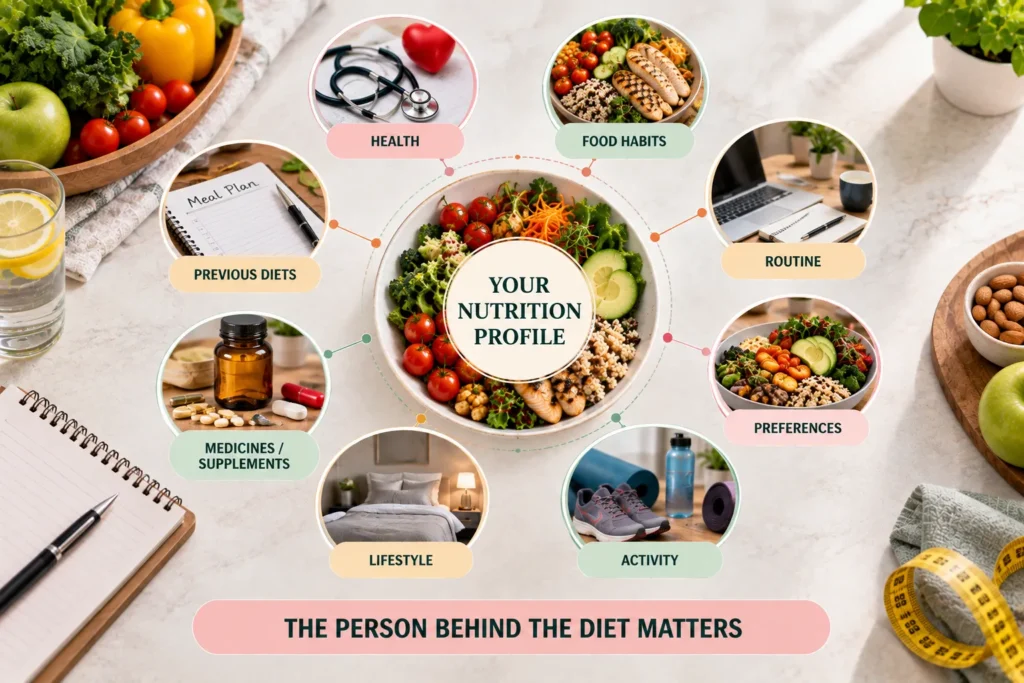
A consultation is usually more than receiving a diet chart. It gives the dietitian an opportunity to understand your health goals, eating habits, daily routine, food preferences and any practical difficulties that affect the way you eat.
The recommendations can then be shaped around your circumstances rather than copied from a generic plan.
At Nourish With Relma, the supplied information describes personalised nutrition plans based on health goals, lifestyle and food preferences. Its consultation process also includes reviewing medical history, habits and goals before discussing concerns and developing a structured plan.
The exact appointment can vary depending on why you are seeking nutrition support. However, there are several things you can generally expect during a first consultation.
What Is a Dietitian Consultation?
A dietitian consultation is a structured discussion about your nutrition, eating habits, lifestyle and health-related goals. Depending on your reason for making the appointment, the discussion may cover:
- Your main nutrition or health goal
- Usual meals and snacks
- Meal timing and portions
- Food preferences and dislikes
- Work and lifestyle routine
- Physical activity
- Sleep and other relevant lifestyle factors
- Health conditions
- Medicines or supplements
- Previous diet plans you have tried
- Relevant medical reports or test results
- Difficulties that make healthy eating challenging
The purpose is to understand your overall situation rather than judging your diet from a list of individual foods.
What Happens During a Dietitian Consultation in Mysore?
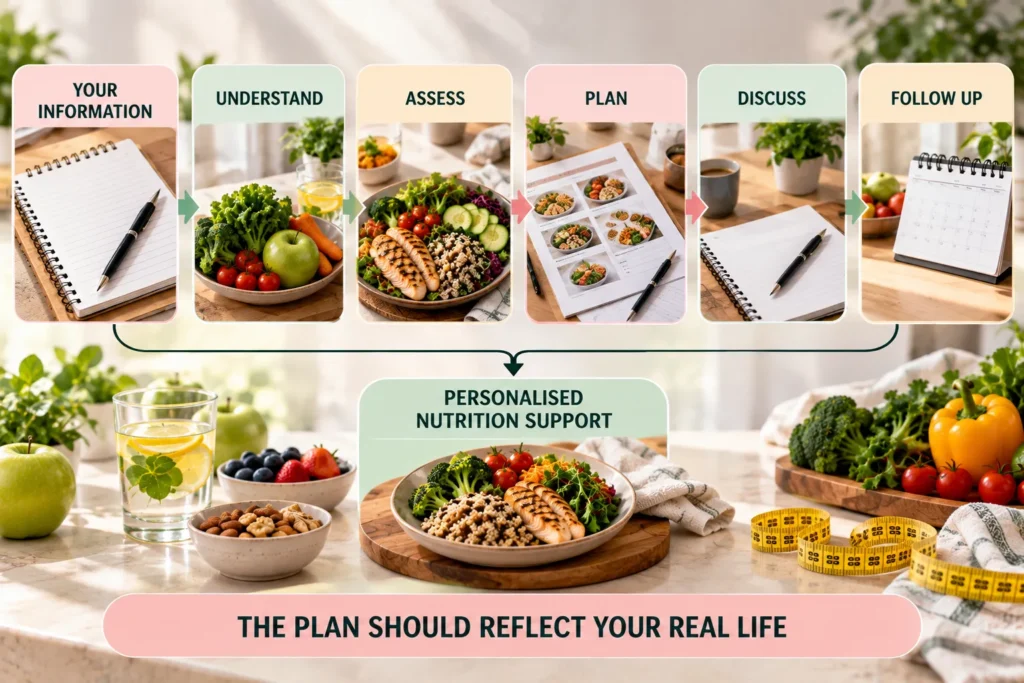
A first appointment may move through several connected stages:
Your goal → health history → dietary assessment → evaluation → nutrition goals → personalised recommendations → questions → follow-up
The order and depth of each step can vary. Someone seeking help with weight management may have a different consultation from someone looking for nutrition support during pregnancy or for a health condition.
Step 1: Discuss Why You Are Seeking Nutrition Support
The consultation usually begins with the reason you booked the appointment. You might be looking for help with:
- Weight management
- Healthier eating
- Meal planning
- Improving everyday food choices
- Nutrition support related to a health condition
- Pregnancy or postpartum nutrition
- Digestive health
- Sports nutrition
- Managing meals around a busy work schedule
Try to be specific about what you want to change. For example, instead of simply saying, “I want to eat better,” you might explain that you regularly skip breakfast, have a large lunch at work and snack late at night. That gives the dietitian a clearer picture of what is happening and what kind of changes may be practical.
Step 2: Review Your Health and Lifestyle History
Your eating habits are connected to the rest of your routine. The dietitian may ask about your daily schedule, physical activity, sleep, eating pattern and relevant health information.
Tell the dietitian about any diagnosed health conditions, medicines, supplements, allergies or dietary restrictions that are relevant to your consultation.
This information matters because two people with the same nutrition goal may have very different circumstances.
Step 3: Assess Your Current Eating Pattern
You may be asked to describe what you normally eat on a typical day. The discussion could include:
- Breakfast
- Lunch
- Dinner
- Snacks
- Beverages
- Eating outside the home
- Weekend eating
- Portion sizes
- Meal timing
- Cravings or frequent snacking
- Foods you enjoy
- Foods you avoid
- Cooking habits
There is no need to make your diet sound healthier than it really is. If you regularly order food, skip meals, eat sweets, drink sugary beverages or snack while working, it is useful to mention those habits.
The purpose of the assessment is to understand your actual routine so that recommendations have a realistic starting point.
Step 4: Discuss Relevant Measurements and Reports
Depending on your circumstances, the consultation may include relevant measurements or existing medical information. This might include:
- Height and weight
- Weight history
- Body measurements where relevant
- Existing medical reports
- Relevant blood test results
- Health history
Not everyone requires the same assessment.
If you already have recent reports related to the reason for your consultation, taking them with you can provide useful context. A nutrition consultation should not be treated as a substitute for medical diagnosis. If your symptoms or history suggest that you need medical evaluation, an appropriate healthcare professional may need to be involved.
Step 5: Set Practical Nutrition Goals
Once your current situation is understood, you can discuss what you want to work towards. A useful goal is usually more specific than simply saying “eat healthy.” Depending on your circumstances, goals might include:
- Establishing regular meals
- Improving food quality
- Increasing dietary variety
- Managing portions
- Making meals more balanced
- Improving consistency
- Planning meals around work
- Supporting physical activity
- Building habits that can be maintained over time
For weight management, long-term approaches generally consider food, physical activity and ongoing support rather than relying only on a short period of dieting.

Step 6: Develop a Personalised Nutrition Plan
This is where the information discussed during the appointment becomes practical. A personalised nutrition plan may take into account:
- Your nutrition goals
- Current eating habits
- Work and lifestyle schedule
- Food preferences
- Cultural or household eating patterns
- Activity level
- Relevant health information
- Dietary restrictions
- Foods that are realistic for you to prepare and eat
The objective is not necessarily to remove everything you enjoy. Instead, the plan can focus on changes that make sense for your nutritional needs while still fitting your daily life. The supplied Nourish With Relma information states that its personalised nutrition plans are tailored around health goals, lifestyle and preferences.
Step 7: Discuss Changes You Can Actually Follow
A nutrition plan only becomes useful when it can work in your normal routine. Your consultation may therefore cover practical issues such as:
- Meal planning:
How can meals fit around your work, family or study schedule? - Portion awareness:
Are your current portions appropriate for your goals? - Food choices:
Which foods might be added, reduced, replaced or combined differently? - Eating outside:
What can you do when eating at restaurants, ordering food or travelling? - Snacks:
What options can fit your routine when you are genuinely hungry between meals? - Consistency:
Which changes are realistic enough to continue beyond the first few weeks?
These questions can help turn general nutrition advice into something you can use in everyday situations.
Step 8: Ask Questions Before You Leave
Do not hesitate to ask questions if something about the plan is unclear. You might ask:
- What should I focus on first?
- What can I eat when travelling?
- What should I do if I miss a meal?
- Can I continue eating the food my family prepares?
- How should I manage eating outside?
- What should I do differently on weekends?
- What should I do if I cannot follow the plan on a particular day?
- When should the plan be reviewed?
Understanding why a recommendation has been made can make it easier to follow.
Step 9: Discuss Follow-Up
A nutrition consultation does not necessarily end after the first appointment. Follow-up can provide an opportunity to discuss what worked, what was difficult and whether the plan needs adjustment. For example, you may find that:
- A recommended meal timing does not suit your work schedule.
- Certain foods are difficult to prepare regularly.
- Portions become difficult to manage during social events.
- Your hunger pattern is different from what you expected.
- Your goals have changed.
- Your daily routine has changed.
These situations do not necessarily mean the entire plan has failed. They can provide information that helps determine what needs to change.
How Should You Prepare for Your First Dietitian Appointment?
You do not need to completely change your eating habits before meeting the dietitian. Instead, prepare information that can help describe your usual routine. Consider noting:
- Why you are seeking nutrition guidance
- Your usual daily meals
- Typical snacks and drinks
- Foods you regularly avoid
- Your work or study schedule
- Physical activity
- Relevant medical conditions
- Medicines and supplements
- Food allergies or intolerances
- Recent relevant medical reports
- Previous diet plans you have tried
- Questions you want to ask
A short food record can also help you remember what you normally eat. Most importantly, be honest. A consultation is more useful when it reflects your ordinary routine rather than an unusually “healthy” day prepared specifically for the appointment.
Do You Need Medical Reports for a Dietitian Consultation?
Not everyone needs medical reports. However, if you already have recent reports that relate to your nutrition concern, taking them with you can provide additional context.
For someone being treated for a medical condition, information about the diagnosis, treatment and relevant reports may help the dietitian consider the person’s nutritional requirements.
You do not need to order medical tests simply because you are attending a dietitian consultation unless a qualified healthcare professional recommends them.
Can a Dietitian Consultation Help With Weight Management?
A dietitian consultation can provide structured nutrition guidance for someone working towards weight-management goals. The discussion may cover eating patterns, portions, food choices and lifestyle factors, helping translate general healthy-eating advice into practical changes.
Professional guidance may be particularly useful when someone has tried generic diet plans but finds them difficult to fit into everyday life.
However, weight change is influenced by several factors. A consultation cannot guarantee a particular amount of weight loss or a specific timeline. Health conditions, medicines, sleep, lifestyle and other factors can affect weight management.
When Should Nutrition Support Be Combined With Medical Care?
Dietetic care and medical care can sometimes work alongside each other.
Speak with an appropriate healthcare professional if you have:
- Unexplained changes in weight
- Significant or persistent symptoms
- A suspected medical condition
- Concerns requiring diagnosis
- A condition requiring medical treatment
A dietitian can provide nutrition guidance within their professional scope, but a dietitian consultation should not replace medical diagnosis or treatment when those are needed.
Dietitian Consultation in Mysore at Nourish With Relma
The supplied information describes Nourish With Relma as being located in Vijayanagar 1st Stage, Mysuru, with personalised nutrition planning as part of its services. The source lists nutrition support areas including weight management, PCOS/PCOD, pregnancy nutrition, digestive health, post-surgery recovery, stress management, hormonal health and sports nutrition.
The supplied website information describes its online consultation process as:
- Booking an appointment
- Completing an assessment form
- Sharing medical history, habits and goals
- Discussing concerns during a one-to-one video call
- Receiving a structured personalised plan based on the information provided
Nourish With Relma
Address: 3rd Floor, Shoumik’s Shetty Mansion, 837, General Thimmaiah Rd, near Aishwarya Petrol Bunk, Vijayanagar 1st Stage, Vijayanagar, Mysuru, Karnataka 570016
Phone: 70197 64856
The supplied source lists consultation hours as Monday–Saturday, 3:30 PM–8:30 PM. Because appointment details can change, confirm current availability directly with the clinic before visiting.
Final Takeaway
A dietitian consultation in Mysore is more than receiving a generic food chart.
The appointment can involve discussing your goals, reviewing relevant health and lifestyle information, understanding your current eating pattern, setting practical objectives and developing nutrition recommendations around your circumstances.
You do not need to arrive with a perfect diet.
Bring honest information about your routine, relevant health details and the questions you actually want answered. That gives the consultation a useful starting point.
If you are considering nutrition guidance in Mysuru, Nourish With Relma provides personalised nutrition services from its Vijayanagar 1st Stage location. Contact the clinic directly to discuss your requirements and current appointment availability.
Frequently Asked Questions
1. What happens during a dietitian consultation in Mysore?
A consultation generally begins with a discussion of your main health or nutrition goal. The dietitian may then review your eating habits, lifestyle, relevant health information, food preferences and routine before discussing practical goals and personalised recommendations. Follow-up may be used to review progress and adjust the plan.
2. What should I bring to my first dietitian appointment?
Bring relevant medical reports if you have them, along with information about your health conditions, medicines or supplements, allergies, usual eating habits and previous diet plans. Preparing a list of questions can also help.
3. Do I need to follow a special diet before seeing a dietitian?
No. You do not need to change your eating habits before the appointment. Describing your normal routine honestly can help the dietitian understand which changes may be practical for you.
4. Will a dietitian give me a personalised diet plan?
Personalised nutrition planning can form part of dietetic care. The plan may consider your goals, lifestyle, food preferences, eating habits and relevant health information. The supplied Nourish With Relma information specifically describes its plans as being tailored to health goals, lifestyle and preferences.
5. Can I consult a dietitian for weight management?
Yes. Nutrition consultations can support weight-management goals by examining eating patterns, portions, food choices and lifestyle factors. Individual results and timelines vary, and a dietitian cannot guarantee a particular amount of weight loss.
6. Do I need medical reports for a dietitian consultation?
Not necessarily. If you already have recent reports relevant to your health concern, they may provide useful context. If you have a medical condition, share relevant information about your diagnosis and treatment with the dietitian.
7. How long does a dietitian consultation take?
The duration can vary according to the provider, appointment type and complexity of your needs. Ask the clinic about the current consultation duration when booking rather than assuming a fixed appointment length.
8. Can I ask questions during the dietitian consultation?
Yes. Asking questions is an important part of understanding your recommendations. You can ask about meal timing, portions, travel, eating outside the home, family meals, substitutions or anything else that may make the plan difficult to follow.
9. Will I need follow-up appointments after my first consultation?
Follow-up may be recommended depending on your goals and circumstances. It provides an opportunity to discuss what worked, identify difficulties and adjust nutrition recommendations when appropriate.
10. Where can I have a dietitian consultation in Mysore?
Nourish With Relma is located at 3rd Floor, Shoumik’s Shetty Mansion, 837, General Thimmaiah Rd, near Aishwarya Petrol Bunk, Vijayanagar 1st Stage, Vijayanagar, Mysuru, Karnataka 570016. The supplied website information lists the contact number as 70197 64856. Confirm current appointment availability and consultation details directly before visiting.