You may have seen the words probiotics and prebiotics on yogurt containers, supplements, health articles and nutrition plans. They sound similar, and both are connected with the gut microbiome, but they are not the same thing.
In simple terms, probiotics are live microorganisms that can provide a health benefit when consumed in adequate amounts, while prebiotics are substances that are selectively used by microorganisms in the body and can provide a health benefit. The World Gastroenterology Organisation emphasizes that the term “probiotic” should be used for microorganisms for which a health benefit has been demonstrated.
Prebiotics are often associated with certain types of dietary fiber and other carbohydrates that gut microorganisms can use. Products containing both probiotics and prebiotics are generally referred to as synbiotics.
Understanding the difference can make it easier to make sensible food choices and avoid treating every probiotic product or supplement as a universal solution for digestive problems.
What Is the Gut Microbiome?
The digestive tract contains a large and diverse community of microorganisms. This community is commonly called the gut microbiome.
It includes bacteria and other microorganisms that interact with the food we eat and with the environment inside the digestive tract.
The relationship is complicated. Different microorganisms can have different effects, and the composition of the gut microbiome varies from one person to another.
Diet is one factor that can influence this environment. Dietary fiber, for example, can be fermented by microorganisms in the colon, producing substances such as short-chain fatty acids.
This is one reason gut health cannot be reduced to simply having “more good bacteria.” The balance and activity of different microorganisms matter, and researchers are still studying how changes in the microbiome relate to human health.
What Are Probiotics?
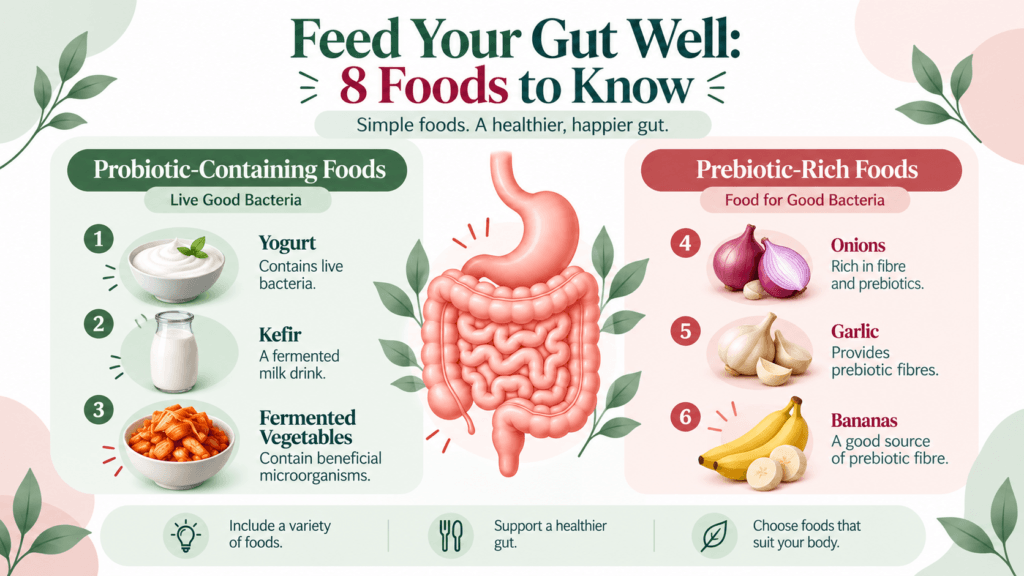
Probiotics are live microorganisms that, when administered in adequate amounts, provide a health benefit to the host. This is the internationally accepted definition used by major scientific organizations.
They can include particular strains of bacteria or yeasts.
Some probiotic microorganisms are found in fermented foods, while others are added to foods or sold as dietary supplements.
Common probiotic groups include certain strains of:
- Lactobacillus and related genera
- Bifidobacterium
- Saccharomyces, a type of yeast
The important detail is the specific strain.
A product containing one type of probiotic should not automatically be assumed to have the same effect as another product containing a different microorganism. The NIH notes that different probiotics can have different effects, and evidence for one strain does not necessarily apply to another.
Are All Fermented Foods Probiotic Foods?
No.
This is a common point of confusion.
Fermentation and probiotics are related, but they are not interchangeable terms.
A fermented food may contain microorganisms produced during fermentation, but that does not automatically mean it meets the scientific definition of a probiotic.
For a microorganism to be called a probiotic, there needs to be evidence that it provides a health benefit when consumed in an appropriate amount.
What Are Prebiotics?
Prebiotics are substances that are selectively utilized by microorganisms and produce a health benefit.
Many prebiotics are forms of carbohydrates that humans do not fully digest. They can reach the colon, where certain microorganisms use them as a source of energy.
Examples include certain types of:
- Insulin
- Fructooligosaccharides
- Galactooligosaccharides
- Other fermentable fibers
The World Gastroenterology Organisation describes prebiotics as selectively fermented ingredients that result in specific changes in the composition or activity of the gastrointestinal microbiota that benefit health.
In everyday nutrition, the conversation around prebiotics often overlaps with fiber-rich foods.
However, not every type of dietary fiber qualifies as a prebiotic. The effect depends on how a particular substance interacts with microorganisms in the gut.
Probiotics vs Prebiotics: What Is the Difference?
The easiest distinction is:
Probiotics = live microorganisms
Prebiotics = substances that certain microorganisms use
They therefore work at different points in the gut-health picture.
Probiotics | Prebiotics |
Live microorganisms | Food components/substrates |
Found in some fermented foods and supplements | Found naturally in many plant foods and some specially formulated foods |
Effects depend on the specific microorganism or strain | Effects depend on the type and amount of substrate |
Do not work identically for every condition | Support the activity of particular microorganisms |
May be consumed through food or supplements | Commonly obtained through a varied, fiber-rich diet |
Neither category should automatically be treated as a cure for digestive disease.
What Foods Contain Probiotics?
Some foods contain live microorganisms, although the exact microorganisms and amounts vary.
Examples may include:
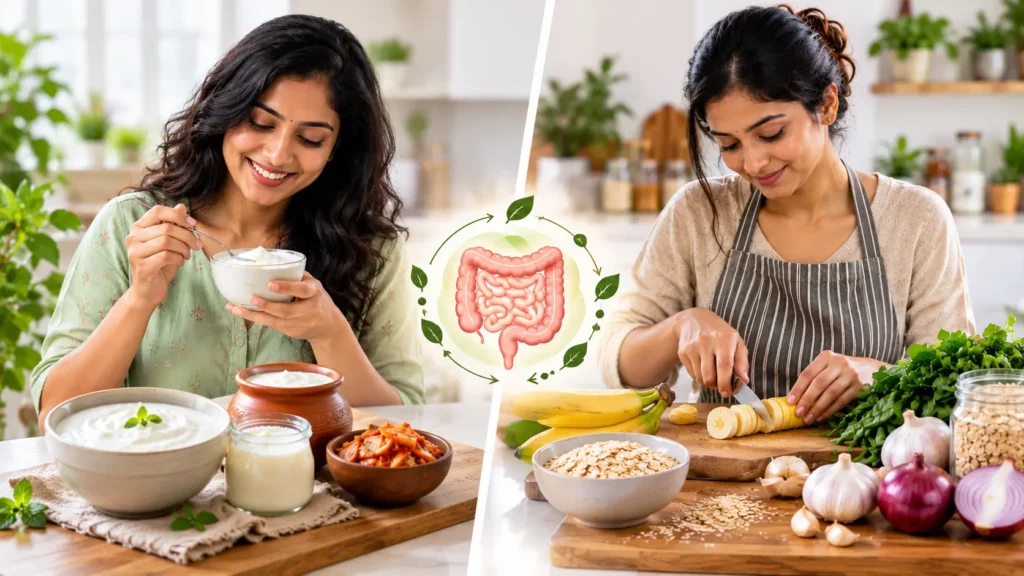
Yogurt
Some yogurts contain live cultures. Check the product label if you are specifically looking for live cultures.
Kefir
Kefir is a fermented milk drink that can contain a range of microorganisms.
Certain Fermented Foods
Depending on how they are produced, fermented foods may contain live microorganisms.Examples can include traditionally fermented vegetables and other cultured foods.However, processing and storage can affect whether microorganisms remain alive in the final product.
Traditional Indian Fermented Foods
Indian diets include many fermented foods and drinks, but their microbial content can vary considerably depending on ingredients, preparation and fermentation methods.Foods such as curd, idli and dosa involve fermentation, but it would be inaccurate to assume that every serving provides a defined probiotic strain with a clinically demonstrated benefit.
That distinction is useful when choosing foods for general nutrition.
What Foods Contain Prebiotics?
Prebiotic compounds occur naturally in a variety of plant foods.
Depending on the specific compound, examples can include:
- Onions
- Garlic
- Leeks
- Asparagus
- Bananas
- Oats
- Legumes
- Chicory root
- Some whole grains
Many of these foods also provide fiber and other nutrients.
The goal does not need to be finding one “superfood” for your gut. A varied diet containing different plant foods can provide different types of fibers and fermentable carbohydrates.
How Do Probiotics and Prebiotics Work Together?
Think of probiotics as microorganisms and prebiotics as certain substances that microorganisms can use.
The relationship is more complicated than simply “feeding good bacteria,” because different microorganisms use different substrates and produce different metabolic products.
Some dietary fibers are fermented by microorganisms in the colon, producing short-chain fatty acids such as acetate, propionate and butyrate. These compounds are involved in several physiological processes in the gut.
Research into the microbiome is still developing, so it is better to talk about supporting a healthy gut environment than promising that a particular food will transform someone’s microbiome.
What Are Synbiotics?
You may also come across the term synbiotic.
Synbiotics are products or combinations that contain probiotics and substrates used by microorganisms.
The concept is intended to bring together microorganisms and the substances that support particular microbial functions. NIH guidance notes that products combining prebiotics and probiotic microorganisms are commonly described as synbiotics.
However, the presence of both ingredients does not automatically mean that a product will provide a specific health benefit for every person.
The formulation, strains, quantities and evidence behind the particular product still matter.
Can Probiotics and Prebiotics Improve Gut Health?
They can have useful roles, but the answer depends on which probiotic, which prebiotic, which health condition and which person.
Evidence supports some specific probiotic strains for particular uses, but results cannot be generalized to every probiotic product.
The World Gastroenterology Organisation specifically recommends linking probiotic recommendations to the particular strain and the health benefit demonstrated in human studies.
That is an important distinction.
A supplement labelled “probiotic” is not automatically proven to help with every form of bloating, constipation, diarrhea, IBS or other digestive complaint.
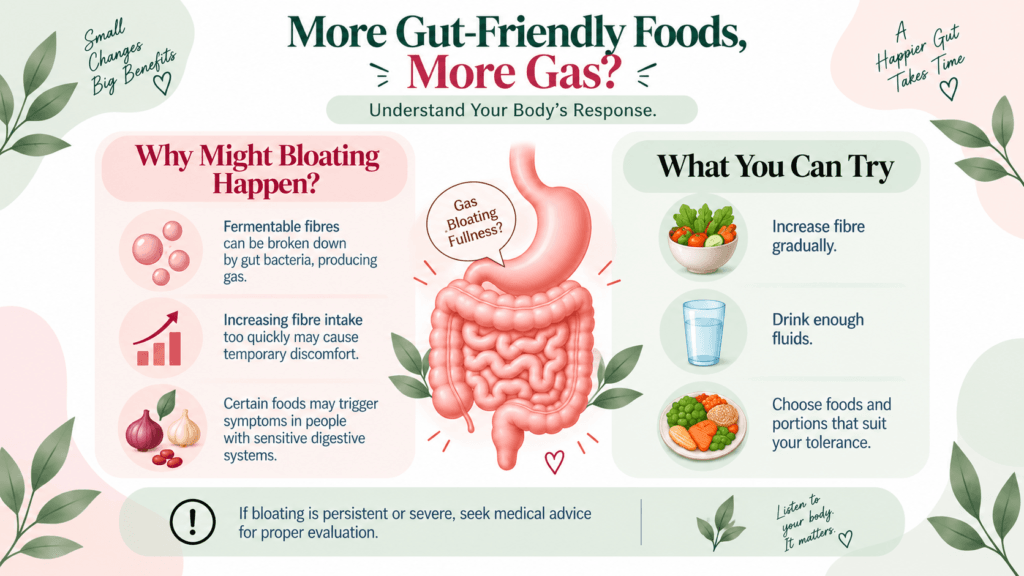
For prebiotics, increasing certain types of fiber may support the gut microbiome, but suddenly increasing fiber can also cause gas or bloating in some people.
Do Probiotic Supplements Work for Everyone?
No.
A probiotic supplement may be useful in some situations, but its effect depends on the microorganism, dose, formulation and reason for use.
The NIH notes that not all products labelled as probiotics have proven health benefits.
This is why choosing a supplement based only on a large “CFU” number or a long list of bacterial names is not necessarily meaningful.
If you are considering a probiotic for a specific digestive problem, discuss the product and the reason for using it with a qualified healthcare professional.
What About Probiotic Safety?
For healthy people, probiotics are generally considered to have a good safety record, but they are not risk-free in every situation.
The NIH’s National Center for Complementary and Integrative Health notes that serious infections have been reported in some vulnerable people receiving probiotics.
Extra caution is appropriate for people who are seriously ill or have certain conditions that may increase the risk of complications.
Probiotics should therefore not be treated as automatically suitable for everyone simply because they are sold as supplements.
What About Bloating, Gas and Digestive Discomfort?
This is where many people become interested in probiotics and prebiotics.
But digestive symptoms have many possible causes.
Bloating, abdominal pain, diarrhea, constipation and changes in bowel habits can occur with conditions ranging from dietary intolerance to functional gastrointestinal disorders and other medical problems.
Adding large amounts of fiber or prebiotic foods suddenly can actually make some people feel more bloated.
A better approach is usually gradual dietary change.
If symptoms are persistent, severe or repeatedly interfering with daily life, it is worth getting the cause evaluated instead of continually switching between supplements.
How to Add Probiotic and Prebiotic Foods to Your Diet
You do not necessarily need a cabinet full of supplements to pay attention to your gut health.
For many people, everyday food is a practical starting point.
Start With Variety
Include different plant foods across the week rather than relying on one “gut health” food.
Vegetables, fruits, legumes, whole grains, nuts and seeds can all contribute different nutrients and types of fiber.
Increase Fiber Gradually
If your current diet is low in fiber, increasing it suddenly may cause gas or bloating.
Increase fiber gradually and maintain adequate fluid intake unless your healthcare professional has advised otherwise.
Include Fermented Foods If They Suit You
Foods such as yogurt or other fermented foods can be included as part of an overall balanced diet when appropriate.
Check labels when you specifically want a product containing live cultures.
Pay Attention to Your Own Tolerance
A food can be nutritious and still not suit everyone equally.
If a particular food repeatedly causes digestive symptoms, discuss the pattern with a dietitian or doctor rather than assuming you simply need more of it.
A Simple Indian Meal Approach for Gut Health
Gut-friendly eating does not have to mean buying expensive imported products.
A regular Indian diet can provide many sources of fiber and fermented foods.
For example, meals can include combinations of:
- Vegetables
- Dal and other pulses
- Whole grains or millets where appropriate
- Fruits
- Nuts and seeds
- Curd or other suitable fermented foods
- A variety of plant foods
The right combination depends on the person’s overall diet, health conditions, food preferences and digestive tolerance.
Someone with IBS, inflammatory bowel disease, food intolerance or another gastrointestinal condition may need a different approach from someone simply trying to improve dietary variety.
What Should You Look for in a Probiotic Supplement?
If a healthcare professional recommends a probiotic supplement, look beyond the word “probiotic” on the front of the package.
Useful information can include:
- Genus
- Species
- Strain
- Amount provided
- Storage requirements
- Expiry information
- Intended use
- Evidence supporting the particular strain
The World Gastroenterology Organisation recommends that probiotic recommendations, particularly in clinical settings, connect specific strains with the benefits demonstrated in human studies.
A higher number of microorganisms does not automatically mean a product is more effective.
When Should You Seek Medical Advice for Digestive Symptoms?
Do not assume that persistent digestive symptoms are simply a sign of an “unbalanced gut.”
Medical evaluation is appropriate when symptoms are persistent, recurrent or concerning.
Seek medical attention promptly if digestive symptoms occur with warning signs such as:
- Blood in the stool
- Unexplained weight loss
- Persistent vomiting
- Severe or worsening abdominal pain
- Difficulty swallowing
- Signs of dehydration
- Persistent fever
- Significant changes in bowel habits that do not settle
The appropriate evaluation depends on the symptoms and the person’s medical history.
A probiotic supplement should not be used to delay assessment of potentially significant symptoms
Gut health and nutrition guidance from Nourish With Relma
If you are looking for nutrition guidance in Mysore and are considering Nourish With Relma, review the business’s current service information and contact the team to confirm whether its available support is suitable for your needs.
Before booking, ask about the consultation format, the professional’s qualifications, fees, follow-up arrangements and whether the service can accommodate your dietary requirements. If you have a gut issues diagnosis, continue to follow the advice of the healthcare professional responsible for your medical care.
Visit the official website for current information: Nourish With Relma.
FAQS
What are probiotics?
Probiotics are live microorganisms that provide a health benefit when administered in adequate amounts. The benefit is linked to the specific microorganism or strain rather than the word “probiotic” alone.
What are prebiotics?
Prebiotics are substances selectively used by microorganisms that result in a health benefit. Certain types of dietary fiber and carbohydrates can act as prebiotics.
Are probiotics and prebiotics the same?
No. Probiotics are live microorganisms, while prebiotics are substances that particular microorganisms can use.
What is the difference between probiotics and synbiotics?
Probiotics contain beneficial live microorganisms. Synbiotics combine probiotics with substrates that are intended to support particular microorganisms or functions.
Which foods contain probiotics?
Some yogurts and fermented foods can contain live microorganisms. However, fermentation does not automatically make a food a probiotic because the probiotic definition requires evidence of a health benefit from specific microorganisms.
Which foods are good sources of prebiotics??
Prebiotic compounds occur in various plant foods, including onions, garlic, asparagus, bananas, oats and legumes. The exact prebiotic content varies between foods.
Can probiotics cure digestive problems?
No. Probiotics should not be described as a universal cure. Evidence varies according to the specific microorganism, condition and product.
Should I see a dietitian for gut health?
A dietitian can be useful if you want help improving your diet, increasing fiber gradually, identifying dietary patterns or adapting nutrition to a diagnosed digestive condition.