Pregnancy Dietitian in Mysore: What Should Your Nutrition Plan Include? : Pregnancy changes your nutritional needs as your body supports the growth and development of your baby. Your usual eating pattern may also need to change as appetite, food preferences, nausea and other pregnancy-related concerns develop.
If you are looking for a pregnancy dietitian in Mysore, it is useful to understand that pregnancy nutrition is not the same for every woman. Your stage of pregnancy, usual diet, nutritional status, food preferences, medical history and advice from your obstetrician can all affect how your nutrition plan is structured.
A pregnancy nutrition plan may include balanced meals, adequate protein, fibre-rich foods, fruits and vegetables, appropriate sources of fat and sufficient fluids. Some nutrients may also require supplementation when advised by your healthcare professional.
The aim is to develop an eating pattern that is appropriate for your individual needs and practical enough to follow during pregnancy.
Why Does Nutrition Matter During Pregnancy?
Pregnancy increases the body’s nutritional demands. Nutrients are needed to support maternal health as well as fetal growth and development.
The ICMR-NIN guidance included in the source material gives particular attention to nutrients such as iron and folic acid and recommends a varied, nutrient-dense diet. WHO also recommends a varied diet during pregnancy that includes foods such as vegetables, fruits, whole grains, pulses, nuts and suitable protein sources.
This does not mean every pregnant woman needs identical meals or quantities.
A useful pregnancy nutrition plan starts with the individual’s dietary pattern and nutritional requirements.

What Should a Pregnancy Nutrition Plan Include?
Several areas can be considered when planning meals during pregnancy.
Protein-Rich Foods
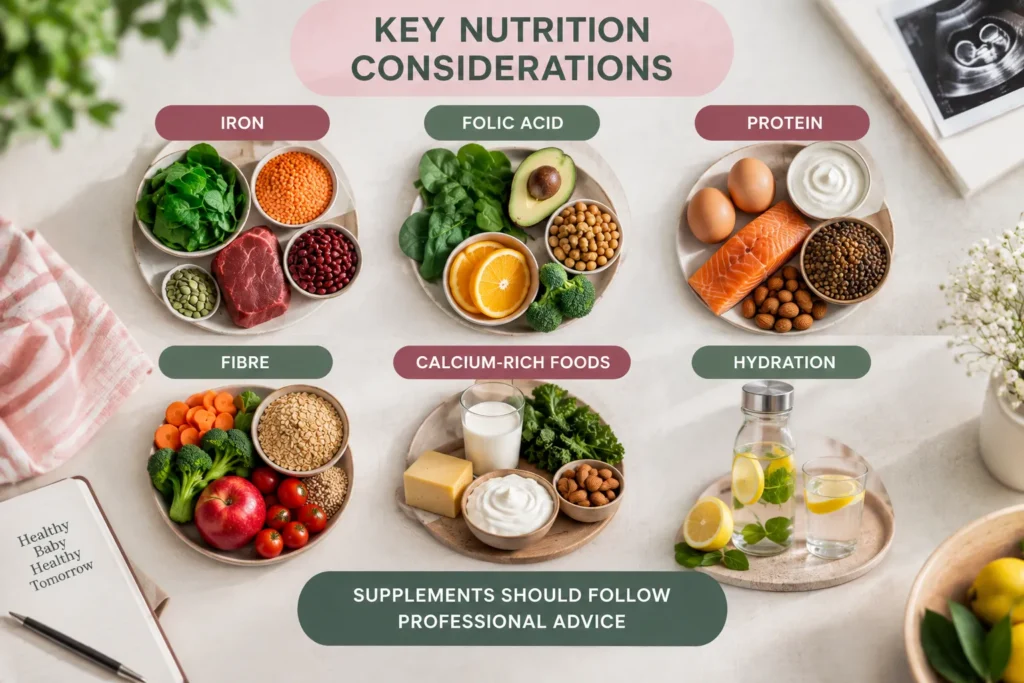
Protein supports normal growth and repair and is particularly relevant during pregnancy. Depending on your dietary preferences, protein may come from foods such as:
- Dal and other pulses
- Beans and legumes
- Milk and curd
- Paneer and other suitable dairy foods
- Eggs
- Properly cooked fish and seafood
- Poultry and other suitable animal foods
- Nuts and seeds
- Soy and other plant-based protein sources
The source notes that ICMR-NIN includes milk, fish, meat, poultry and eggs among protein sources, while combinations of cereals, pulses and nuts can also contribute protein. A dietitian can help distribute protein-containing foods across your meals according to your usual eating pattern.
Fibre-Rich Foods
Fibre can be obtained from foods such as:
- Vegetables
- Fruits
- Pulses
- Beans
- Whole grains
- Millets
- Nuts and seeds
Fibre can be particularly relevant when constipation occurs during pregnancy. However, increasing fibre should also take fluid intake and individual tolerance into account. A large increase in fibre may not be comfortable for everyone, especially if the usual diet contains very little fibre.
Fruits and Vegetables
A pregnancy meal plan can include a variety of vegetables and fruits rather than relying on only a small number of foods. Different foods provide different vitamins, minerals, fibre and other nutrients. Meals can include combinations of:
- Seasonal vegetables
- Green leafy vegetables
- Fresh fruits
- Legumes
- Whole grains
- Nuts and seeds
Dietary variety is also recommended in pregnancy nutrition guidance referenced in the source.
Healthy Sources of Fat
Fat is part of a balanced diet. The type and overall amount matter more than trying to eliminate fat completely. Depending on your dietary pattern, suitable sources can include nuts, seeds, appropriate cooking oils and selected fish. The overall meal pattern should be considered when deciding how much and which sources of fat to include.
Adequate Fluids
Hydration is another part of pregnancy nutrition. Water can generally form the main source of fluids, with individual needs affected by factors such as climate, activity and advice from your healthcare team.
Nausea, vomiting, constipation or other pregnancy-related concerns may make it more difficult to maintain adequate fluid intake. Your nutrition plan may need to take these issues into account.
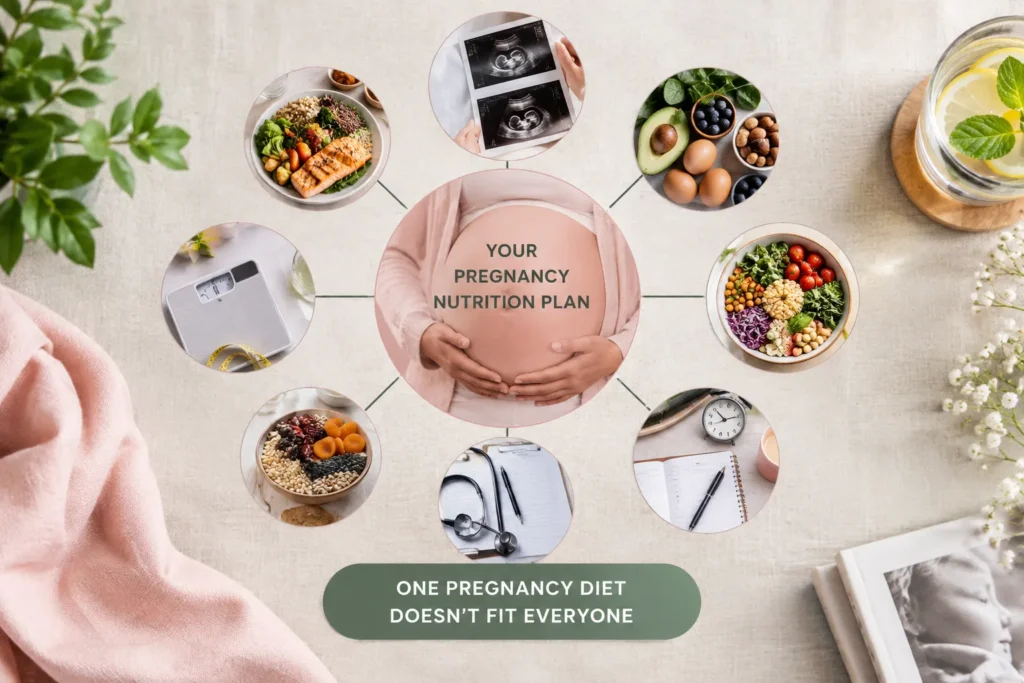
How Can Pregnancy Nutrition Be Personalised?
A pregnancy dietitian should consider the individual rather than applying the same food chart to everyone. Your nutrition plan may take into account:
- Stage of pregnancy
- Usual daily meals
- Vegetarian or non-vegetarian preferences
- Food allergies or intolerances
- Cultural and family food habits
- Work schedule
- Meal timing
- Appetite
- Food aversions
- Nausea
- Existing nutritional concerns
- Relevant medical history
- Physical activity
- Advice from your obstetrician
- Prescribed supplements or medications
For a woman in Mysuru, this can mean working with familiar foods and cooking practices rather than requiring an entirely different way of eating. A plan is generally easier to follow when it fits the foods, routines and practical circumstances of the household.
Which Nutrients Deserve Attention During Pregnancy?
Pregnancy nutrition involves many nutrients, but some receive particular attention.
Protein
Protein requirements increase during pregnancy. ICMR-NIN provides pregnancy-specific guidance on additional protein needs during later trimesters.
Iron
Iron requirements increase during pregnancy. Food sources and prescribed supplementation may both have a role depending on individual nutritional and medical needs.
Folate and Folic Acid
Folate-rich foods contribute to the diet, while folic acid supplements should be taken according to healthcare advice.
Calcium
Calcium-containing foods can form part of a balanced pregnancy diet. Dairy is one option for women who consume it, while other sources can be considered according to dietary preferences.
Iodine
Iodine is important during pregnancy, and iodised salt is one dietary source. Supplementation should not be started without appropriate professional advice.
Fibre
Vegetables, fruits, pulses and whole grains can provide fibre and may be useful when constipation becomes a concern.
Healthy Fats
Nuts, seeds, suitable oils and appropriately selected fish can contribute fats and other nutrients. The exact combination of foods depends on your diet and nutritional requirements.
Which Foods Need Extra Attention During Pregnancy?
Food safety becomes particularly important during pregnancy. Some foods carry a greater risk of foodborne infection when they are raw, undercooked, unpasteurised or handled incorrectly. The source specifically recommends precautions around raw or undercooked meat and eggs, unpasteurised dairy products, unwashed produce and certain higher-risk seafood. Practical food-safety habits include:
- Wash fruits and vegetables properly.
- Avoid raw or undercooked meat and eggs.
- Choose pasteurised dairy products.
- Cook food thoroughly.
- Store perishable foods safely.
- Maintain good kitchen hygiene.
- Take additional care with foods that may have a higher contamination risk.
Food safety advice should be followed alongside guidance from your obstetrician or healthcare professional.
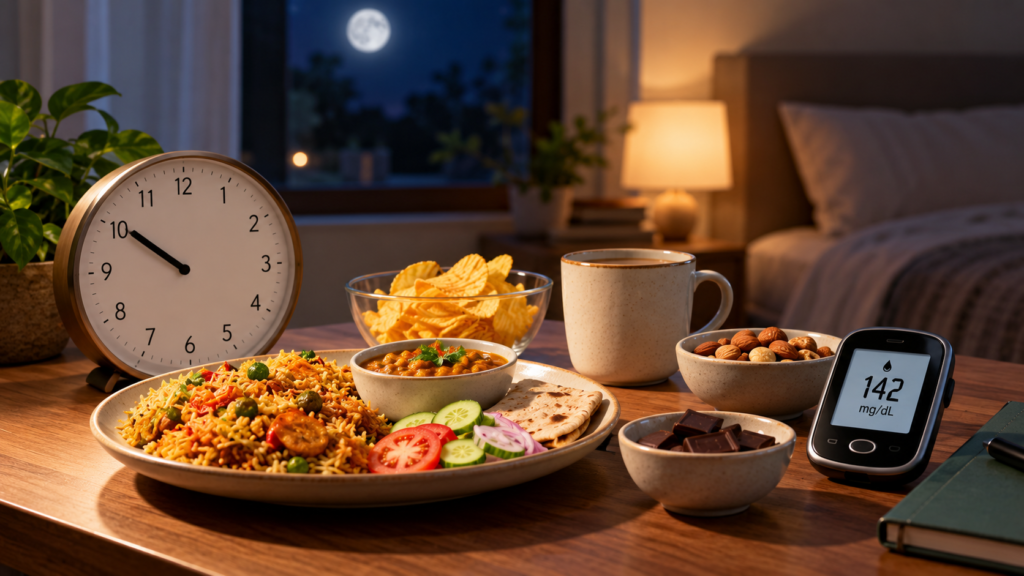
How Much Caffeine Is Safe During Pregnancy?
Caffeine deserves attention during pregnancy because it can come from several sources, not only coffee. Sources can include:
- Coffee
- Tea
- Cola-type drinks
- Energy drinks
- Chocolate
- Some medicines
The supplied source notes WHO guidance regarding high caffeine intake during pregnancy and recommends discussing an appropriate intake with your obstetrician or qualified healthcare professional if you regularly consume several caffeinated drinks. Looking at your total daily intake is more useful than considering one drink in isolation.
What About Pregnancy Supplements?
More supplements do not necessarily mean better nutrition.
Some nutrients may require supplementation during pregnancy, but the appropriate supplement and dose depend on individual circumstances.
The supplied source notes that WHO recommends supplements such as folic acid and iron when advised by a health worker. It also notes NHS guidance concerning certain vitamin-A-containing supplements during pregnancy.
Your dietitian can help you understand how food sources fit into your nutrition plan. Your obstetrician or healthcare provider should guide pregnancy-specific supplementation.
Do not start high-dose supplements on your own.
Why Might a Generic Pregnancy Diet Chart Not Suit You?
An online pregnancy diet chart can look convenient, but it cannot account for every person’s circumstances. Two pregnant women may have different:
- Food preferences
- Dietary patterns
- Nutritional status
- Medical histories
- Activity levels
- Food tolerances
- Meal schedules
- Pregnancy-related concerns
For example, a vegetarian woman may need a different approach to obtaining protein and certain nutrients from someone who eats eggs, fish or meat. Similarly, someone experiencing significant nausea may tolerate a different meal pattern from someone whose appetite has remained unchanged. This is why pregnancy nutrition should be considered in the context of the individual rather than copied directly from a generic chart.
What Happens During a Pregnancy Nutrition Consultation?
A pregnancy nutrition consultation can begin with understanding your current eating pattern before making dietary changes. Depending on your needs, the discussion may include:
- Your current eating pattern
- Typical breakfast, lunch, dinner and snacks
- Food preferences
- Vegetarian or non-vegetarian choices
- Food allergies or intolerances
- Meal timing and daily routine
- Relevant health information
- Stage of pregnancy
- Nutrition-related concerns
- Supplements or medications recommended by your healthcare team
The dietitian can then use this information to develop practical nutrition guidance. Pregnancy-specific medical decisions, abnormal test results, complications, medication changes and other clinical concerns should remain under the care of your obstetrician or appropriate healthcare professional.
How Can a Dietitian Work With Your Obstetrician?
A dietitian and obstetrician have different responsibilities.
Your obstetrician provides medical care and monitors the pregnancy.
A dietitian focuses on nutrition-related areas such as food choices, meal planning, dietary adequacy and practical eating habits.
The two forms of care can work alongside each other.
For example, when your healthcare provider identifies a nutritional concern, a dietitian can help translate the relevant dietary advice into meals that suit your routine and preferences.
Nutrition counselling should not replace prenatal check-ups, medical investigations or treatment recommended by your obstetrician.
When Should You Speak to Your Obstetrician?
Nutrition advice should never delay necessary medical care. Contact your obstetrician or healthcare provider when you have pregnancy-related symptoms or concerns that require medical assessment. The supplied source specifically identifies concerns such as:
- Persistent or severe vomiting
- Difficulty keeping food or fluids down
- Significant bleeding
- Severe abdominal pain
- Fainting or significant weakness
- Concerning swelling or other sudden symptoms
- Abnormal blood sugar or blood pressure readings
- Concerns about fetal movement
- Any symptom your obstetrician has specifically asked you to report
The appropriate response depends on your pregnancy and medical history. If you believe you are experiencing an emergency, seek urgent medical care instead of waiting for a nutrition consultation.
Pregnancy Nutrition Support at Nourish With Relma
The supplied business information presents Nourish With Relma as a clinical dietitian and nutrition service in Mysuru and lists Pregnancy Nutrition among its areas of nutrition support.
If you are considering a pregnancy dietitian in Mysore, a consultation can help you review your existing eating pattern and discuss practical nutrition guidance based on your individual needs.
Nourish With Relma : 3rd Floor, Shoumik’s Shetty Mansion, 837, General Thimmaiah Rd, near Aishwarya Petrol Bunk, Vijayanagar 1st Stage, Vijayanagar, Mysuru, Karnataka 570016
Phone: 70197 64856
Before your consultation, it can be useful to keep your recent medical information, current supplement list and questions ready. This can make the nutrition discussion more focused.
Frequently Asked Questions
1. What does a pregnancy dietitian do?
A pregnancy dietitian provides nutrition-focused guidance during pregnancy. This may include balanced meals, protein and fibre intake, food choices, meal planning, hydration and adapting nutrition to dietary preferences. Nutrition guidance complements rather than replaces obstetric care.
2. When should I consult a pregnancy dietitian in Mysore?
You may consider a pregnancy nutrition consultation if you want help understanding changing nutritional needs, planning balanced meals, adapting your existing diet, managing dietary preferences or making meals more practical during pregnancy.
3. Can a dietitian create a personalised pregnancy diet plan?
Yes. A nutrition plan can be structured around factors such as your food preferences, daily routine, dietary pattern, stage of pregnancy, nutritional concerns and relevant information from your healthcare team.
4. What foods should I include during pregnancy?
A varied diet can include vegetables, fruits, whole grains, pulses, nuts, seeds and suitable protein sources such as dairy, eggs, fish, poultry or other foods that fit your dietary pattern.
5. Should I take supplements during pregnancy?
Some supplements, including folic acid and iron, may be recommended during pregnancy. The appropriate supplement and dose depend on individual circumstances.
Follow the advice of your obstetrician or healthcare professional rather than starting high-dose supplements independently.
6. Can a pregnancy dietitian help vegetarian women?
Yes. Nutrition guidance can be adapted to vegetarian eating patterns by considering suitable sources of protein, iron, folate, calcium and other nutrients.
Individual nutritional needs should be assessed instead of relying on a generic vegetarian pregnancy diet chart.
7. What foods should I avoid during pregnancy?
Food safety is particularly important during pregnancy. Raw or undercooked meat and eggs, unpasteurised dairy products and unwashed produce can increase foodborne illness risk.
Your obstetrician or healthcare professional can provide advice appropriate to your circumstances.
8. Can a dietitian replace my obstetrician?
No. A dietitian provides nutrition-related guidance, while an obstetrician manages pregnancy-related medical care.
9. What should I bring to a pregnancy nutrition consultation?
It can be useful to bring your current supplement and medication information, relevant medical reports, details of your usual meals, dietary preferences and a list of nutrition-related questions.
10. Where can I find pregnancy nutrition support in Mysore?
Nourish With Relma provides nutrition and dietary guidance in Mysuru and lists Pregnancy Nutrition among its areas of support.
The supplied business address is 3rd Floor, Shoumik’s Shetty Mansion, 837, General Thimmaiah Rd, near Aishwarya Petrol Bunk, Vijayanagar 1st Stage, Vijayanagar, Mysuru, Karnataka 570016. The listed phone number is 070197 64856.